Showing posts with label Easter. Show all posts

Monday, April 30, 2018

Lily Pasta Santa Caterina


April 29 (new) and April 30 (traditional) are the feasts of St. Catherine of Siena. Last night I ended up serving Pasta Santa Caterina for dinner. This time I made it with lily shaped pasta (Capanelle, also referred to as gigli or riccioli, translates to little bells or bellflowers) from Trader Joe's, since I had given some to our children in this year's family Easter Basket.


The lily symbolizes purity. Its stoic structure, pure white color, and delicately sweet aroma attribute to qualities of royalty, purity, and chastity. It is the symbolic flower of the Blessed Virgin Mary and is sometimes depicted with other saints (including St. Catherine of Siena) who possess these qualities. A lily among thorns represents the Immaculate Conception as the purity of the Virgin is preserved among the fallen nature of the world. Legend says that the lily originated from Eve’s tears when she and Adam were banished from the Garden of Eden. Another legend claims that lilies sprang up from the ground when drops of blood fell to the foot of the Cross. During the Easter season, many churches line their altars with Easter Lilies to signify the resurrection of Jesus Christ and the hope of eternal life.

This pasta would also be perfect for tomorrow's feast (May 1, St. Joseph the Worker) since the lily is also one of the symbols for St. Joseph.


Pasta Santa Caterina

Ingredients:
  • 2 lb. ripe tomatoes 
  • 2 Tbsp. Italian parsley, chopped
  • 2 Tbsp. fresh Basil, chopped
  • 2 tsp. garlic minced
  • 3 Tbsp. freshly grated Parmesan cheese (I omitted this and it was still great) 
  • 1 tsp. dried oregano
  • 6 Tbsp. olive oil
  • 1/2 tsp. salt
  • 1/2 tsp. black pepper
  • 1 lb. gigli pasta 

Directions:

Peel tomatoes, remove seeds and dice.

In a medium bowl combine all of the ingredients except the pasta.
Marinate at room temperature for about 1 hour.

Cook the pasta according to package directions, until tender. Drain thoroughly, and transfer pasta to a heated serving dish. Add the sauce and toss.

Serves 8 to 10.


St. Catherine of Siena, ora pro nobis! 

Pin It

Friday, March 30, 2018

Peacock Fruit Platter for Easter


The peacock has long been a Christian symbol of immortality and Christ's resurrection. From ancient times the peacock represented immortality which came from a belief that the flesh of the peacock did not decay.  For this reason the symbol became associated with the Resurrection of Christ with the early Christians and peacocks are found adorning the walls and tombs of the catacombs. In addition, the “multitude of eyes" on the beautiful fan tail, suggested the all-seeing eye of God and that of the Church.

As we celebrate the Resurrection of Christ in the Easter Octave, the peacock can serve as a visible reminder of His rising from the dead. This fun fruit platter is made up of kiwi slices, grapes, and blueberries "feathers" surrounding a half pear for the body. Beak and legs were cut from a red bell pepper and the eyes are cut from the pear.

Additional past Easter ideas from Catholic Cuisine which incorporate this ancient symbol can be found here:
Easter Symbols: Handcrafted Candy for Easter!
The Good Shepherd's Garden Party: Week Seven


Pin It

Thursday, March 29, 2018

Cloved Ham - Good Friday


Planning on having ham this year for Easter dinner? Ham has been a traditional part of many Easter meals, so if you are serving it this Easter consider adding a little Good Friday prep to your ham baking by doing the "cloving" on that day.

Cloves are the unopened flower buds of the clove tree (Syzygium aromaticum), which is a tropical evergreen. They have an almost pungent aroma as well as a sweet and spicy flavor and are commonly used to flavor ham for baking. The word, clove, has an interesting etemology which I think links them well to this idea. They resemble small nails or tacks and their name comes an alteration of Middle English clowe, borrowed from the Old French clou de girofle (nail of clove) , from Latin clāvus (“nail”) for its shape. 

A clever idea could be to "clove" the ham on Good Friday in anticipation of cooking it on Sunday for Easter.

On Good Friday as we contemplate Chist's passion and crucifixion, we can think specifically of those nails that held him to the cross. As you place the clove "nails" in the ham, you could reflect on those wounds He received. 

To clove a ham: 
  • Using a sharp knife, score ham by making diagonal cuts in a diamond pattern, about 1/4 inch deep. Do not score the meat itself, just the fat and any skin. 
  • Place whole cloves in centers (and points, optional) of diamonds.

Cover and keep refrigeratorated until ready to cook on Easter. 

Golden Clove Glazed Ham 

Ingredients:
8 - 10 lb. bone-in cooked ham (shank end or butt end)
Cloves, whole
   For Glaze:
1/2 cup firmly packed brown sugar
2 tablespoons honey
1 tablespoon water
1/2 teaspoon cloves, ground


Directions:Bake covered at 325 for 2- 2 1/2 hours. Make glaze by adding ingredients to sauce pan. Mix and simmer 30 minutes to reduce. After the ham has cooked for 1 1/2 hour, brush the surface with some of the glaze. Then put it back into the oven, uncovered, for another 20 minutes. During that last hour continue glazing every 20 mintues.  This gives it a nice golden glaze. Remove from oven and let stand 15 minutes. To serve, transfer ham to a serving platter. Slice. Discard the cloves.


Pin It

Thursday, July 14, 2016

Campanelle "Little Bells" or Gigli "Lily" Pasta Ideas


Campanelle is a pasta shaped like a cone with a ruffled edge. It is Italian for "bellflowers” or "little bells" due to its shape like a bell or bell-shaped flower. This pasta shape is also referred to as gigli which means lily. Campanelle is intended to be served with heavier sauces or in a casserole.

It is part of tradition in Christian art to use lilies as a symbol of purity when portraying Our Lady or the Saints and even Angels.  The lily is an emblem of purity and chastity. It is the flower the medievals found to best symbolize the purity of Mary, and was admired as a flower of purity since the time of the Ancients. By the 14th century, it became common to find the lily in Annunciation paintings and illuminations, with either St. Gabriel holding it on in a vase between them.

There are numerous saints depicted with a lily or a bell which would be fitting for a campanelle pasta meal idea on feast days.  This week we happen to have a prominent lily associated saint - St. Kateri, the Lily of the Mohawks. But it is a good year round option due to the many saints associated and depicted with lilies or bells, as well as all the Marian feasts.  

St. Anthony the Hermit - January 17
St. Agnes - January 21
St. Agatha - February 5
St. Casimir - March 4
St. Joseph - March 19
Feast of the Annunciation - March 25
St. Agnes of Montepulciano - April 20
St. Catherine of Siena - April 29
St. Anthony of Padua - June 13
St. Aloysius Gonzaga - June 21
St. Maria Goretti - July 6
St. Kateri Tekakwitha - July 14
St. Dominic - August 8
St. Philomena - August 11
St. Gabriel the Archangel - September 29

Pin It

Thursday, May 12, 2016

Holy Spirit Cupcakes for Pentecost


Decorate cupcakes with red sprinkles and white chocolate doves for a simple and symbolic Pentecost dessert! I packed along these cupcakes to share at our Homeschool Family Camp last year.


Candy molds are easy to use and can be purchased inexpensively online. Other options include these Pentecost Cupcakes made with dove cupcake picks from the wedding section of the craft store and these beautiful Flaming Cupcakes for Pentecost


You can find additional recipes for Pentecost in the archives. Our family favorite has always been a Symbolic Birthday Cake for our beloved Church. I hope you all have a blessed Pentecost Sunday!

One loving spirit sets another on fire. 
~ St. Augustine

Pin It

Thursday, April 9, 2015

Divine Mercy Cake

The following recipe was submitted by Susan, from Sole Searching Mama, for the feast of Divine Mercy. Thank you, Susan!


Divine Mercy Cake

Ingredients:
  • 1 white cake mix
  • 1 small package Jell-O, any flavor (I used strawberry)
  • 1 package dream whip (in the pudding/Jell-O section)
  • 1 package vanilla instant pudding
  • 1 ½ cup very cold milk
  • 1 tsp. vanilla

Preheat oven to 350. Dissolve jello in ¾ cup boiling water. Add ½ cup of very cold water to the jello, set aside until it reaches room temperature. Bake the cake in a 9” x 13” pan as directed (I added 1 tsp. clear vanilla to the cake to give it more flavor.). Cool the cake for about 30 minutes. With the cake still warm, poke holes in the cake about ½ inch apart. I used a chop stick and wiggled the stick a bit to create an open hole for the jello to flow into. Slowly pour the jello into the holes. Place the cake in the fridge to chill. In a bowl, blend together dream whip, pudding, cold milk and vanilla until stiff and fluffy, about 4-6 minutes. Frost the cake and garnish as desired.

The following combinations make a lovely cake:
Strawberry Jell-O with strawberry garnish
Peach Jell-O with mint leaf garnish
Orange Jell-O with a mandarin orange garnish
Raspberry Jell-O with raspberry garnish


Pin It

Tuesday, January 21, 2014

Marshmallow Lamb Cookies


The lamb, as a symbol of purity, is one of the symbols of St. Agnes. Every year on January 21st, the memorial of St. Agnes, the pope blesses two lambs that have been raised by Trappists of the Tre Fontane Monastery outside of Rome. After the lambs have been blessed they are taken to Benedictine nuns at the Monastery of St. Cecilia in Rome. Here the nuns care for them and use their wool to weave the palliums worn by the Pope and his Archbishops. The palliums are conferred on new archbishops (those appointed as archbishops during the preceding year) on the Feast of Sts. Peter and Paul on June 29th.

"The palliums are about 3 inches wide and have a 14-inch strip hanging down the front and the back. The strips are finished with black silk, almost like the hooves of the sheep the archbishop is symbolically carrying over his shoulders." (CNS)

According to The Church's Year of Grace, "Our saint's name should be traced to the Greek hagne - the pure, rather than to the Latin agna - lamb. But the Latin derivation prevailed in the early Church. The reason may have been that eight days after her death Agnes appeared to her parents with a train of virgins, and a lamb at her side. St. Augustine knew both derivations. "Agnes", he writes, "means 'lamb' in Latin, but in Greek it denotes 'the pure one'."  (Catholic Culture)

Because of St. Agnes's association with lamb,  I made some quick and easy Marshmallow Lamb Cookies for the children to enjoy while coloring pictures and listening to a story about the life of St. Agnes in honor of her memorial.  These Marshmallow Lamb Cookies would also be perfect to make during the Easter season!


Marshmallow Lamb Cookies 
Adapted from Last Minute Mel

Ingredients:
  • Graham Crackers
  • Mini Marshmallows
  • 1 T Confectioners Sugar (and a drop of milk to make icing)
  • Raisins
  • Food Marker

Directions: 

Using a serrated knife and a gentle sawing motion, cut the graham crackers to a somewhat oval shape.

Spread a thin layer of the powdered sugar icing over the top of the graham cracker and cover with marshmallows. 


Microwave on high for approximately 10 seconds.  Remove from microwave and gently push the marshmallows together and flatten slightly.


Add the raisin for the ear and draw in an eye.  Enjoy! 


Pin It

Saturday, October 12, 2013

Sprouting Wheat - Getting Ready for St. Ignatius of Antioch

Catholic Culture's Liturgical Year website: 
St. Ignatius is one of the great bishops of the early Church. He was the successor of St. Peter as Bishop of Antioch. He was condemned to death by wild beasts during the Emperor Trajan's persecution. On his way to Rome, he wrote seven magnificent letters, which we still have today, concerning the Person of Christ, his love for Christ, his desire for martyrdom and on the constitution of the Church and Christian life. His sentiments before his approaching martyrdom are summed in his word in the Communion antiphon, "I am the wheat of Christ, ground by the teeth of beasts to become pure bread."

Wheat berries are a great visualization of this quote from St. Ignatius.  Sprouted wheat berries can be included in many dishes and are very nutritious, so would be a nice option for his feast day, October 17.

Sprouting wheat berries is easy, but you need to think ahead a little. You need a few days to get them to sprout so they will be ready to eat or use in recipes on St. Ignatius' feast. So if you want to join in and start now, you will need:
  • wheat berries
  • mason jar(s)
  • cheesecloth
  • water

Fill a mason jar about 1/3 full of dried wheat berries (to allow for expansion). Rinse wheat berries and drain. Refill jar with fresh water so that it is about an inch above or twice as high as the berries. Cover with cheese cloth and jar ring (or rubber band). Let sit for at least 12 hours. After it has sat, pour out water and rinse berries thoroughly. After jar is drained well, place on side, so seeds spread out for better air flow. A couple times a day rinse with luke warm water and drain berries and place jar on side again. Berries should sprout to 1/4 inch in 2-4 days. Once sprouted they are ready for use. To keep, refrigerate them. Will keep about 1 week. 

Notes:
~Simple uses for sprouted berries: sprinkle over yogurt, mix into salads as topping, put into sandwiches, add to soups or stir fry.
~Recipe ideas to follow. 

~Would be fitting for Easter season, too. Sprouting wheat symbolizes the Paschal mystery. Truly, truly, I say to you, unless a grain of wheat falls into the earth and dies, it remains alone; but if it dies, it bears much fruit” (John 12:24)


Pin It

Thursday, April 25, 2013

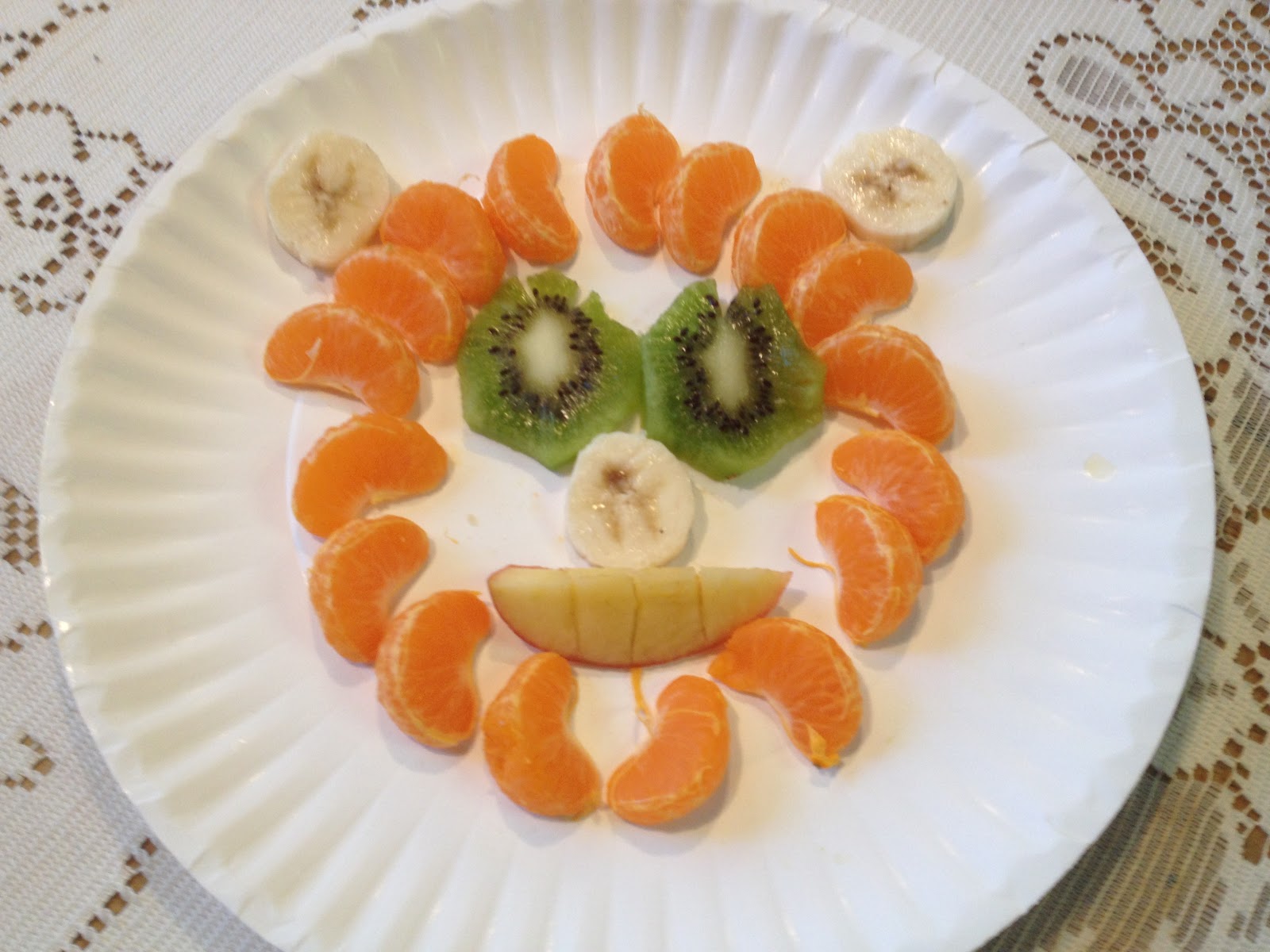
St. Mark Fruit Plates

Hi there!
Just popping in to share fun, healthy and easy fruit plates for the feast of St. Mark.  I do think they're kind of cute too:)
They're so easy, kids of all ages could even assemble themselves!
We made individual fruit plates but one large plate would be sweet too.
For one individual plate, I used approximately 2 cutie oranges.  In addition, making 4 plates used 2 kiwi, 1 apple and 1 banana.  
(I cut slits in the apple for the teeth....The kids liked this part the best:)
+Happy Feast of St. Mark+

"Evangelist Mark is represented as a lion because he begins his Gospel in the wilderness, `The voice of one crying in the desert: Make ready the way of the Lord,' or because he presents the Lord as the unconquered King."~Catholic Culture
Pin It

Thursday, April 4, 2013

Golden Peach Coffee Cake for Easter


Back in 2008 I shared the recipe for our favorite Cherry Cheese Coffee Cake.  It is always one of the first things requested, especially by my husband, every holiday!  This year my aunt asked me to include it in our Easter Menu and so I decided to try a variation as well, incorporating the liturgical Easter colors of "white" and "gold!"   The cherry is still my personal favorite, but the peach was  also very good!  


Golden Peach Coffee Cake
adapted from Cherry Cheese Coffee Cake

Ingredients: 

Cake & Filling
2 (8 oz. each) pkgs. refrigerated crescent rolls
8 oz. cream cheese
1/4 cup powdered sugar
1 egg
1/2 tsp. vanilla or almond extract
21 oz. can peach pie filling

Glaze

1/2 cup powdered sugar
2-3 teaspoons milk

Directions: 

Preheat oven to 350 degrees F.

Unroll crescent dough and arrange 12 of the triangles in a circle with wide ends toward the outside edge of the Large Round Stone or Baking Sheet - the points will not meet in the center.  Lightly flour and roll out the seams making a 14" circle with a 3" hole in the center. 

Note:  I use my Pampered Chef Large Round Stone, though any 16" stone or pizza pan will work.  You may need to reduce the bake time by a couple minutes if you are using a metal pan instead of the stone.

Combine the cream cheese, powdered sugar, egg & vanilla and spread over dough. Top with pie filling. 


Cut each of the 4 remaining triangles into thirds (starting at the wide end opposite the point and cutting lengthwise to the point). Arrange over filling evenly in spoke-like pattern. Press ends to seal at center and outer edges. Bake 25-30 minutes or until golden brown. Cool slightly. 


Mix powdered sugar and milk until glaze consistency and drizzle over coffee cake.


Enjoy! 
Pin It

Wednesday, April 3, 2013

A Paleo Strawberry Coconut Trifle

This post was written by past Catholic Cuisine contributor Amy.


It is a little late for this Easter, but I wanted to share this with you anyway.  It would be a great dessert for many feast days, including Valentine's Day or Pentecost.  Add some blueberries and it would be a fun dessert for Divine Mercy Sunday as well!

In our family we have people with gluten intolerance and one poor little muffin who is lactose intolerant.  So I generally have to get a bit creative with our holiday treats. 

All I could think about was the fact that I wanted to have that wonderful trifle here at Catholic Cuisine we have every year on Easter.  So I searched the net, but nothing looked very good (well to me, that is, I was being picky).  Then I found, on Pinterest, a link on how to make whip cream from canned coconut milk.  With that and a gluten free cake mix from Pamela's I knew I had it!


A Paleo Strawberry Coconut Trifle

  • 1 package Pamela's Vanilla Cake Mix
  • 3-4 pounds strawberries (you can do less, but we went for it)
  • 1/2 to 1 cup almond or coconut milk
  • 1 cup coconut
  • 1/2 cup evaporated cane juice  (you could use agave or another sweetener I am sure to your taste)
  • 2 cans Native Forest unsweetened FULL FAT coconut milk

Bake the cake according to directions.  Do this the night before and let it cool completely.  I had to hide mine on top of the fridge.  In the morning cut up into 1 inch cubes.  Poor the almond or coconut milk over the cubed cake till it is moist but not soaked.  Cut the strawberries and sprinkle with coconut and sweetener, mix.  Make the coconut whipped cream.  Follow these directions.  They work and it is AMAZING.  I didn't have enough whipped cream for the top because one of my cans got shook up, which was a huge disappointment.  So we only had one layer of the coconut whipped cream instead of two.  I ended up drizzling the other can a little over everyone's servings instead.

On the bottom of your trifle or glass bowl, put half the cake.  Put half the strawberry mixture on top of that, then half of the 2 cans worth of whipped coconut cream.  Repeat.  On top place a decorative strawberry and some toasted coconut.


Pin It

Friday, March 29, 2013

Basic Paska for Easter


After reading a Ukrainian folktale to my girls this morning, we got busy baking our Hot Cross Buns for Good Friday, Easter Doves, and Paska!  Jennifer recently posted her beautiful Paska recipe, but since I didn't have all the ingredients necessary, and I wasn't going to be able to make it back to the grocery store, I decided to adapt "Mary Urim's Paska" recipe from Romancing the Stove incorporating some of the decorating tips from Ukrainian Classic Kitchen.  I just love how pretty the Paska turned out, and it smells heavenly!


Basic Paska

Ingredients:
  • 1 cup lukewarm water
  • 2 cups of milk
  • 1/2 cup sugar
  • 1 package active dry yeast
  • 4 eggs, beaten and separated
  • 4 tablespoons butter, melted
  • 3 tablespoons oil
  • 1 tablespoon salt
  • 9 1/2 – 10 1/2 cups flour


Directions:

In a small bowl, dissolve the yeast in lukewarm water. Let stand for 10 minutes.

Meanwhile, scald the milk. Add the sugar, stirring with a whisk until the sugar has dissolved. Remove from heat, and let cool.


In another bowl, mix 3 eggs (saving one for the egg wash), butter, oil, and salt. Add the yeast mixture, and milk mixture, and whisk to combine.

Add 9 1/2 cups of flour to a stand mixer fitted with the dough hook. Gradually add the egg/milk/yeast mixture while mixing. Mix the dough for 10 minutes. Adding up to 1 to 1 1/2 cups of additional flour. The dough should pull away from the sides of the mixing bowl and not stick. If it is sticking, gradually add more flour. (Note: My stand mixer was not quite large enough for this recipe so I ended up kneading the dough by hand. If needing by hand, knead well, letting the dough rest a couple times between kneading to let the gluten work. Continue kneading until the dough no longer sticks to hands.)

Place the dough in a large bowl coated with oil, turning to cover all sides of the dough with oil. Cover with a towel and let rise in a warm place until doubled in bulk (about 1-2 hours).


After the dough has risen, take it out of the bowl, punch it down a little, and shape into loaves, reserving a little dough to create decorations. Place loaves into well oiled round baking dishes, filling only 1/3 full. Cover with a towel and let rise in a warm place until once again doubled in bulk (about 30-45 minutes).

Note:  I had to be creative finding deep round baking dishes!  I ended up using an Oven-proof Batter Bowla white casserole we were given for our wedding, my new Round Covered Baker, and an old Pampered Chef Bread Crock

Meanwhile create decorations for the top of the paska.

Note: Adding decorations after the shaped Paska has risen prevents the decorations from rising unevenly.


To make a braided cross: Using 3 small pieces of dough, roll each piece into a rope, then braid the 3 pieces together. Repeat to make a second braid. Place one of the braids over the dough ball in the pan, tucking the sides under the ball. Place the second braid over the first in the form of a cross, again tucking the ends under the dough ball.


Additional decoration suggestions/designs can be found in Jen's post.


Preheat the oven to 350˚F. Make egg wash - beat 1 egg and 2 tablespoons of water. Brush the tops of the loaves with egg wash. Bake for 45 minutes or until the bread is golden.


 Let cool in the pan.


Remove from pan, place on wire rack and cool completely.


NOTE:  This recipe will create 2-3 Paska, depending on pan size.  I used the leftover dough from our Easter Doves to create a 4th small Paska.  


Pin It