Showing posts with label Breads. Show all posts

Monday, December 18, 2017

O is for Bagels and O Antiphons


This week the Church celebrates the "O Antiphons" - the Magnificat antiphons used at Vespers of the last seven days of Advent.  I love an easy idea to make these days memorable.  It is a busy week so I thought this would be a perfect way to celebrate the Great Os - with some yummy O-shaped bagels. We took advantage of Einstein's Bagels Monday $7 Deal to pick up a dozen for our family and a couple dozen for some of our seminarian friends.


What I love about this (besides being easy) is that since it is not day specific can be done for any of the O Antiphon days. We still have all week. [Oh - and donuts work, too! ;  ) ]

Pin It

Saturday, April 22, 2017

Divine Mercy Cinnamon Rolls


Last year I made these heart shaped cinnamon rolls with whipped cream and berries to serve on Divine Mercy Sunday along bacon, scrambled eggs and orange juice. They were so easy to make and I'm planning to serve them again this year!

Divine Mercy Cinnamon Rolls 

What you need: 
  • Ready-to-Bake Cinnamon Rolls (Last year I used the Jumbo Rolls from Trader Joe's. This year I'm planning to use homemade Cinnamon Roll dough.) 
  • Whipped Cream
  • Strawberries, sliced
  • Blueberries


Directions: 

Take each pre-sliced cinnamon roll and completely unroll it. To re-roll it into the shape of a heart, simply roll up both ends at the same time until they meet in the middle. Pinch the bottom to form the "point" of the heart. Bake as usual.

Pin It

Friday, February 19, 2016

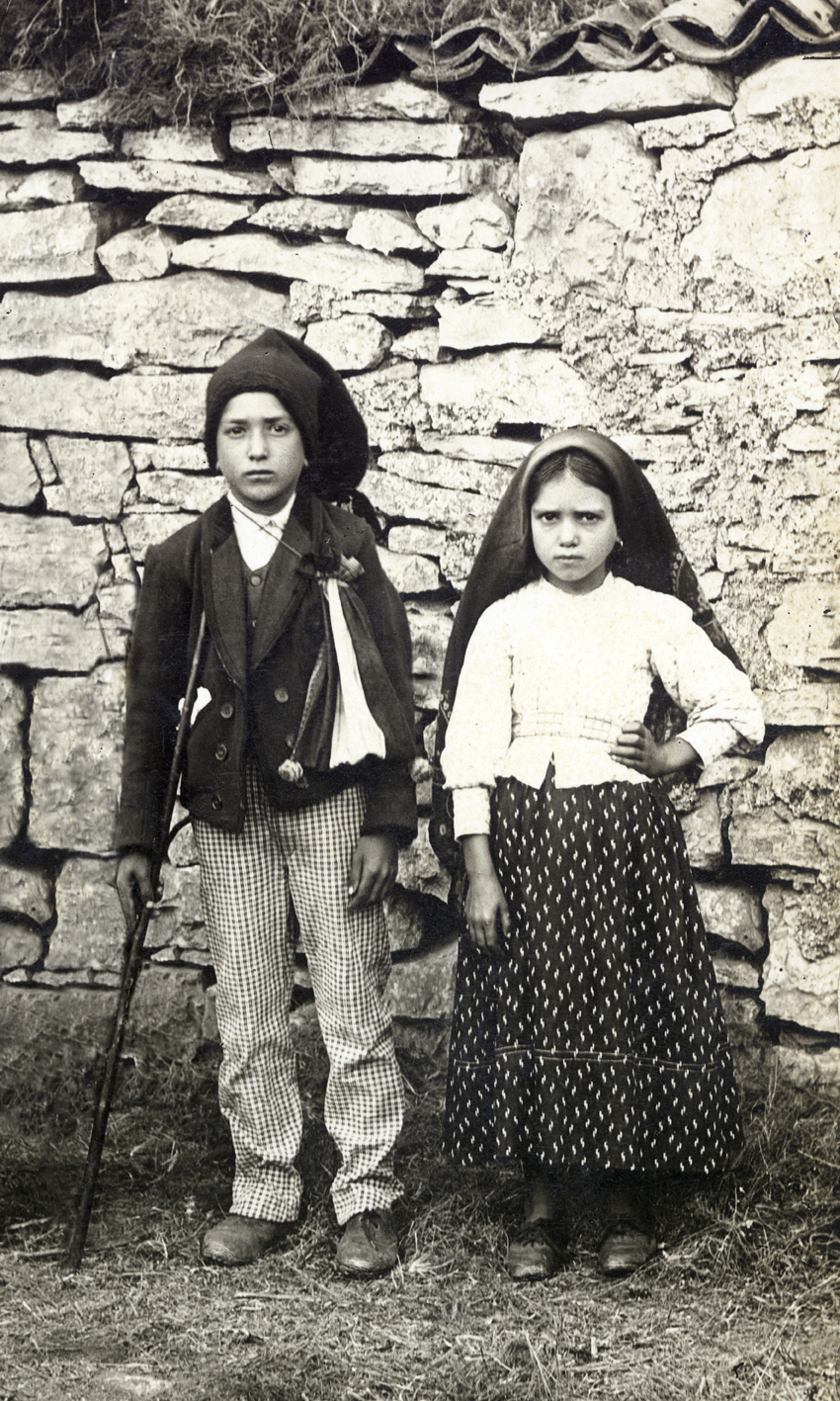
Hearty Peasant Fare for Saints Jacinta and Francisco


February 20 marks the  anniversary of the date of the death of Jacinta Marto, one of the Fatima seers. Jacinta and her brother Francisco were the youngest non-martyrs to be beatified in the history of the Church. The brother and sister, who tended to their family's sheep with their cousin Lucia Santo in the fields of Fatima, Portugal, witnessed the apparitions of Mary, now commonly known as Our Lady of Fatima.  We are approaching the 100th anniversary of the apparitions which will be commemorated next year, 2017. Thinking of Fatima and its upcoming centenary, I wanted share some ideas for this feast of the Sts. Jacinta and Francisco.
My husband’s family is Portuguese so I like to try to learn some of the common dishes associated with the country and culture. Portugal is known for its rustic peasant style cooking – food from the land. It is simple and doesn’t take much equipment to prepare, but it is always flavorful and comforting. As Sts. Jacinta and Francisco were shepherds the peasant foods like this would likely be common for their family.
Caldo verde, or green soup, considered by some as “Portugal's national dish” is a homey dish of potatoes, thinly sliced kale, and smoky pork sausage. Linguica is the preferred Portuguese sausage if you can find it. I was able to get it at a specialty meat market.  Readers often mention looking for healthy recipes for feast days. With kale being such a current super food, high in organosulphur compounds, vitamin A, vitamin C, B6, manganese, calcium, copper, and potassium.  I hope you find this addition one for the healthy (and hearty) category.

Caldo Verde - Portuguese Green Soup

Ingredients:
1/4 cup olive oil
1 cup chopped onion
2 teaspoons chopped garlic
3 or 4 potatoes, peeled and thinly sliced
2 quarts water
6-8 ounces linguiça (or other sausage)
¾ - 1 pound kale, washed, trimmed of the thick stems and thinly sliced
salt and pepper, to taste
 
Directions:
Bring a saucepan of water to a boil over high heat. Prick the sausages with a fork and add to the boiling water. Boil for about 5 minutes. Using tongs, transfer the sausages to a cutting board and, when cool enough to handle, slice them.

In a medium soup pot, heat 3 tablespoons of olive oil, add onions and garlic and cook for 2 to 3 minutes until tender and translucent, but not browned. Add potatoes, water and salt. Cover and boil gently over medium heat for 20 minutes. Meanwhile, in a skillet cook sausage slices until most of the fat is rendered out. Drain and reserve.

Scoop out about 2 cups of the potatoes and mash well. Return potatoes to pan, add the sliced sausages and simmer about 5 minutes more. Add the greens, stir well and simmer, uncovered, stirring occasionally, for 3 to 5 minutes. Do not overcook; the greens should be bright green and slightly crunchy. Season with salt and pepper.

To serve, ladle the soup into warmed bowls and drizzle each serving evenly with extra-virgin olive oil. Serves 6

Broa - Portuguese Cornbread

Ingredients:
2 (1/4 ounce) packages active dry yeast
2  t. sugar
1⁄4 c. warm water
1 1⁄2 c. cornmeal, finely ground
2  t. salt
1  c. boiling water
1⁄4 c. unsalted butter, melted and cooled
2  c. all-purpose flour, plus
1  T. coarse salt
Directions:
Combine the yeast, sugar, and the warm water in a large bowl until the yeast is dissolved and foamy, about 5 to 10 minutes.
In a large mixing bowl, combine the cornmeal and salt with the boiling water. Mix vigorously with a wooden spoon to blend. Allow to stand for a few minutes for the cornmeal to soften and cool to room temperature. Add the melted butter and mix to incorporate. Now, pour the yeast mixture into the cornmeal mixture, stirring to combine. Gradually add the flour, mixing well after each addition. Add a couple of tablespoons of water if the dough feels dry and doesn't come together easily. Continue to mix until a dough forms into a ball. Turn the dough out onto a lightly floured surface and knead, adding just enough flour to keep the dough from sticking, until smooth and elastic, about 5 to 10 minutes.
Grease a large bowl with oil and place dough to the bowl, brush the top with more oil.  Cover with kitchen towel and let it rise in a warm place until doubled in bulk, between 1-2 hours.
Turn the dough out onto the floured surface and knead briefly, 3 or 4 times, to punch out the air. Gather the dough into a ball and shape it into a round loaf. Cover the dough with a kitchen towel and let rise again until doubled in bulk, about 1 hour.
Preheat the oven to 400 degrees F. and place a pizza stone in the oven to heat up. Put the dough round on the pizza stone and brush the top with oil. Sprinkle the top of the bread with coarse salt. Bake in middle of the oven for 40 to 50 minutes until the bread is golden brown and bottom sounds hollow when tapped.

Saints Francisco and Jacinta, Pray for us!

 
Pin It

Monday, November 23, 2015

Pope St. Clement - Clementine Cranberry Tea Bread


On this feast of Pope St. Clement I think of clementines for feasting. The timing is prime as clementine cuties are just starting to become abundant in the stores - right as we celebrate St. Clement's feast. This tasty sweet and tangy tea bread is a fitting tribute to today's patron.  Enjoy this bread with breakfast, brunch, or afternoon tea.

Clementine Cranberry Tea Bread

Ingredients:

4 ounces butter, at room temperature
2 ounces cream cheese, at room temperature
1 cup sugar
zest of 3 clementines
3 eggs
1 teaspoon vanilla
1 1/2 cups flour
1/2 teaspoon baking powder
1/2 teaspoon salt
1 cup dried cranberries, chopped
Glaze:
1/2 cup powdered sugar
2 tablespoons clementine juice

Instructions:

Preheat oven to 325º. Grease and flour 8 x 4 or 9×5 loaf.

Combine the butter, cream cheese, sugar and zest in mixer bowl. Beat on medium until light, 3 – 4 minutes. Add eggs one at a time, beating until combined after each addition, and scraping sides. Stir in the vanilla. Sift together flour, baking powder and salt.  Add it to batter, stirring on low speed until just combined. Fold the batter a few times with a rubber spatula to make sure zest clumps are distributed throughout the batter. Fold in the cranberries. Scrape the batter into the prepared pan and smooth the top.


Bake 75-90 minutes until a tester inserted into the center comes out clean.  Cool for 15 minutes and remove from the pan. Poke it all over the top with a toothpick or skewer.

Make the glaze:
While loaf is cooling, whisk together the powdered sugar and juice. Brush the glaze over the top and sides. Cool completely and serve. Makes one 9×5 loaf.

Pope St. Clement, Pray for us. 

Pin It

Friday, July 10, 2015

St. Benedict - The Raven and the Bread


St. Benedict of Nursia whose feast day is July 11 (March 21 traditional) is, among other patronages, the saint invoked against poisoning. There are a couple stories associated with him where he was spared of poisoning. In one depiction Benedict was given poisoned bread by priest who was jealous of him and his fame. Knowing that the bread was poisoned St. Benedict called to the raven (or crow), who would often come and feed from his hand, to take it away to a place where no one could eat it. The raven flew away with the poisoned bread in his beak and disposed of it, then returning to be given rations from St. Benedict. You can read the episode yourself in The Dialogues of St. Gregory (Book II, Chapter 8) which is the life of St. Benedict.

Due to this and other stories, the raven is often depicted with St. Benedict in pictures. It is the mascot of many Benedictine schools. So since the bread and raven are noteworthy symbols associated with St. Benedict, this very simple feast day idea came to mind. I know as busy parents it is always nice to have something that is really easy to put together without a lot of effort. Bread is something we usually have on hand, or is easy to obtain. Any kind will do and if you have special dietary considerations can choose a suitable bread as well. And if you have more time, it is also possible to bake your own bread for the feast using one of the many past recipes here at Catholic Cuisine. 

I went the easy route and picked up a boule of Italian bread from the store. Then I sliced it up and served it with the raven mascot looking on. We happen to have a couple fake ravens/crows in our decoration but a simple alternative if you don't have a plastic raven/crow handy and don't want to get one (readily available around Halloween) - use a paper silhouette you can print out and place as guardian of the bread at your table. This site has some great raven/crow silhouettes in their free clip art, including this one - Raven Silhouette Clipart.


St. Benedict, Pray for Us!
Pin It

Monday, November 17, 2014

Rose Bread for St. Elizabeth of Hungary


Today, November 17, we celebrate the feast day of St. Elizabeth of Hungary. As a queen she felt that she should care for all her people as if they were her children. She was known for her generosity to the poor. Legend says that on one occasion in the middle of winter she left her castle with her apron filled with bread for the poor. On the way she met her husband. He opened her cape to see what she carried and found her apron full of roses, not bread. When he bent to kiss Elizabeth he found her face transfigured with the radiance of heaven. 

Both roses and bread are her symbols, so as we celebrate her today and recall her charity to the poor, what better way than with a rose shaped bread. Braided bread is associated with many Eastern European countries such as Hungary and while this particular style is referred to as Russian Rose Bread, it seems particularly fitting for St. Elizabeth since it is bread shaped in a rose. It can be filled with either a sweet or savory filling.  
This morning we made a cinnamon rose bread for breakfast. It can be made using a generic bread recipe. In this case I made a sweet bread dough. The recipe and ingredients for this one are similar to those shared a few years ago by Charlotte - Hungarian Cinnamon Bread. The main difference is the shaping technique used to end up with a rose shaped bread here. 

Sweet Roll Dough
1 pkg. dry yeast
½ c. warm water
1/2 c. lukewarm milk (scalded then cooled)
1/3 c. butter, margarine or shortening
1/3 c. granulated sugar
1/2 tsp. salt
1 egg
3 ½ to 4 c. flour

Dissolve yeast in warm water in large bowl. Stir in milk sugar, butter, salt, egg, and 2 cups flour. Beat until smooth. Mix in enough remaining flour to make dough easy to handle. Turn onto lightly floured surface and knead until smooth and elastic. Place in greased bowl, turn greased side up. Cover and let rise in warm place until double, about 1 ½ hours.

Cinnamon Filling
2-3 tbsp. butter, softened
1/4 c. brown sugar
2 tsp. cinnamon 

Roll dough into large rectangle. Spread butter over dough, sprinkle with brown sugar and cinnamon. 
Roll up dough tightly along lengthier side. Pinch edge of dough to seal well. Cut the roll in half lengthwise. 
Starting at the top, cross over the strands in an X, repeat crossover to twist the two lengths together into long braid. 
Wind braided strand into a circle keeping cinnamon slits facing upward. Fan open as needed to create rose/flower petal look. 
Place on bottom of greased springform pan. Add springform pan sides. Let rise until double (30-40 minutes). Bake in 375 degree oven 20-25 minutes. 

Additional idea: Make two, one to keep and one to share, in the spirit of Christian charity of St. Elizabeth. 


St. Elizabeth, pray for us.


Pin It

Thursday, October 16, 2014

Soles of St. Hedwig


St Hedwig, known as St. Jadwiga in Poland, was a 13th century duchess of Silesia and is a historic patroness of Poland.  Her feast day is October 16. On this feast day, in that region, there is a bread called Hedwigsohlen (Shoe Soles of St. Hedwig) that was historically distributed to the poor of Trebnitz, the location of the Cistercian abbey which her husband founded and she later entered. The biography at Catholic Culture website states St. Hedwig led a life of piety and solicitude for the sick and poor, including their religious education. She lived a life of poverty and humility, despite her prominent position. Every day, even in winter, she would walk barefooted, so her feet were in bad shape. A story tells us her husband sent her a pair of shoes, insisting that she not be without them — so she kept them under her arm. The shoe soles, depicted in the bread shape, remind us of her generosity to the poor, and the fact that she sacrificed her own comfortable shoes when walking. 

Hedwigsohlen 


For dough 
1/2 cup lukewarm milk
4 tablespoons sugar

1 teaspoon dry yeast
1 lemon
2 cups flour
4 tablespoons butter
1/2 teaspoon salt
1 egg 

For topping 
2 tablespoons sour cream
1 egg yolk
sugar

Mix half of the milk with a teaspoon of sugar and the yeast. Let stand until frothy. Grate the peel of half of the lemon. Mix this and all the other dough ingredients with the yeast mixture to make a smooth dough. It may be necessary to add extra flour or liquid so the dough is pliable. 

Let dough rest for 45 minutes. Cut the dough into 10 small balls and pieces and form each into the shape of the sole of a shoe.  The dough should be about 1/4 inch thick. Put the "soles" onto a greased baking sheet,  let rise and rest for about 20 minutes. 

Bake the bread in preheated oven at 400 ° F (200 ° C) for 20 minutes until golden brown. Five minutes before the end of baking time, brush the top of each "sole" with the mixture of sour cream and egg yolk. Sprinkle with sugar and return to oven for last 5 minutes.

This recipe is from Cooking with the Saints by Ernest Schuegraf. Any bread dough recipe could be used and shaped into the sole shape.  In fact, you could use pre-prepared dough or even biscuit or cookie dough as those can easily be cut in the desired shape - and retain the shape well. Lots of possibilities for "sole" food in memory of St. Hedwig. 


St. Hedwig, Pray for us!

Pin It

Thursday, July 31, 2014

St. Peter in Chains Feast Day Bread

"Liberation of St. Peter" by Murillo

"On the very night before Herod was to bring him to trial, Peter, secured by double chains, was sleeping between two soldiers, while outside the door guards kept watch on the prison. Suddenly the angel of the Lord stood by him and a light shone in the cell. He tapped Peter on the side and awakened him, saying, “Get up quickly.” The chains fell from his wrists." ~Acts 12:6-7

The feast of St. Peter in Chains was a feast day commemorated on August 1st to recall St. Peter's miraculous release from imprisonment and the dedication in the 4th century of the church Pietro in Vincoli - St. Peter in Chains in Rome . The church holds the reliquary containing the chains of St. Peter.
The feast day is no longer on the current liturgical calendar but definitely one that can be recognized. I think the imagery of chains is very vivid - one that makes an impression, so would be good to talk about and discuss with our children. 

This feast was also called "Lammas Day" or "Loaf Mass Day" because this day was offered as thanksgiving for the wheat harvest, used for the bread that becomes the Eucharist. Florence Berger discusses the connections between the liturgical year and agrarian life.

Bread is the most common product made from wheat – it is used to celebrate in all cultures and is symbolic of life and abundance.  We have discussed its significance in past posts here; Staples of Our Feastday Celebrations Part One: Bread and Bread – A Staple of the Liturgical Year Celebrations.  So making a bread of some sort to commemorate this day would be appropriate. And shaping it into links to form a bread chain uses that vivid image to a dramatic culinary advantage. Use any bread or pretzel recipe, such as the one suggested by Jessica in her St. Peter’s Keys post or even a pre-made refrigerator dough in a pinch.

Ingredients:
1 1/2 cups warm water
1 package yeast
1 tablespoon sugar
1 tablespoon salt
4 cups flour
1 egg (optional)

Directions:
Dissolve the yeast in warm water.  Add the sugar and salt.  Mix in the flour and knead until the dough is smooth.  Roll out dough and form into desired shape - in this case into links. Connect the links to form a chain. Brush the dough with a beaten egg for a golden finish if desired. Bake in a preheated oven at 425˚F for 15 minutes.


Another idea that came to mind with the chain shaped dough was to place it along the outside ring of a pizza crust so the pizza would be circled in chain. A dinner idea for the feast day. Blessings to all!

~  ~  ~  ~  ~  ~  ~  ~  ~  ~  ~  ~  ~  ~  ~  ~  ~  ~  ~  ~  ~  ~  ~  ~  ~  ~  ~  ~  ~  ~  ~  ~  ~  ~
Because of the symoblism of this feast and since St. Peter is their patron, The Priestly Fraternity of St. Peter has asked all of its apostolates around the world to dedicate Friday, August 1 to a day of prayer and penance for the Christians who are suffering terrible persecution in Iraq, Syria and elsewhere in the Middle East.
Pin It

Monday, February 3, 2014

St. Blaise Sticks (Pan bendito)


In Europe there is a tradition of giving blessed bread to others on the feast of St. Blaise, bishop and martyr. These are shaped into breadsticks called St. Blaise Sticks or Pan bendito.

It is said that those who partake of the bread will be protected against problems with their throats. In honor of his memorial (February 3) consider serving breadsticks alongside a fish dinner, recalling the legend of St. Blaise saving the young boy from choking on a fish bone.

Breadsticks can be made with either packaged breadstick or pizza dough, or using your favorite dough recipe. You can also easily shape them into a bishop’s staff before baking for a fun and symbolic twist!


Prayer in Honor of St. Blaise

O GOD, deliver us through the intercession of Thy holy bishop and martyr Blase, from all evil of soul and body, especially from all ills of the throat; and grant us the grace to make a good confession in the confident hope of obtaining Thy pardon, and ever to praise with worthy lips Thy most holy name. Through Christ our Lord. Amen.

Pin It

Monday, November 11, 2013

Cinnamon Toast St. Martin Snacks


I came up with this idea this morning not intending to blog it but my kids really liked it, so I'm sharing it with you. The story of St. Martin of Tours is that when he was a soldier, he came upon a beggar outside of the city gates who was in need of clothing and warmth. St. Martin, having nothing else to offer, took off his beautiful cloak and cut it in two giving half to the beggar to keep him warm. Later that night, St. Martin had a dream that the beggar man was really Jesus and he was commending St. Martin for his generosity to the angels in Heaven. In honor of that story, I made these cinnamon toast treats to look like gates and cloaks. My oldest daughter commented though that if you turn the gate upside down, it resembles a horseshoe, which is also one of St. Martin's symbols. Either way, it is simple to make.

First, make some cinnamon toast. We like to toast the bread in the toaster, butter it and then sprinkle on the cinnamon sugar.
Then, I used the bottom edge of my cheese grater to cut out a rounded shape to look like a cloak. You could use just a knife though and cut out the shape by hand. 
Now you have a gate and a cloak.
Just serve it up, let the big kids cut the cloak in half themselves or score it for the little ones to tear in half and tell them the story of this most generous saint.

St. Martin of Tours, pray for us!
Pin It

Sunday, October 20, 2013

Sprouted Wheat Berry Recipes


    Sprouted Wheat Berry Salad - Mediterranean Style

St. Ignatius was bishop of Antioch, the Syrian city on the Mediterranean. A Mediterranean style salad using the wheat berries is a fitting feast day side dish or lunch. Directions for sprouting wheat berries shared in this previous post.

1 cup sprouted wheat berries 
1/2 cup kalamata olives (sliced) 
1/4 pine nuts 1/4 cup feta (grated) 
1/3 cup sun-dried tomatoes (diced)
1/8 cup fresh basil (chopped)
1 T. olive oil 
1 t. balsamic vinegar

You can either use sprouted wheat berries raw or cook them. The tastes and textures vary slightly depending on how you use them - cooked slightly sweeter and a little chewier, raw more nutty flavor and slightly crisper. Both ways are good. If you cook wheat berries, put in saucepan with water to cover. Allow to boil. Take off heat and let sit for 5-10 minutes. Drain and cool.

To make the salad simply mix all ingredients together in bowl. Chill and serve. Make approx. 4 servings. 


    Sprouted Wheat Berry Bread Stick Croziers

Bread is one of the common uses of sprouted wheat berries. It can be made solely using the wheat berries ground or a combination of wheat berries chopped and wheat flour. If using only sprouted berries, they should be barely sprouted (about 48 hrs.) and not have developed the 1/4 inch tail. If chopped and added to a bread dough with flour can be more sprouted.

The staff or crosier is a common symbol of bishops, and since St. Ignatius was bishop of Antioch, following St. Peter a fun idea is to make crozier shaped bread sticks.

1 1/2 T yeast
1 cup warm water
1/4 cup oil
1 1/2 t. salt
2 T honey
1 egg
1/2 cup nonfat dry milk powder
3 -3 1/2 cups whole wheat flour
1/2 - 3/4 cup sprouted wheat berries (chopped)

Sprinkle yeast over 1/4 cup water and, when dissolved, add remaining 3/4 cup water, oil, salt, honey, and egg. Beat smooth with wooden spoon. Beat in dry milk and 2 cups flour and wheat berries, then gradually mix in remaining flour until it is completely absorbed into dough. Dough will be somewhat sticky.

Cover and rest for 15 minutes. Shape as desired and let rise 1 hour.

For Bread Sticks: use refrigerated dough because it is easier to handle. Pinch off about 3 tablespoons dough or a 3-inch ball and roll into a log about 10 inches long and just under 1/2 inch around. curve end to shape into crozier. Place on oiled baking sheet. Cover and let rise about 1 hour. Bake for 10-12 minutes


Pin It

Thursday, April 4, 2013

Golden Peach Coffee Cake for Easter


Back in 2008 I shared the recipe for our favorite Cherry Cheese Coffee Cake.  It is always one of the first things requested, especially by my husband, every holiday!  This year my aunt asked me to include it in our Easter Menu and so I decided to try a variation as well, incorporating the liturgical Easter colors of "white" and "gold!"   The cherry is still my personal favorite, but the peach was  also very good!  


Golden Peach Coffee Cake
adapted from Cherry Cheese Coffee Cake

Ingredients: 

Cake & Filling
2 (8 oz. each) pkgs. refrigerated crescent rolls
8 oz. cream cheese
1/4 cup powdered sugar
1 egg
1/2 tsp. vanilla or almond extract
21 oz. can peach pie filling

Glaze

1/2 cup powdered sugar
2-3 teaspoons milk

Directions: 

Preheat oven to 350 degrees F.

Unroll crescent dough and arrange 12 of the triangles in a circle with wide ends toward the outside edge of the Large Round Stone or Baking Sheet - the points will not meet in the center.  Lightly flour and roll out the seams making a 14" circle with a 3" hole in the center. 

Note:  I use my Pampered Chef Large Round Stone, though any 16" stone or pizza pan will work.  You may need to reduce the bake time by a couple minutes if you are using a metal pan instead of the stone.

Combine the cream cheese, powdered sugar, egg & vanilla and spread over dough. Top with pie filling. 


Cut each of the 4 remaining triangles into thirds (starting at the wide end opposite the point and cutting lengthwise to the point). Arrange over filling evenly in spoke-like pattern. Press ends to seal at center and outer edges. Bake 25-30 minutes or until golden brown. Cool slightly. 


Mix powdered sugar and milk until glaze consistency and drizzle over coffee cake.


Enjoy! 
Pin It

Friday, March 29, 2013

Basic Paska for Easter


After reading a Ukrainian folktale to my girls this morning, we got busy baking our Hot Cross Buns for Good Friday, Easter Doves, and Paska!  Jennifer recently posted her beautiful Paska recipe, but since I didn't have all the ingredients necessary, and I wasn't going to be able to make it back to the grocery store, I decided to adapt "Mary Urim's Paska" recipe from Romancing the Stove incorporating some of the decorating tips from Ukrainian Classic Kitchen.  I just love how pretty the Paska turned out, and it smells heavenly!


Basic Paska

Ingredients:
  • 1 cup lukewarm water
  • 2 cups of milk
  • 1/2 cup sugar
  • 1 package active dry yeast
  • 4 eggs, beaten and separated
  • 4 tablespoons butter, melted
  • 3 tablespoons oil
  • 1 tablespoon salt
  • 9 1/2 – 10 1/2 cups flour


Directions:

In a small bowl, dissolve the yeast in lukewarm water. Let stand for 10 minutes.

Meanwhile, scald the milk. Add the sugar, stirring with a whisk until the sugar has dissolved. Remove from heat, and let cool.


In another bowl, mix 3 eggs (saving one for the egg wash), butter, oil, and salt. Add the yeast mixture, and milk mixture, and whisk to combine.

Add 9 1/2 cups of flour to a stand mixer fitted with the dough hook. Gradually add the egg/milk/yeast mixture while mixing. Mix the dough for 10 minutes. Adding up to 1 to 1 1/2 cups of additional flour. The dough should pull away from the sides of the mixing bowl and not stick. If it is sticking, gradually add more flour. (Note: My stand mixer was not quite large enough for this recipe so I ended up kneading the dough by hand. If needing by hand, knead well, letting the dough rest a couple times between kneading to let the gluten work. Continue kneading until the dough no longer sticks to hands.)

Place the dough in a large bowl coated with oil, turning to cover all sides of the dough with oil. Cover with a towel and let rise in a warm place until doubled in bulk (about 1-2 hours).


After the dough has risen, take it out of the bowl, punch it down a little, and shape into loaves, reserving a little dough to create decorations. Place loaves into well oiled round baking dishes, filling only 1/3 full. Cover with a towel and let rise in a warm place until once again doubled in bulk (about 30-45 minutes).

Note:  I had to be creative finding deep round baking dishes!  I ended up using an Oven-proof Batter Bowla white casserole we were given for our wedding, my new Round Covered Baker, and an old Pampered Chef Bread Crock

Meanwhile create decorations for the top of the paska.

Note: Adding decorations after the shaped Paska has risen prevents the decorations from rising unevenly.


To make a braided cross: Using 3 small pieces of dough, roll each piece into a rope, then braid the 3 pieces together. Repeat to make a second braid. Place one of the braids over the dough ball in the pan, tucking the sides under the ball. Place the second braid over the first in the form of a cross, again tucking the ends under the dough ball.


Additional decoration suggestions/designs can be found in Jen's post.


Preheat the oven to 350˚F. Make egg wash - beat 1 egg and 2 tablespoons of water. Brush the tops of the loaves with egg wash. Bake for 45 minutes or until the bread is golden.


 Let cool in the pan.


Remove from pan, place on wire rack and cool completely.


NOTE:  This recipe will create 2-3 Paska, depending on pan size.  I used the leftover dough from our Easter Doves to create a 4th small Paska.  


Pin It