Showing posts with label Fruit. Show all posts

Thursday, August 21, 2025

Bartlemas - Traditional St. Bartholomew feast day treat


Watermelon is a classic summer fruit treat - refreshing and plentiful. So it is a perfect choice for the August 24th feast of the Apostle, St. Bartholomew (aka Nathanael).  Watermelon originated in Africa (or at least that is where there is earliest evidence) but seems to have been introduced in Europe by the 10th-12th century. Medieval manuscripts created in several countries have illustrations of watermelons. In Northern Europe, monk and scholar St. Albertus Magnus might well have provided the first written description of watermelon in the 13th century. 

Turismo Roma Website shares an history of an old traditional festival that was held in Rome (until the 19th century) at the Tiber island church Church of San Bartolomeo all’Isola - the Church in Rome dedicated to St. Bartholomew. So at least in Italy the watermelon is very much connected Bartlemas - the feast of St. Bartholomew. 

Bartholomew’s memory and popularity among Romans, until the 19th century, were also linked to the feast held here every 24 August, when every corner of the island was invaded by watermelon sellers and watermelons displayed on the so-called “spallette” or piled up like cannonballs. Amid the shouts and cheers of the crowd, some watermelons would be thrown into the river and become objects of contention among the kids who would dive into the eddies of the Tiber to retrieve them. Decidedly dangerous, the pastime was banned in 1870 because of the frequent accidents that occurred: but watermelon has remained one of the city’s freshest summer vices.

For its ease of preparation and the plentiful availability this time of year, watermelon is a fun and simple choice for a treat for this Apostle's August feast day.   Bon appetito!

St. Bartholomew, Pray for us!


Pin It

Friday, May 29, 2020

Flower Fruit Sandwiches for Our Lady


O Mary we crown thee with blossoms today!
Queen of the Angels and Queen of the May.

Earlier this month I ran across a photo of some lovely flower covered sandwiches and was inspired to try something similar with my children in honor of Our Lady during her month of May. Due to the pandemic and stay-at-home order I used what I happened to have on hand, so some of our fruit was frozen instead of fresh, but they still turned out lovely! 


To make the sandwiches we simply trimmed the crusts off of some white bread, spread some homemade whipped cream over the bread, and then decorated each tea sandwich with flowers made from slices of fruit. 

We used fresh cuties and kiwis along with frozen blueberries, strawberries and a little mango. 


Pin It

Sunday, January 19, 2020

St. Sebastian Fruit Skewer Arrows


On January 20 we remember St. Sebastian, early Roman martyr. He was sentenced to be shot to death by archers. His body was riddled with arrows and he was left to for dead, but survived and was later clubbed to death. He is the patron of soldiers, athletes and archers. The arrow symbol is associated with him for this persecution that he suffered.

Other saints who have arrows for a symbol are:
  • St. Frances of Rome (March 9) - art depictions of her holding arrows
  • St. Thomas the Apostle (July 3) - was martyred by spear, though arrows and stones are also often pictured with the spear as his symbols
  • St. Philomena (August 11) - the two anchors, three arrows, palm and ivy leaf found on the tiles of her tomb were interpreted to represent method of martyrdom
  • St. Ursula (October 21) - an arrow is the symbol of her method of martyrdom and pictured either holding an arrow or with an arrow in her chest
  • St. Edmund (November 20) - symbol is crown this two arrows, symbol of his martyrdom
Readers often ask for healthy feast day options and also ones that are simple. Hopefully this is an idea that fits both those request criteria. Fruit skewers can be made in just a few minutes. A variety of fruit can be used - blackberries, blue berries, raspberries, melon balls or cubes, grapes. And strawberries with their "tipped" ends make a nice pointed end of the arrow, so place it as the final fruit. You can also leave the pointy skewer end free.  We cut feather end (fletching) out of construction paper and taped on the skewer.


St. Sebastian, Pray for Us!


Pin It

Monday, July 1, 2019

St. Junípero Serra's Black Mission Figs

Fig Cookies and The Mission Bell (OOP) - The story of Father Junipero Serra's travels in the California wilderness, of his interest in the Indians and of his building of the missions.


July 1st is the feast day of St. Junípero Serra who was canonized a saint on September 23, 2015. You can find lots of other ideas in the Commemorating the Canonization of Junípero Serra post over at Shower of Roses. 

The Black Mission Fig was named after the mission fathers who planted the fruit as they made their way north along the California coast! Black Mission Figs or fig filled cookies (Trader Joe's Fig Bites, Fig Newtons, etc) would make an easy and simple treat for today.


Black Mission Figs from Trader Joe's


St. Junípero Serra, Ora Pro Nobis!

Pin It

Tuesday, August 14, 2018

Assumption Day and First Fruits


August 15, the feast of the Assumption, is a harvest feast day and associated with "first fruits". We are reminded that Mary goes before us in Faith and also as a first fruit of the Resurrection, of which all the faithful will experience at the end of time (1 Corinthians 15:20-21). In many Catholic counties Assumption Day marks the period for invoking blessings on various "fruits" or fruiting plants - - particularly vineyards/grapes, fruit trees, grains, and herbs.

One idea is to serve "First Fruits" shortcake and topped with whipped cream - symbolizing the clouds of the sky in scenes depicting Mary being raised into heaven. You can use a variety of fruits on packaged shortcake cups.

A very simple idea along the same lines is a fresh fruit tray with whipped cream for dipping.


Grapes are especially associated with the feast of the Assumption. Armenian communities all over the world bless grapes on Assumption Day. Great trays are piled high with ripe grapes and carried to church, where they receive the blessings of the priest. Since grapes so often have this prominence in Assumption feasting we will often have this refreshing grape enhanced salad on this feast day.


Silverglade Spinach Salad
Ingredients:
6 cups spinach, rinsed and stemmed
6 ounces cheese, shredded or cut into julienne strips (Cheddar or Jack or combo)
2 cups seedless grapes, halved
Dressing:
1/4 cup cider vinegar
1/2 cup oil
2 teaspoons Dijon mustard
2 teaspoons brown sugar
4 slices bacon, fried crisp, drained, & crumbled
2 green onions, sliced thin

Directions:
To prepare dressing, whisk together vinegar, oil. mustard, and brown sugar. Stir in bacon pieces and onion. Refrigerate. In a large bowl combine spinach, cheeses, and grapes. Toss with dressing. 

O Clement, O Loving, O Sweet Virgin Mary, Pray for us. 
Pin It

Wednesday, July 25, 2018

Summer Sangria in this Month of the Most Precious Blood


July is drawing to a close, but there is still time to enjoy a classic summer drink - sangria - perfect for the month dedicated to the Most Precious Blood. Sangre means blood in Spanish and the drink sangria took it's name from the red wine used, as it resembled the color of blood. Living in Colorado where there is a spectacular mountain range which extends into New Mexico named Sangre de Cristo (Blood of Christ), I always think of the word sangre/sangria as associated with Christ's blood.

In addition to the dedicated month there are many saints with devotion and insights into the saving power of the Precious Blood and isn’t it convenient that several of them have summer feast days – perfect days to toast with a sangria and offer prayers through the saving power of the most precious blood.

St. Gaspar del Bufalo (feast: December 28), founder of the Missionaries of the Precious Blood said, “We must let it be known how the Blood of Christ cleanses the souls and sanctifies them, particularly by means of the sacraments.”

In both the Dialogue and her letters, St. Catherine of Siena (feast: April 29) talks much about the blood of Christ as fundamental to salvation. Her dying words were, “Blood! Blood! Father, into Thy hands I commend my spirit.”

The Carmelite saint, St Mary Magdalen de Pazzi (feast: May 25) when in a rapture, saw that, “every time a human being offers up the Blood by which he was redeemed, he offers a gift of infinite worth, which can be equaled by no other.” Inspired by her vision, St Mary Magdalen de Pazzi offered the Precious Blood fifty times for the souls of the living and the dead, and then God rewarded her with visions of the multitudes of souls that had been saved from perdition or delivered from Purgatory.

The Curé of Ars, St. John Vianney (feast: August 4), drew on the most perfect way of offering the Most Precious Blood: he asked Our Lady to offer it for him, and said that it never failed to obtain for him the grace or favor he sought.

St. Dominic (feast: August 8), actually had a vision of Our Lady sprinkling devout people in his congregation with the Precious Blood.

St. Maria De Mattias (feast: August 20), founder of the religious congregation of the Sisters Adorers of the Blood of Christ had a consuming desire that "not even one drop of the Divine Blood would be lost"; that it would reach all sinners to purify them and so that, washed in that river of mercy, they would rediscover the right way to peace and union among people.

Classic Sangria

Ingredients:
2 bottles chilled dry red wine, like Rioja
1 cup brandy
1 cup orange juice
1/4 cup superfine granulated sugar
2 oranges, cut into thin rounds & quartered
2 lemons, cut into thin rounds & quartered
3 limes, cut into thin rounds & quartered
2 apples, cored and cut into 1/2-inch chunks
2 cups cold club soda or sparkling water

Directions:
In a large pot or pitcher, combine the wine, brandy, orange juice, and sugar and stir until the sugar dissolves. Add the orange, lemon, lime slices, and the apples then refrigerate until well chilled, about 1 hour. Remove from the refrigerator and add the club soda. Serve in glasses over ice.


  *    *    *    *    *     *     *

“Eternal Father, I offer Thee the Most Precious Blood of Jesus Christ, in satisfaction of my sins, in supplication for the holy souls in Purgatory and for the needs of Holy Church (name a soul).”

“Immaculate Heart of Mary, do thou offer to the Eternal Father the Precious Blood of Our Lord Jesus Christ, for the conversion of sinners, especially, (name the soul).”

Pin It

Friday, March 30, 2018

Peacock Fruit Platter for Easter


The peacock has long been a Christian symbol of immortality and Christ's resurrection. From ancient times the peacock represented immortality which came from a belief that the flesh of the peacock did not decay.  For this reason the symbol became associated with the Resurrection of Christ with the early Christians and peacocks are found adorning the walls and tombs of the catacombs. In addition, the “multitude of eyes" on the beautiful fan tail, suggested the all-seeing eye of God and that of the Church.

As we celebrate the Resurrection of Christ in the Easter Octave, the peacock can serve as a visible reminder of His rising from the dead. This fun fruit platter is made up of kiwi slices, grapes, and blueberries "feathers" surrounding a half pear for the body. Beak and legs were cut from a red bell pepper and the eyes are cut from the pear.

Additional past Easter ideas from Catholic Cuisine which incorporate this ancient symbol can be found here:
Easter Symbols: Handcrafted Candy for Easter!
The Good Shepherd's Garden Party: Week Seven


Pin It

Thursday, November 5, 2015

Apple Slices with Cinnamon - Fall Harvest Treat for Feast Days


Autumn and apples - it is the consummate harvest food. So many delicious varieties. Because apples are harvested in the late summer and fall months and they keep well into the winter, they were a common feast day food inclusion for a number of fall saints. We see apples at Michaelmas (September 29), Martinmas (November 11), and also for this week's feast of St. Charles Borromeo (November 4 on the General Roman Calendar and November 5 on Traditional Calendar). St. Charles is the patron of apple orchards so has a special connection for anything apple in feast day celebrations.  Another saint associated with apples is St. Dorothea (Dorothy) of Caesarea (February 6). She is usually depicted holding a basket of apples and roses for a pious legend associated with her martyrdom and the conversion of one of her persecutors.  And in Eastern rite churches (like Ukrainian Catholic) the Feast of the Transfiguration (August 6, August 19 for Orthodox) is traditionally called Apple Spas. Apples are blessed on that day.  The apple is also symbolic of Christ, the new Adam. When Christ is depicted holding an apple it symbolizes the fruit of salvation (as contrasted with the apple in Adam's hand, meaning sin). 

Simplicity is always helpful to me in feast day ideas and this apple treat is a very easy and healthy snack option. It consists of freshly cut apple slices, sprinkled with cinnamon.  It is delicious and it tastes like a treat but is so easy to make.  I find I prefer a crisp and sweet apple for this treat (Gala, Fuji, Cameo, Honeycrisp, Braeburn). Use as many or as few apples as you need. Since they will be sliced you will only want to make what will be eaten in a fairly short time so they don't brown. 

Core and slice (thinly) the apples. Place in bowl. Sprinkle generously with cinnamon. Mix apples to coat evenly. Add more cinnamon if needed to taste. Serve.  


Pin It

Sunday, October 4, 2015

Another Dents de Loup Idea for St. Francis Feast


Dents de loup, wolf’s teeth in French, is a culinary decorative cut used for fruits or vegetables. It is called dents de loup because the pointed teeth-like shapes of the outer surface or rind looks like the sharp teeth of a wolf.   Last year I shared a recipe for a French cookie/biscuit also called Dents de loup as an option for the feast of St. Francis of Assisi because of his connection to the wolf of Gubbio story.  But it is also really simple to add a dents de loup option to a meal or snack for the feast day by using this cut on an orange, watermelon, cantaloupe, kiwi, grapefruit, lemon, tomato, or bell pepper.

How to Cut a Fruit or Vegetable in Dents de Loup 

  • Cut thin slice off both ends of the fruit so it will hold steady in the plate or platter.
  • Start at the middle of the fruit.  Insert a sharp knife at an angle, going deep enough to reach the center.  Remove the knife and insert again at an angle but in opposite direction to form a triangle (or pointed dent de loup/wolf tooth).
  • Continue with same pattern around the fruit.  When you reach the beginning cut, separate the two halves.   
It is now ready to serve or to decorate any plate. Watermelon boats/baskets are frequently decorated with this cut.  Lemons that are cut in dents de loup are often served with fish to decorate.
Pin It

Friday, October 24, 2014

Festive Fall Pumpkin Cobbler for St. Crispin

October 25: Feast of Saints Crispin and Crispinian

These brother saints from the 3rd century are the patrons of shoemakers and cobblers, which has lead to the lighthearted suggestion of a cobbler style dessert for the memorial feast day.  See Charlotte's wonderful St. Crispin's Apple Crisp from several years back.

I wanted to share this excerpt from the Feast Day Cookbook by Katherine Burton and Helmut Ripperger, which provides some additional background about the connection to shoemakers or cobblers. The authors also share a basic fruit cobbler recipe following their narrative.

This is the feast of two brothers, whose names are oddly alike. Both were bootmakers and cobblers. In France, their native land (though "The Golden Legend" tells us that they were Romans who had migrated to Soissons), many useful objects bear their name. A shoeshine kit is called a "Saint-Crispin"; an awl is "Saint Crispin's lance"; and if your shoes are too tight, you are "in Saint Crispin's prison."  

Because of their refusal to sacrifice to idols, Saint Crispin and Saint Crispinian were pierced with shoemaker's awls and suffered other tortures. They were in popular veneration throughout the Middle Ages, and we read in Shakespeare's "Henry the Fifth":  
    
This day is call'd the feast of Crispian:        
He that outlives this day, and comes safe home,        
Will stand a tip-toe when this day is nam'd,        
And rouse him at the name of Crispian. 

For many years there was a special Mass for the cobblers of France on this feast and it was followed by a huge banquet. Legend says the first celebration of this Mass so pleased the saints that they allowed cobblers to have as reward a little preview of heaven. 

In England, the same custom of a special feast on Saint Crispin's day was observed by the shoemakers. Afterwards they burned torches on the sand, probably as substitutes for the altar lights provided by the shoemakers' guild in pre-Reformation times for their chantry chapel. 

Just as, some months back, on Saint Anthony's Day we allowed a recipe having as its title a pun, so we give you another for the day of the shoemaking saints.

Fruit Cobbler
 3 cups fruit                                                      
1 tablespoon flour          
1/2 cup sugar                                                   
1 egg  
biscuit dough

A cobbler may be made with the fruit on top of a biscuit dough or with fruit under the dough. Prepare the fruit and add sugar (the amount will vary with the sweetness of the fruit) mixed with flour or with a well-beaten egg. Make a rich biscuit dough (or use prepared mix) and place in the bottom of a greased baking tin; cover with fruit dotted with bits of butter and bake at 425 degrees F. for about half an hour. Or, cover the fruit with the dough and brush the dough with a little milk or the beaten yolk of an egg diluted with a little water. Apples, peaches, plums, or other fruits may be used.
~ From Feast Day Cookbook by Katherine Burton & Helmut Ripperger, 1951

Pumpkin Cobbler

Taking some elements of Burton and Ripperger's basic recipe and combining with internet recipes for a distinctly fall option of pumpkin cobblers, came up with a recipe to honor the cobbler saints of October. Topped with whipped cream, it makes a warm and hearty treat for a cool October evening. 

INGREDIENTS
Filling:
1 can (15 oz) pumpkin puree
1 cup evaporated milk
2 eggs, lightly beaten
1/2 cup sugar
1/2 cup brown sugar
1/4 cup flour
1/2 teaspoon cinnamon
1/2 teaspoon ginger
1/4 teaspoon cloves
1/4 teaspoon allspice
1/2 teaspoon salt

Topping:
3/4 cup flour
3 tablespoons sugar
3/4 teaspoon baking powder
1/4 teaspoon baking soda
1/4 teaspoon salt
2 tablespoons butter softened
1/2 cup buttermilk
2 tablespoons brown sugar

DIRECTIONS: 
Preheat oven to 350 F. Spray a 2-3 quart baking dish with non-stick spray or grease with butter. 
Combine the pumpkin puree, evaporated milk, and eggs in a bowl. Add in both sugars, the flour, pumpkin pie spice, and salt. Pour the mixture into the prepared baking dish.

In another bowl combine the flour, granulated sugar, baking powder, baking soda, and salt. Add in the butter. Cut with pastry fork until crumbly. Stir in the buttermilk, adding slowly until the mixture comes together. Don't over stir.

Drop the topping mixture by dollops onto the custard. Sprinkle with the brown sugar. Bake until golden brown, about 35-40 minutes.
Pin It

Friday, September 19, 2014

Our Lady of La Salette - Mini Blueberry Galettes


Mid-September brings one of the Marian feasts of an apparition in France. The Blessed Virgin appeared to two young shepherds, Maximin Giraud and Melanie Calvat, on the mountain of La Salette, France on September 19, 1846.  After thorough investigation the Church approved the message and secret of La Salette as written by Melanie. The account was published in Lecce in 1879. Mary's message in La Salette was similar to that of Fatima, "If my people do not wish to submit themselves, I am forced to let go of the hand of my Son. It is so heavy and weighs me down so much I can no longer keep hold of it." Our lady cried and expressed her sadness at those who do not keep Sunday holy and who take the name of the Lord in vain.

I saw the idea for mini blueberry galettes on The Pioneer Woman’s blog. They seemed a perfect dessert for French Marian apparition feast days – galettes because they have a French connection and blueberries because the color is associated with Our Lady.

Galette is a French culinary term referring to a variety of flat, round cakes, made with a flaky pastry dough. It is a broad term and can include a wide variety of different desserts, but most often galette refers to a free form tart that is made with a flaky pasty crust. The tarts are not molded in tart pans. Instead, filling is placed directly on top of a circle of rolled pastry and the edges are folded up and around the filling and baked until crisp. 


Galette Pastry Dough
1 cup flour
1/2 tsp sugar
pinch of salt
6 Tbsp cold unsalted butter, cut into 1/2-inch pieces
1/4 cup ice water

In a bowl, mix the flour, sugar, and salt. Cut in half of the butter with pastry blender until the mixture resembles coarse meal. Cut in the remaining butter until the largest pieces are the size of peas. Drizzle the water over the dough and mix until moistened. Knead together 2 or 3 times. Flatten dough into a disk, wrap in plastic and refrigerate for at least 30 minutes.

Mini Blueberry Galettes

1 cup blueberries
1/8 cup sugar
1 Tbsp cornstarch
1 lemon
1/2 tsp vanilla extract
pinch Of salt
1 egg
1 Tbsp Water

Preheat oven to 425 degrees.
Stir together blueberries, sugar, cornstarch, 1 tsp lemon zest, juice quarter of the lemon, vanilla, and salt in a bowl.

Roll out dough. Using a 5-inch round pastry cutter cut rounds of pastry. Rerolling and cutting until dough is used. Makes 6 mini galettes. Place rounds on baking sheets lined with parchment paper. Evenly distribute the blueberry mixture between the six discs.

Gently fold over the edges of each crust, folding the dough in on itself to create a small rim of crust.

Make an egg wash by beating together the egg and water. Brush edges of each pie with the egg wash. Sprinkle the crust with sugar.


Bake for 15 minutes until golden and filling is bubbly. Remove from the oven and allow pies to sit on the pan for 5 minutes. Remove and cool.  Serve warm or at room temp.

~There are several apparitions of Our Lady in France, so these mini treats could be used several times around the year. 

Our Lady of Pontmain (OL of Hope) - January 17
Our Lady of Lourdes - February 11
Our Lady of the Miraculous Medal (Rue du Bac) - November 27

Pin It

Thursday, August 14, 2014

Infused Water - Refreshing Drink for Summer Feasts


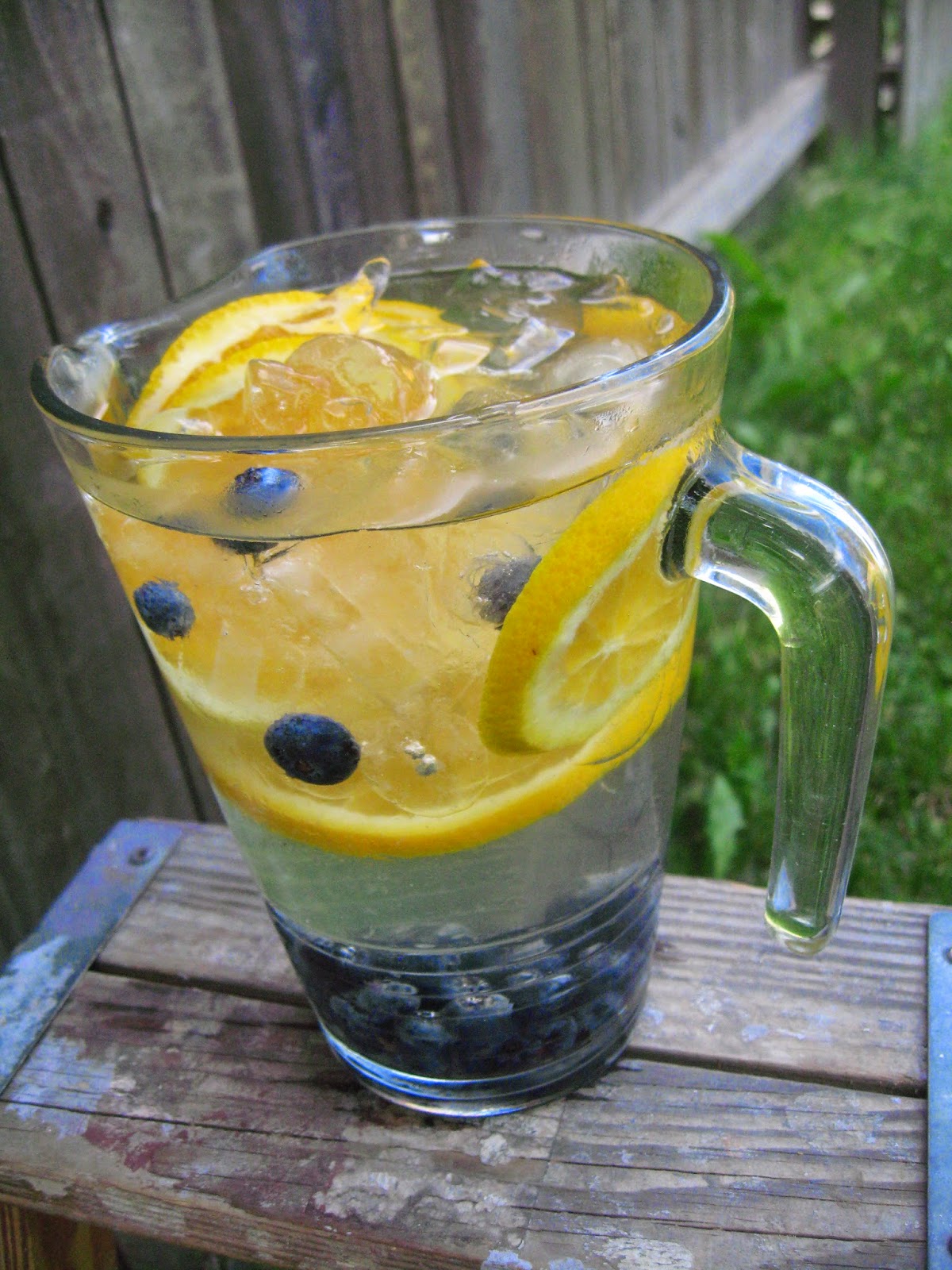
Infusing your water with fruits, herbs, or veggies not only adds flavor to the water, but also adds essential vitamins and nutrients that help your body.  It is a great way to quench your thirst and keep you hydrated on a hot, late summer day. They can be helpful for getting children to increase their daily water intake. And they are pretty, too. 

Making your own is more cost friendly and healthier than purchased waters. So join in making some feast day themed waters with a hint of summer flavors for our August saints. 

Making infused water is very simple. Just add desired fruit, veggie, or herb or combination to a pitcher of water with ice. Muddle mixture a bit if you want to increase flavor and let steep for at least several hours, up to 24, depending on how strong you want the flavors.  For some mixtures you can pour directly from pitcher, for others you may want to strain ingredients first to remove small floaters. As long as you keep the water refrigerated, the fruit should stay fresh. And you can keep refilling the pitcher as you drink the water but, it will dilute the flavor each time you refill.  It should last several days before you need to remake with fresh fruit.

One way to make infused water is with a single ingredient. Citrus is a great, no lose option for adding a touch of flavor to water, so it can be a good one to start with.

St. Dominic – Orange

In her recent post for Catholic Culture, Jenn Miller alerted me to the connection of St. Dominic (August 8) to the orange. So orange infused water would be perfect for his feast day.  


You can also make infused waters that combine a variety of fruits, veggies or herbs.

St. Maximilian Kolbe – Coconut Strawberry or Blueberry Orange

Infused waters are simple, no frills refreshers and considering that St. Maximilian Kolbe (August 14) died in a concentration camp it is a simple, non-extravagant treat for an austere remembrance. St. Maximilian had a vision of Mary – she offered him two crowns – red for martyrdom and white for purity and asked which one he would accept.  He chose both. Making a coconut strawberry infusion represents the colors of the two crowns that he was shown and accepted.


Blueberry orange infused water incorporates blue for his Marian devotion and formation of the Militia of the Immaculata movement of Marian consecration. Orange trees and their blossoms are symbolic of purity, chastity and generosity so the addition of oranges for St. Maximilian represents three strong characteristics of this saint who gave his life to take the place of another prisoner.


Assumption – Blueberry Lemon

As mentioned since blue is a universal color associated with Mary, the blueberry is a great fruit to use on Marian feasts. The lemon is a symbol of fidelity in love, and, as such, is often associated with the Virgin Mary in art. A lemon blueberry infused water would be a refreshing addition to this Marian solemnity.

Saint Rose - Raspberry, Rose, & Vanilla

The rose is closely associated as a symbol for St. Rose of Lima (August 23) but could be used, too, for St. Clare (August 11) as she has a rose story. The vanilla bean and raspberries of this recipe don't necessarily represent anything about the saints but were a infused water combination I found with rose that sounds delicious.


Pin It

Thursday, June 26, 2014

Sacred and Immaculate Heart Fruit and Veggie Platters

 
+Happy Feast of the Sacred Heart of Jesus, followed by the Feast of the Immaculate Heart of Mary+
 
I think these 2 Feast Days are my favorite during Ordinary Time.  Hence, the many ways I enjoy making them special.  Last year I made fruit pizzas for my family and friends but this year I came up with an even healthier alternative! 
 
It's always so much fun to contribute here at Catholic Cuisine. (Thank you, Jessica!)  I hope you will find these easy fruit and veggie platters a nice addition to your family or parish celebration.
 
Sacred Heart Veggie Platter
Ingredients:
Baby carrots
Cherry/grape tomatoes
Red bell pepper
Pretzel sticks
 
Simply line your platter with baby carrots to make the shape of a heart.  Next, I added the pretzel (thorns) and filled in with cherry and grape tomatoes.  The red bell peppers made a great flame for the top and more pretzel sticks for the cross.
 
Looking for platter ideas?  I purchased these two 18" clear Sturdiware platters from a local party store a few years ago.  They were only a few dollars a piece!  They are at the top of my list of favorite, frugal, kitchen purchases...I use them constantly for a variety of entertainment occasions.
 
Immaculate Heart Fruit Platter
Ingredients:
Watermelon
Mini Marshmallows
Red apple
There's a post on Pinterest from Women Living Well about how to cut a watermelon.  This is extremely helpful! 
Clump your watermelon together to make the shape of a heart.  Then, add marshmallows to make the string of white flowers and place the sliced red apple on top for the flame.
 Enjoy!
 
"Love overcomes, love delights, those who love the Sacred Heart rejoice." ~St. Bernadette Soubirous
 
"If you put all the love of all the mothers into one heart, it still would not equal the love of the heart of Mary for her children."~St. Louis de Montfort

Pin It

Thursday, December 6, 2012

Strawberry Santas

Happy Feast of St. Nicholas!  I was excited to receive this submission from HI Cookery earlier this evening,  since I had hoped to make these cute little treats, but wasn't able to find decent Strawberries in our area.  Aren't they darling!  You could easily pipe a cross on the hat/miter or in place of the buttons.  You can also use a slice of banana in place of the whip cream for the head/face! 


December 6: Feast Day of St. Nicholas

Make Strawberry Santas

for the Feast of St. Nick!

They’re healthy and cute

and can be made quick!

Strawberry Santas are a great last-minute idea for a seasonal snack and creative Christmas cuisine. Our friend Lisa L. had sent us an Internet image this past weekend suggesting we try these tiny treats. And then while at Whole Foods Market the other day, we even saw them being sold in the gourmet dessert display case! We just couldn’t resist preparing our own Strawberry Santas at home for a ho-ho-ho-holiday blog post and for a fast, fun and festive food on the Feast Day of St. Nicholas.

Recipe

Ingredients
  • Strawberries
  • Whipped cream (we recommend Cool Whip brand frosting)
  • Mini chocolate chips, black sesame seeds, poppy seeds, chocolate or black tube frosting or dark nonpareils (for the eyes)
  • Red pearl nonpareils (we used a round 4 millimeter nonpareil) (for the nose)

Directions

Wash and dry the strawberries. Slice the leaves off and let the strawberry sit on the flat end. Slice a bit off the pointy end of the strawberry.


Fill a pastry or plastic bag with whipped cream. Use a star tip to form the head/face. Top with the strawberry piece for the hat. Use a small round tip to pipe the buttons and a little ball on top.


Finish the face with eyes by putting in two mini chocolate chips. Add the red pearl nonpareil nose. Arrange on a serving platter and chill in the refrigerator until ready to serve.


Notes
  • Regular whipped cream is soft and can melt easily so we recommend a stronger and more stabilized whipped cream product, like the new Cool Whip Frosting, or even sweetened whipped cream cheese.
  • Strawberry Santas can be prepared as pops by putting a stick in the bottom of the fruit. Or they can sit atop cupcakes or cookies as a base.
  • Santa hats can be made out of strawberries, too. Simply slice the leaves off and pipe whipped cream around the bottom and a ball on the top tip.

Pin It

Thursday, November 8, 2012

Thanksgiving Turkey Fruit & Veggie Platters

First of all, thank you to everyone that participated in this year's Saint-O-Lantern Link up!  If anyone missed adding their link, or didn't have enough time, let me know and I can open it up for a few more days.

With Thanksgiving coming up in a couple weeks I thought I would share a fun veggie platter that I made with my kids last year, along with an Caramel Apple fruit platter (inspired by a pin on Pinterest, I couldn't find the original link) from this afternoon.   They were both very easy to make and the kids loved them!  They were gobbled right up!  ;)


Turkey Veggie Platter

Ingredients:
  • Leaf Lettuce
  • Cucumber, sliced
  • Red, Yellow and Green Bell Pepper
  • Baby Carrots
  • 2 Black Beans (or Black Olives)
  • 1/3 of Celery Stalk
  • Toothpicks

Directions:

Slice the bell peppers crosswise and then cut each circle in half.  Set aside the bottom part of the green pepper and 1/2" piece off of both the red and yellow peppers to use for the face.  Slice the remaining peppers to use for the body.

Cover a platter with lettuce leaves.   Start with making the turkey's feathers by forming a circle with the cumber slices at the bottom of the platter, followed by semi-circles of the yellow, green and red peppers.   Place the baby carrots vertically above the last row of peppers.

Break two toothpicks in half. Put two of the toothpicks where the eyes will go. Push the black beans onto the toothpick making sure that the toothpick doesn't go all the way through. Cut a triangle out of the leftover bottom from the yellow pepper. Attach with a toothpick below the eyes. Attach the reserved red pepper piece to the left of the yellow pepper "beak".

Cut the piece of celery in half lengthwise. On each piece, carefully slice lengthwise from the end of the celery piece to almost the center. Do this twice on each piece. Place the celery in ice water and place in the refrigerator until the ends curl. (I didn't have time to do this step.) When curled, nestle the un-curled end under the cucumbers.

Serve with hummus or other dip of choice.


Caramel Apple Turkey 

Ingredients:
  • 4 Apples (Red and Green)
  • Caramel Sauce
  • 1 Candy Corn
  • 2 Chocolate Chips

Directions:

Pour Caramel Apple Sauce into round serving dish, top with candy corn (beak) and chocolate chips (eyes) and place on platter.   Cut apples into wedges.  Cut one wedge in half to use as feet and arrange the remaining apple wedges in a semi circle. 


Thank you, Father, for having created us and given us to each other in the human family. Thank you for being with us in all our joys and sorrows, for your comfort in our sadness, your companionship in our loneliness. Thank you for yesterday, today, tomorrow and for the whole of our lives. Thank you for friends, for health and for grace. May we live this and every day conscious of all that has been given to us.  ~  From The Catholic Prayer Book, compiled by Msgr. Michael Buckley

Pin It

Thursday, July 26, 2012

St. Anne's Day Dessert Fruit Pizza


Through the ages she {St. Anne} has been depicted wearing a green mantle and a red dress, colors symbolic of immortality and divine love.  Rev. Edgar Schmiedler in "Your Home: A Church in Miniature" mentions the custom in Louisiana of children of French extraction named Anne wearing red and green ribbons in her honor. These are colors to bear in mind for party decorations on her feast. There is no need to look "Christmasy" by using equal amounts; rather, use cool green for the main color scheme with accents of red. ~ My Nameday - Come for Dessert

This year, in honor of today's feast of St. Anne, we my oldest daughter made a Dessert Fruit Pizza covered with "Red and Green Fruit Ribbons" to celebrate, just like Lisa made last year!  Here's our recipe, adapted from Pampered Chef:

Dessert Fruit Pizza

Ingredients:

  • 1 package (18 ounces) refrigerated sugar cookie dough
  • 1 package (8 ounces) cream cheese softened
  • 1/3 cup sugar
  • 4 cups assorted red and green fresh fruit such as strawberries, raspberries, kiwi, green grapes, etc

Directions:

Preheat oven to 350° F. Place dough on round baking stone and cook 18-20 minutes until golden brown. Remove from oven and cool. For topping, combine cream cheese and sugar and spread over cookie dough, then start placing on the fruit.


Family Prayer on the Feast of St. Anne:

Father: We all rejoice in the Lord, 
As we keep holiday in honor of blessed Anne, 
Of her whose feast fills angels with joy, 
And sets them praising the Son of God. 
All: Amen. 

Father: Spotless Anna, Juda's glory, 
Through the Church from East to West 
Every tongue proclaims thy praises, 
Holy Mary's mother blessed. 
All: From thy stem in beauty budded 
Ancient Jesse's mystic rod; 
Birth from thee received the Mother 
Of the almighty Son of God 

Father: Let us pray. O God, You were pleased to bestow Your grace upon Anne so that she might fitly become the mother of her who was to bear Your only-begotten Son; grant that we who keep her feast will be helped by her protection. Through Christ, our Lord. 
All: Amen. Christ conquers, Christ reigns!


Sts. Joachim and Anne, Pray for Us! 
Pin It