Showing posts with label Assumption. Show all posts

Tuesday, August 14, 2018

Assumption Day and First Fruits


August 15, the feast of the Assumption, is a harvest feast day and associated with "first fruits". We are reminded that Mary goes before us in Faith and also as a first fruit of the Resurrection, of which all the faithful will experience at the end of time (1 Corinthians 15:20-21). In many Catholic counties Assumption Day marks the period for invoking blessings on various "fruits" or fruiting plants - - particularly vineyards/grapes, fruit trees, grains, and herbs.

One idea is to serve "First Fruits" shortcake and topped with whipped cream - symbolizing the clouds of the sky in scenes depicting Mary being raised into heaven. You can use a variety of fruits on packaged shortcake cups.

A very simple idea along the same lines is a fresh fruit tray with whipped cream for dipping.


Grapes are especially associated with the feast of the Assumption. Armenian communities all over the world bless grapes on Assumption Day. Great trays are piled high with ripe grapes and carried to church, where they receive the blessings of the priest. Since grapes so often have this prominence in Assumption feasting we will often have this refreshing grape enhanced salad on this feast day.


Silverglade Spinach Salad
Ingredients:
6 cups spinach, rinsed and stemmed
6 ounces cheese, shredded or cut into julienne strips (Cheddar or Jack or combo)
2 cups seedless grapes, halved
Dressing:
1/4 cup cider vinegar
1/2 cup oil
2 teaspoons Dijon mustard
2 teaspoons brown sugar
4 slices bacon, fried crisp, drained, & crumbled
2 green onions, sliced thin

Directions:
To prepare dressing, whisk together vinegar, oil. mustard, and brown sugar. Stir in bacon pieces and onion. Refrigerate. In a large bowl combine spinach, cheeses, and grapes. Toss with dressing. 

O Clement, O Loving, O Sweet Virgin Mary, Pray for us. 
Pin It

Sunday, August 14, 2016

Honoring Our Lady with Star of the Sea Appetizers

"As sailors are guided by a star to the port, so Christians are guided to heaven by Mary."
--St. Thomas Aquinas

As mentioned before, Our Lady is known by many star titles - - Star of the Sea (Stella Maris) and Morning Star (Stella Matutina) being the most prominent. The star as a symbol of Mary is rich in meaning. Johnette Benkovic, on her Women of Grace blog mentions how the star is used to symbolize several characteristics of Mary: “her privileges, in particular her mission as Mother of the Redeemer or her holiness; her anticipatory role (forerunner, announcer) with regard to Christ; and her role as luminous and enlightening.”

The star image could be tied to any Marian feast day, but there is a very strong connection to the Assumption and the Star of the Sea title. In many places traditions associated with the sea are part of this celebration - like the blessing of fleets, blessing of the bounty of the sea, and wedding of the sea ceremony.

These appetizers combine the star shape and the products of the sea to recall Mary under this title – Our Lady, Star of the Sea.  I used Valley Lahvosh Baking Co. star shaped crackers though there are other star shaped crackers that could be used. 


I spread a smear of softened cream cheese in middle and added a lemony shrimp scampi on top. The lemon is a symbol of fidelity in love so is often associated with the Virgin Mary in Christian art.  This is the recipe I used for the Lemony Shrimp Scampi (from Pampered Chef) though I used medium shrimp and halved the other ingredients.


Another simple and last minute option would be to just pick up a prepared seafood spread or dip (like crab) and use that with the star shaped crackers.  


O God, you have willed that Mary should shine forth as the Star of the Sea and protectress for us who are tossed about on the stormy waves.

Grant that through her help and direction, we may be safe from dangers of soul and body, reaching the port of eternal happiness. We ask this through Christ our Lord. Amen.


Pin It

Saturday, August 13, 2016

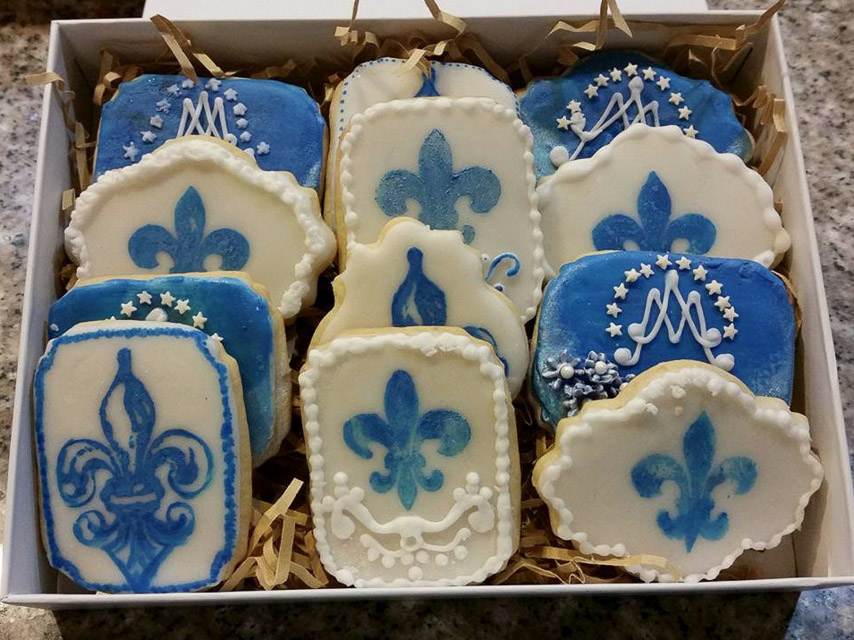
Assumption Cookies

These beautiful cookies, in honor of the Feast of the Assumption of the Blessed Virgin Mary into Heaven celebrated on August 15th, were submitted by LaDawn Wilson who shares, "I homeschooled six children for over twenty years. I now have three grandchildren I can bake for each week. I enjoy revolving most of my creativity around feast days and the children's birthdays." Thank you, LaDawn! 


Assumption Cookies

"The cookies are a basic sugar cookie recipe but I added lemon emulsion and poppy seeds.
I used two stamps for the fleur de lis. I like to paint directly on the stamp using AmeriColor Gels and then stamp the cookie on completely dried white glaze. Royal icing is used for the white borders and Ave Maria symbol. The tiny flowers are made from fondant."


Pin It

Tuesday, August 9, 2016

Sopa Estrella - Soup with Star Shaped Pasta


There are several small star shaped pastas in the variety referred to as stelline (Italian for "little stars"). It is sometimes simply packaged as pastina which is a the generic variety of of tiny pieces of pasta available in a variety of shapes. Pastina is the smallest type of pasta produced.  These pasta are common for broth based or thin soups.

August has several feast days where this tiny star shaped pasta, stelline, could be used as a symbolic reminder of a saint in a recipe.

St. Dominic (August 8) - On Monday we celebrated the feast of St. Dominic de Guzman. St. Dominic, the Spanish priest and the founder of the Dominican Order received the rosary from Our Lady and the child Jesus. It is said when St. Dominic was a baby his godmother saw a star on his forehead during the baptism, so a common attribute is a star either on the forehead or above his head.

St. Lawrence (August 10) - Wednesday is the feast of St. Lawrence, deacon and martyr. Due to the timing of his feast in mid-August at the peak of the Perseid meteor shower, that annual asteroid showing is often called the "tears of St. Lawrence." So a "shower" of stars in some dish would remember this tie to St. Lawrence.

Assumption (August 15) - Our Lady is known by many star titles - - Star of the Sea (Stella Maris) and Morning Star (Stella Matutina) being the most prominent. Other titles or images include Star of the New Evangelization, Madonna della Stella, Star of Jacob, Fixed Star.  The star image could be tied to any Marian feast day, but there is a very strong connection to this feast and the Star of the Sea title. In many places traditions associated with the sea are part of this celebration - like the blessing of fleets, blessing of the bounty of the sea, and wedding of the sea.

Our Lady of Guadalupe (December 12) - In the image on St. Juan Diego's tilma we see Our Lady clothed in a mantle of blue with 46 stars.

Epiphany (January 6) - And of course we associate a star with the visit of the wise men who followed the Star of Bethlehem to the infant Jesus.

Our Lady of Pontmain (January 17) - Our Lady of Hope appeared to several children at Pontmain, France. They described her as surrounded by stars. "Oh, there are so many stars the Blessed Virgin will soon be gilt all over.”  Images of her under this title show he clothed in a blue mantle gilded with golden stars.


St. Thomas Aquinas (January 28) and St. Nicholas of Tolentino (September 10) both are shown with a sun/starburst on their chest in many depictions.

St. John Nepomucene (May 16), Bohemian priest and martyr for the seal of the confessional, is often shown with five stars over his head (because, on the night of his murder, five stars were seen over the spot where he was drowned).

This week for the feast of St. Dominic I modified a typical Spanish tomato broth sopa, using stelline pasta instead of the typical fideo to celebrate the Spanish Dominic de Guzman.

Sopa Estrella


1 (8 ounce) can tomato sauce
1 large clove garlic, minced
2 tablespoons olive oil
3/4 cup stelline pasta, uncooked
3 cups chicken broth
salt and pepper to taste

Saute garlic in olive oil. Add chicken broth and tomato sauce. Bring to boil. Add dry pasta and simmer until pasta is tender. Add more liquid if desired for thinner consistency. Add salt and pepper. 


Pin It

Saturday, August 15, 2015

Heavenly Cloud Cookies

Sacred Art Series Rosary Flip Book and Trader Joe's Vanilla Meringues

I picked up a box of Vanilla Meringues  - "Heavenly Cloud Cookies" -  from our local Trader Joe's to serve as a little treat following our family rosary. 

Additional ideas and recipes can be found in the archives

Happy Solemnity of the Assumption of the Blessed Virgin Mary! 

Pin It

Thursday, August 14, 2014

Infused Water - Refreshing Drink for Summer Feasts


Infusing your water with fruits, herbs, or veggies not only adds flavor to the water, but also adds essential vitamins and nutrients that help your body.  It is a great way to quench your thirst and keep you hydrated on a hot, late summer day. They can be helpful for getting children to increase their daily water intake. And they are pretty, too. 

Making your own is more cost friendly and healthier than purchased waters. So join in making some feast day themed waters with a hint of summer flavors for our August saints. 

Making infused water is very simple. Just add desired fruit, veggie, or herb or combination to a pitcher of water with ice. Muddle mixture a bit if you want to increase flavor and let steep for at least several hours, up to 24, depending on how strong you want the flavors.  For some mixtures you can pour directly from pitcher, for others you may want to strain ingredients first to remove small floaters. As long as you keep the water refrigerated, the fruit should stay fresh. And you can keep refilling the pitcher as you drink the water but, it will dilute the flavor each time you refill.  It should last several days before you need to remake with fresh fruit.

One way to make infused water is with a single ingredient. Citrus is a great, no lose option for adding a touch of flavor to water, so it can be a good one to start with.

St. Dominic – Orange

In her recent post for Catholic Culture, Jenn Miller alerted me to the connection of St. Dominic (August 8) to the orange. So orange infused water would be perfect for his feast day.  


You can also make infused waters that combine a variety of fruits, veggies or herbs.

St. Maximilian Kolbe – Coconut Strawberry or Blueberry Orange

Infused waters are simple, no frills refreshers and considering that St. Maximilian Kolbe (August 14) died in a concentration camp it is a simple, non-extravagant treat for an austere remembrance. St. Maximilian had a vision of Mary – she offered him two crowns – red for martyrdom and white for purity and asked which one he would accept.  He chose both. Making a coconut strawberry infusion represents the colors of the two crowns that he was shown and accepted.


Blueberry orange infused water incorporates blue for his Marian devotion and formation of the Militia of the Immaculata movement of Marian consecration. Orange trees and their blossoms are symbolic of purity, chastity and generosity so the addition of oranges for St. Maximilian represents three strong characteristics of this saint who gave his life to take the place of another prisoner.


Assumption – Blueberry Lemon

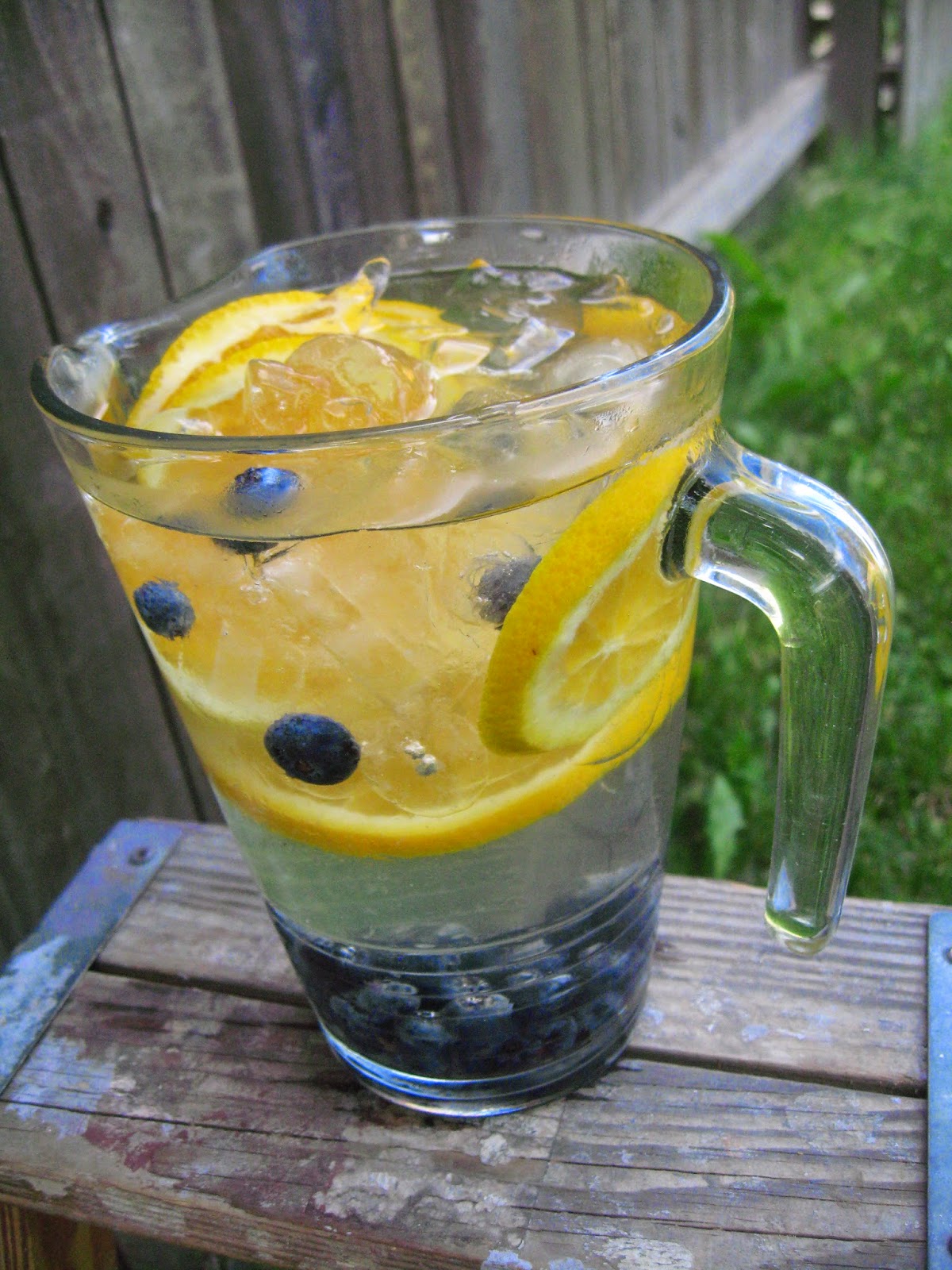
As mentioned since blue is a universal color associated with Mary, the blueberry is a great fruit to use on Marian feasts. The lemon is a symbol of fidelity in love, and, as such, is often associated with the Virgin Mary in art. A lemon blueberry infused water would be a refreshing addition to this Marian solemnity.

Saint Rose - Raspberry, Rose, & Vanilla

The rose is closely associated as a symbol for St. Rose of Lima (August 23) but could be used, too, for St. Clare (August 11) as she has a rose story. The vanilla bean and raspberries of this recipe don't necessarily represent anything about the saints but were a infused water combination I found with rose that sounds delicious.


Pin It

Friday, September 27, 2013

Our Lady Undoer of Knots

Mary Undoer of Knots (also Untier of Knots) is a title of Mary derived from a 1700 painting by Johann Schmittdner. The image, called Maria Knotenlöserin in German, is located in St Peter am Perlach church in Augsburg, Germany.  Earliest reference to Mary using the image of untying knots is in an ancient text of St. Ireneus in the late 2nd century. He wrote "the knot of Eve's disobedience was loosed by Mary's obedience."  "For what the virgin Eve had bound fast through unbelief, this did the virgin Mary set free through faith." (Adversus haereses, 3, 22). This is one of the earliest examples of describing Mary as the New Eve. We see here the beginnings of the devotion to Our Lady, Untier of Knots. 

The painting depicting Our Lady untying the knots of a white wedding ribbon was commissioned around 1700 by Fr. Hieronymus Ambrosius Langenmantel in thanksgiving for her intervention in his family. The history and story of that intervention can be found her at the website of the International Fraternity of the Virgin Mary Untier of Knots.

In the lower portion of the painting, Wolfgang Langenmantel can be seen being guided by the Archangel St. Raphael in his journey to resolve the crisis in his marriage. The advocation of Mary, Untier of Knots, has become widespread and efficacious particularly in the resolution of marital and family conflicts. 

Pope Francis has a special devotion to this image and is responsible for bringing it to Argentina and other parts of South America where it is highly regarded. Because of this we are seeing more and more about Our Lady under this title and understanding her intercession in struggles of family life and marriage.  It is a beautiful image. Since it is an image that may be new to many this it would be a great year to spend some time focusing on learning more about it and introducing your family to the devotion. 

The feast days listed for this title of Mary are of course August 15 and December 8 which cover her under many different titles. September 28 is also listed as a day to commemorate her under this title - sources indicate that is the date of the intervention in the Langenmantel  family. It also seems symbolic that there is a connection to St. Raphael and the archangels whose feast is the day following. With St. Raphael being pictured and the image associated with healing of marriage struggles it is that Raphael/marriage connection.

The visual of a knots being untied is so sensory and physical.  There are many great menu or treat ideas that you could easily incorporate into your day.

Bread Knots come to mind as very fitting and easy to do. Whether you make them from scratch or use a prepared refrigerator dough. The two classics are garlic knots and cinnamon knots. Cinnamon knots would be a fun option for a breakfast or brunch while the garlic knots seem more suited to lunch or dinner.


String Cheese Knots is a fun snack idea that can easily be achieved by using the longer skinny cheese sticks or taking some "strings" from a packaged cheese stick and tying it in a knot. 


Licorice Knots are another sting-like food that can be tied in a knot, and untied too, making it a fun and interactive treat for the day. The thin string licorice works well but the thicker is fine too. There are even blue flavors available that make this even more fitting as a remembrance of our lady in blue. 

Pretzels or pretzel styled snacks are an easy and ready made "knot" to pull out to remember Our Lady today. 

The prayer to Our Lady Undoer of Knots, written by our Holy Father Pope Francis, when he was a bishop in Argentina. 

Holy Mary, full of God's presence during the days of your life,
you accepted with full humility the Father's will,
and the Devil was never capable to tie you around with his confusion
Once with your son you interceded for our difficulties,
and, full of kindness and patience you gave us example of how to untie the knots of our life.
And by remaining forever Our Mother,
you put in order, and make more clear the ties that link us to the Lord.
Holy Mother, Mother of God, and our Mother,
to you, who untie with motherly heart the knots of our life, we pray to you to receive in your hands (the name of person),
and to free him/her of the knots and confusion with which our enemy attacks.
Through your grace, your intercession, and your example,
deliver us from all evil, Our Lady, and untie the knots that prevent us from being united with God,
so that we, free from sin and error, may find Him in all things, may have our hearts placed in Him, and may serve Him always in our brothers and sisters. Amen

Pin It

Monday, August 12, 2013

Heavenly Assumption Parfaits


The Solemnity of the Assumption, which is a Holy Day of Obligation, is coming up on August 15th!  These Assumption Parfaits, adapted from Yummy Finds, would make a simple and fun treat to celebrate the feast! 


To make these all you need is a box of Berry Blue Jello, Cool Whip, and Glasses. 


Prepare the Berry Blue Jello according to the directions on the package. 


 Layer spoonfuls of Berry Blue Jello and Cool Whip in narrow glasses to create the sky and clouds!


Be sure to alternate where you place the cool whip “clouds” so that you get a nice staggered effect.


Enjoy! 


"We pronounce, declare and define it to be a divinely revealed dogma: that the Immaculate Mother of God, the ever Virgin Mary, having completed the course of her earthly life, was assumed body and soul into heavenly glory." ~ Pope Pius XII 

Pin It

Saturday, August 13, 2011

Assumption Cupcakes

These beautiful "Assumption Cupcakes" were made in honor of the upcoming feast of the Assumption, and submitted by a new Catholic in upstate New York, Lisanne Jensen.  Thank you for sharing Lisanne, and welcome to the Church!


You can find additional recipes and ideas for the feast of the Assumption in the archives!

Pin It

Thursday, March 24, 2011

Baked Blueberry & Pecan Crusted French Toast


The wonderful recipe that Tiffany shared yesterday, for Annunciation Blueberry Coffee Cake, reminded me of the delicious Baked Blueberry & Pecan Crusted French Toast that I served my family last year on Easter Sunday.   It worked out nicely since I was able to make it the night before and just pop it in the oven after Mass.  It would be a great breakfast for any of the feasts of Our Lady, the color blue (blueberries in this recipe) symbolizes Mary.   

Baked Blueberry & Pecan Crusted French Toast
Adapted from All Recipes

Ingredients:

12 slices of day-old French bread
5 eggs
2 1/2 cups milk
1 cup packed brown sugar, divided
1 teaspoon vanilla extract
1/2 teaspoon ground nutmeg
1/2 teaspoon cinnamon
1 cup chopped pecans
1/4 cup butter or margarine, melted
2 cups fresh or frozen blueberries

Directions:

Arrange bread in a greased 13-in. x 9-in. x 2-in. baking dish. In a bowl, combine the eggs, milk, 3/4 cup brown sugar, vanilla and nutmeg; pour over bread. Cover and refrigerate for 8 hours or overnight.

Remove from the refrigerator 30 minutes before baking.   (To make sure that the bottom didn't end up too soggy I flipped the bread over before adding the toppings and baking.) 

Sprinkle pecans over egg mixture. Combine butter and remaining sugar; drizzle over the top. Bake, uncovered, at 400 degrees F for 25 minutes. Sprinkle with blueberries. Bake 10 minutes longer or until a knife inserted near the center comes out clean. Pin It

Wednesday, August 12, 2009

Blueberry-Strawberry Cobbler in Honor of Our Lady

With the Solemnity Feast of the Assumption of the Blessed Virgin Mary coming up on August 15th, I thought I would share a delicious Blueberry-Strawberry Cobbler we recently made with some leftover berries.

Serving blueberries is an easy way to tie in any of Our Lady's feast days since the color blue is symbolic of her mantle.

The cobbler was very easy to make and turned out absolutely delicious.


Blueberry-Strawberry Cobbler 
  • 1/3 cup Butter
  • 1 1/2 cups Flour
  • 1 1/2 cups Granulated Sugar
  • 1 1/2 cups Milk
  • 2 teaspoons Baking Powder
  • 1/2 teaspoon Cinnamon
  • 1/2 teaspoon Salt
  • 4 cups of Blueberries
  • 2 cups of Strawberries, sliced
  • 1/2 cup Pecans, coarsely chopped
  • 1/3 cup Brown Sugar
Preheat oven to 375°F (190°C). Place butter in a 9×13″ baking pan and melt in preheating oven, but remember to keep an eye on it. Remove from oven when butter is melted.

In the meantime, combine flour, granulated sugar, milk, baking powder, cinnamon and salt in a large mixing bowl.  Whisk together until a thin batter forms and all the lumps are gone.


Pour the batter into the pan, over the melted butter.  Do not stir.  (The butter will ooze up around the batter and may pool on the top, which is ok.) 
Sprinkle berries evenly over batter.


Sprinkle with pecans and brown sugar.


Bake for 45-60 minutes or until it tests done. The top will be a beautiful golden color.


Serve warm with vanilla ice cream or whipped cream (a big "cloud" for the Assumption) and Enjoy!

Be sure to check the archives for even more ideas for celebrating the Assumption.  I also posted a few other ideas here . 


Queen Assumed into Heaven,
 Pray for Us!

Pin It

Friday, August 15, 2008

Assumption Rolls


We wanted to celebrate Our Lady's feast day today, so I got creative with my raisin bread recipe. I make this recipe often (tripling it for our family of 10), but today I did a little something different. I just made little balls of dough, rolled them in melted butter and then in a sugar/cinnamon mixture. I put them side by side in my Pampered Chef muffin pan (I love PC!), and after rising a bit, baked them up. I told the kiddos that the bread is rising, just like Mary did today. It is sweet, just like the love between Jesus and Mary and the two pieces joined together are just like them going up into heaven, when Jesus came to get His mother and take her to be in heaven with Him, body and soul.


Raisin Bread: makes 2 loaves or 12 muffins and 1 loaf

1 pkg. active dry yeast
1 1/2 cups warm water
5 1/2 cups all purpose flour
1 tsp. salt
1/3 c. sugar
3 Tbsp. butter or margarine - softened
1 tsp. ground cinnamon
1/2 cup raisins

In a small bowl, sprinkle yeast over 1/2 cup of the water. Stir and set aside to soften, about 5 minutes. In a large bowl, combine 5 cups of flour, salt, cinnamon, and sugar. Add the yeast mixture, remaining 1 c. of water, and the butter. Stir until all ingredients are moistened. Knead the dough in the bowl until it forms a ball. Sprinkle work surface with 1/2 c. flour. Turn the dough onto the board and knead until it becomes smooth and elastic, 3 - 5 minutes. Gently knead the raisins into the dough. Lightly oil a large bowl. Shape the dough into a ball and place it in the bowl, turning to bring the oiled side up. Cover with a clean cloth, and let the dough rise in a warm place until it is double in size - about 45 minutes. Form into loaves (or make the muffins, as described above), place into greased pans, and let rise again for 45 minutes. Bake in preheated oven at 350 for 50 - 60 minutes (30 minutes for the muffins).


Pin It

Feasting for the Assumption

August 15 marks the Solemnity of the Assumption of Our Lady into heaven, a holyday of obligation. In the Eastern churches it is called the Dormition, or sleeping of our Lady.

I had lots of ideas for this day, but my planning time was usurped by family matters and upcoming events. I don't have pictures to share for these recipes, but you can use your imagination.

The most notable tradition on this day is the Blessing of Fruits and Herbs, although in some areas the blessing includes wheat and specifically, grapes. This is a first-fruits feast, a feast reminding us of the Old Testament offering to God the best of their beginning of the harvest.

The Directory on Popular Piety explains the significance of this feast and the custom of blessing herbs:

In the Germanic countries, the custom of blessing herbs is associated with 15 August. This custom, received into the Rituale Romanum, represents a clear example of the genuine evangelization of pre-Christian rites and beliefs: one must turn to God, through whose word "the earth produced vegetation: plants bearing seeds in their several kinds, and trees bearing fruit with their seed inside in their several kinds" (Gen 1, 12) in order to obtain what was formerly obtained by magic rites; to stem the damages deriving from poisonous herbs, and benefit from the efficacy of curative herbs.
This ancient use came to be associated with the Blessed Virgin Mary, in part because of the biblical images applied to her such as vine, lavender, cypress and lily, partly from seeing her in terms of a sweet smelling flower because of her virtue, and most of all because of Isaiah 11, 1, and his reference to the "shoot springing from the side of Jesse", which would bear the blessed fruit of Jesus.
So for this feast, I'm incorporating fruits and herbs in my dishes. I like to make this Assumpta Salad with our fresh tomatoes, technically a fruit, with lots of herbs. This recipe is by Brother Victor-Antoine d'Avila-Latourrette from his Twelve Months of Monastery Salads. I love this cookbook, particularly in the summer.
Assumpta Salad

"This enticing salad is always served as an appetizer. It is one of our favorites for the feast of Our Lady, and we especially like it on the Feast of the Assumption on August 15, when garden tomatoes are at their best."

Salad
8 medium-size ripe tomatoes, sliced
1 red onion, finely chopped
1 cup pitted black olives, drained
1/3 cup chopped fresh basil
1/4 cup chopped fresh oregano
1/4 cup chopped fresh Italian parsley
1 cup cubed feta cheese (I omit because of food allergies)

Vinaigrette
1/2 cup plus 2 Tbsp. extra virgin olive oil
5 Tbsp. red wine vinegar
1 garlic clove, minced
Salt and freshly ground pepper

Whisk the vinaigrette ingredients together until thickened. Let stand for about 1 hour before using to steep the garlic. For the salad, arrange tomato slices on 6 to 8 salad plates. Sprinkle the onion and olives among them. Sprinkle the herbs evenly, then add the cheese cubes in the middle of each dish. Whisk vinaigrette just before serving and drizzle evenly over each plate. Serve immediately.
I love to grow herbs -- they are actually a lazy gardener's (or busy mama's dream), as they are so low maintenance. I am going to make a bouquet of some of our herbs (and flowers) and have a family blessing, and then incorporate some of our harvest of fruits and herbs into food and crafts.

One plant we have and enjoy is lavender, known as Mary's Drying Plant (rosemary has a similar title). One doesn't normally think of eating lavender, but the flower is edible. I thought a sugared lavender flower and lavender cookies would be an easy treat to make.

This recipe can be found in Herbs for Weddings & Other Celebrations by Bertha P. Reppert (first printed as A Bride's Herbal).
Lavender Sticks

12 stalks fresh lavender flowers
1 egg white, beat until frothy
1/2 cup granulated sugar

Cut just the flowers from the stalks. Dip the sprigs in beaten egg white. In a separate bowl then roll or dust on granulated sugar. Air-dry on waxed paper. Makes 1 dozen edible flowers.
I found several versions of Lavender Cookies in cookbooks, including Susan Branch's The Summer Book and the Internet, such as this recipe.

The variances are many, but generally I'm finding either shortbread, sugar, or butter cookie dough as the base for the recipes, then add lavender. Some call for dried flowers, other fresh. I think I would prefer using fresh flowers, rather than crunchier dried ones. For my son I was going to use an allergy free sugar cookie mix for my son and add some fresh lavender flowers. Having the cookies and edible flower bites would make a lovely dessert display, also perfect nibbling food for tea.

Or I may take an even simpler route, make a dessert (with icing) and decorate with flowers and herbs. All in the spirit of honoring Our Lady!

Our Lady assumed into heaven, pray for us! Pin It