Showing posts with label St. Anthony. Show all posts

Wednesday, June 13, 2018

St. Anthony's Sermon to the Fishes Cupcakes


I thought I shared these cupcakes a couple years ago, but it looks like I only posted them over at Shower of Roses along with a few other ideas for the feast of St. Anthony. I'm planning to make them again today for the children to enjoy after we read St. Anthony's Sermon to the Fishes by Abraham a Sancta-Clara, an Augustinian monk who lived from 1607–1680. You can find the poem here

 
These cupcakes are so quick and easy to decorate. I simply used some Fluffy White frosting and created little peaks on the top of each cupcake so the fish and other sea creatures (I used Scandinavian Swimmers from Trader Joe's) could peak out of the whitewater to listen to St. Anthony's Sermon!

They are a great (and artificial dye free) alternative to the "A Multitude of Fish Cupcakes"


St. Anthony of Padua, pray for us! 

Pin It

Tuesday, June 13, 2017

"Hammer of Heretics" Snack


Today we celebrate the feast day of St. Anthony of Padua, most frequently called upon as intercessor of all things lost. But the great preacher, St. Anthony was also known as the "Hammer of Heretics" for his exemplary teaching of the truths of the faith among the heretics of his day. He traveled throughout northern Italy and southern France combating abuses in the Church and bringing people back to the faith through his diligent preaching.


While it is short notice (and I apologize for that), I do love a simple way to celebrate the feast day. This simple, but "hard-hitting" snack takes just a few seconds to make - and is easy for the kids to do themselves. And hopefully these common ingredients are even on hand. All you need are pretzel sticks and and cheese sticks (any cheese block could be cut into hammer head blocks as well). Slice a cheese stick into 4ths. Gently insert a pretzel stick into the bottom of the cheese piece to form an edible mini-hammer. [Thinly sliced carrot or celery sticks could be cut as a substitute for the pretzel sticks.]

That is it - enjoy.

St. Anthony, holy friar, Hammer of Heretics, Pray for us.
Pin It

Saturday, October 1, 2016

St. Francis of Assisi Tonture Cupcakes

(Tonsure: Latin tondere, "to shear") 

Tonture is the custom of shaving part (or all) of the hair of the head, derived from monastic observance in the fourth and fifth centuries. Shaving the whole head or leaving an outside ring of hair on scalp (representing a crown of thorns) became common for clerics in the sixth and seventh centuries.  Though used by many early religious orders, most associate this hair style with the Franciscans, especially St. Francis.  The idea of cakes and other treats that resembled a ring tonture have been posted here at Catholic Cuisine in the past for St. Francis feast day, October 4.

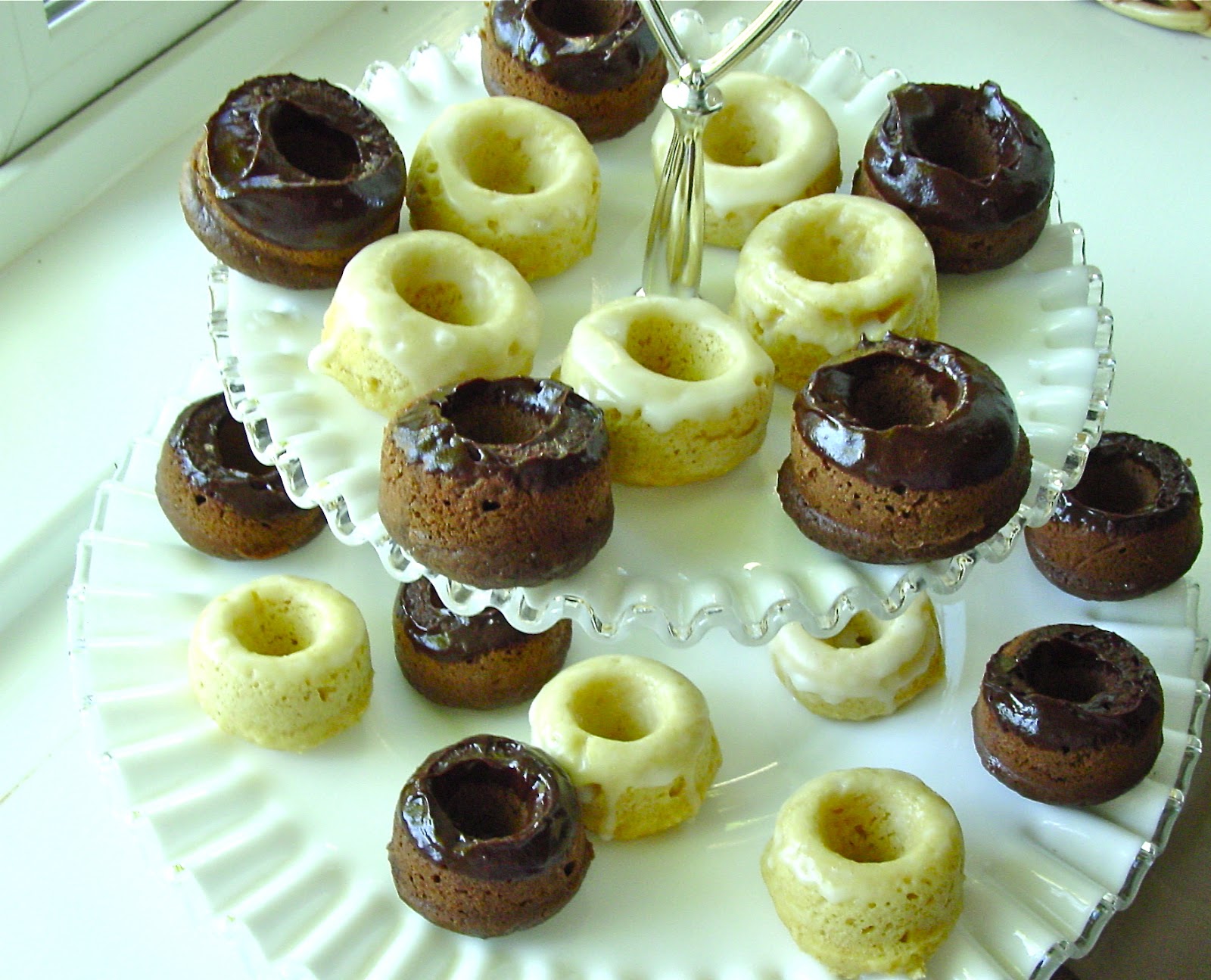
Tiny Tonture Cakes - baked donuts
Tonture of St. Francis Cake - bundt cake
Another Tonture Cake - Poor Man's Cake

This is another variation idea made with cupcakes and is very easy and quick to pull together. Make cupcakes as directed using a yellow or white cake. Pipe chocolate frosting around outer edge of each cupcake to form a tonture. The raised nature and the ability to make it look curly or wavy add to the appearance as hair and is set apart from the lighter color of the cupcake.

Serve for the feast of St. Francis or one of the other typically tontured saints.

St. Francis of Assisi and all the Franciscan saints, Pray for us!


Pin It

Thursday, July 14, 2016

Campanelle "Little Bells" or Gigli "Lily" Pasta Ideas


Campanelle is a pasta shaped like a cone with a ruffled edge. It is Italian for "bellflowers” or "little bells" due to its shape like a bell or bell-shaped flower. This pasta shape is also referred to as gigli which means lily. Campanelle is intended to be served with heavier sauces or in a casserole.

It is part of tradition in Christian art to use lilies as a symbol of purity when portraying Our Lady or the Saints and even Angels.  The lily is an emblem of purity and chastity. It is the flower the medievals found to best symbolize the purity of Mary, and was admired as a flower of purity since the time of the Ancients. By the 14th century, it became common to find the lily in Annunciation paintings and illuminations, with either St. Gabriel holding it on in a vase between them.

There are numerous saints depicted with a lily or a bell which would be fitting for a campanelle pasta meal idea on feast days.  This week we happen to have a prominent lily associated saint - St. Kateri, the Lily of the Mohawks. But it is a good year round option due to the many saints associated and depicted with lilies or bells, as well as all the Marian feasts.  

St. Anthony the Hermit - January 17
St. Agnes - January 21
St. Agatha - February 5
St. Casimir - March 4
St. Joseph - March 19
Feast of the Annunciation - March 25
St. Agnes of Montepulciano - April 20
St. Catherine of Siena - April 29
St. Anthony of Padua - June 13
St. Aloysius Gonzaga - June 21
St. Maria Goretti - July 6
St. Kateri Tekakwitha - July 14
St. Dominic - August 8
St. Philomena - August 11
St. Gabriel the Archangel - September 29

Pin It

Sunday, June 12, 2016

St. Anthony "Little Tongues" Linguini


In a recent post for St. Mark's feast day I suggested a penne pasta dish for the pasta shape symbolism of quills. As shared then, there are hundreds of kinds of Italian pastas, and each one has its own special name and the names are usually symbolic to the shapes. I am finding it fun to make a connections for creative dish or celebrations for saints and their symbols.

Linguini is a long flat pasta, (thinner and more narrow than fettucine). Linguine means “little tongues” in Italian due to this shape. It is a versatile pasta and often used with a savory seafood sauces.

 In thinking of the significance of the tongue shape for any saints, I thought of several with a tongue association. St. Anthony of Padua, whose feast is June 13 was known as a gifted preacher. When his crypt was opened, they found that the saint’s body had been reduced to dust and bones, but his tongue was intact and life-like. This was taken a sign from God confirming the ardent gifts of preaching and teaching that Saint Anthony had enjoyed on earth. There are also a couple saints who are referred to as "honey-tongued" doctors - St. Ambrose and St. Bernard of Clairvaux.

Pasta is a great option because it is quick to prepare and can be paired with a prepared sauce or simple seasoning and make an easy feast day meal or side. I decided to pair some linguine with pesto for a light side dish. In addition to being delicious pesto contains basil as a main ingredient. There is a custom in Italy of giving pots of basil away on St. Anthony's feast day and so I have come to associate basil with St. Anthony. Including a basil component to the linguine increased that symbolism, but any Italian sauce or flavoring would be appropriate for this beloved saint, who died in Italy. Thinking ahead to the other possible tongue symbol saints, a honey based pasta sauce seems fitting.

So I hope you consider an easy side for St. Anthony's feast day - "little tongue" linguine in remembrance of his eloquent preaching.

St. Anthony of Padua, Pray for us!


Pin It

Monday, October 12, 2015

For Those Sailing Related Saints - Taco Boats


I recently saw this new product from Old El Paso - Mini Soft Tortilla Taco Boats - and immediately thought of the uses for all the saints and feast days associated with boats and sailing (and there are many!).

Today's feast of Our Lady of the Pillar is connected to Christopher Columbus, the holiday also recognized today in the United States.  Under King Ferdinand of Aragon and his wife Queen Isabella, devotion to Nuestra Senora del Pilar (Our Lady of the Pillar) took on national importance in Spain. When Columbus embarked on his journey to find a sailing route to India, he placed the three ships under Mary's patronage. As the weeks dragged on and no land in sight, the sailors grew restless. Columbus' journal indicates he invoked Our Lady under this title, declared that if they did not see land by her feast day they would turn back. On October 12, 1492 the navigators spotted indications of approaching land - one of the islands of the Bahamas - which was named San Salvador when they landed.  Our Lady had interceded.

Today, in commemoration of Our Lady of the Pillar, and of the three ships - the Nina, the Pinta, and the Santa Maria - we enjoyed a dinner of taco ships.  These edible little boats can be filled with a variety of different fillings, made to your liking and specifications. Here they are filled with spiced ground beef, cheese, salsa and sour cream with a tortilla chip sail. Thought a "New World" Hispanic inspired meal with spices (Columbus' travels were intended to make it easy to reach the spices of far east.) would be fun. Made with or without a sail, can be a quick and ready made boat for a variety of saints and feast days.

Some ideas to consider:

  • St. Brendan (May 16)- Called Brendan the Navigator, patron of mariners; it is said he sailed across the Atlantic in 6th century
  • St. Nicholas (December 6) - patron of sailors and ships
  • St. Elmo (Erasmus) (June 2) - patron of sailors, especially against sudden storms and lightening
  • St. Raymond of Pennafort (January 7)- miraculous story of him sailing on cloak across the Balearic Sea after being barred from boarding a ship
  • St. Catherine of Siena (April 29) - often pictured holding a ship (represents the Church)
  • St. Anthony of Padua (June 13) - ended up in Italy because a storm forced a ship he was on in opposite direction and so he did not return to Portugal
  • St. Jude Thaddeus [& Simon] (October 28) - often pictured holding a ship (represents the Church)
  • St. Peter Gonzales (April 15) - sometimes also called St. Elmo, patron of Spanish and Portuguese sailors
  • St. Francis Xavier (December 4) - known for his missionary travels to Asia, often pictured with ship
  • St. Peter (June 29) - the title "Barque (ship) of St. Peter" often used for Catholic Church
  • St. Paul (June 29, February 10) - known for his missionary travels by ship to spread the Gospel, shipwrecked
  • Our Lady of the Rosary (October 7) - Naval battle of Lepanto: Christians victorious against great odds, feast of OL of the Rosary instituted after her intercession
  • St. Frances Cabrini (November 13) - Immigrated to US on ship, story of her dropping violets in paper boats as a child who wished to be a missionary

Past posts with sailing themes: Deviled Egg Boats, Victory Vessel Potatoes, Sts. Peter and Paul Sailing Cupcakes, St. Paul Apple & Cheese Ships


Pin It

Tuesday, October 29, 2013

All Saints Guessing Jars

I just shared this post over at Shower of Roses, but thought I would add it here as well for anyone who is still looking for All Saints' party game ideas!   


A few days ago I happened to run across the link to some Saint Themed Guessing Jars at Catholic Inspired.  I loved the idea and and was inspired to create a variation for our annual All Hallows' Eve / All Saints' Party which we will be hosting again this week!

I prefer to keep the games simple for the party we host at our home, focusing on mostly group games like our All Saints Scavenger Hunt, All Saints Bingo, and the All Saints Puzzle Races - leaving plenty of time for standing around the bonfire, roasting marshmallows, lots of great food and visiting with friends and family.  This game will be a perfect addition and something that everyone will be able to participate in, both the children and adults!  


When I was out grocery shopping this past weekend I picked up a few of the original suggestions, adapting and adding some of my own ideas as well.  I then created saint themed labels for each jar.


I decided to use my Wide Mouth Mason Jars with White Storage Lids. (I plan to dump the contents of each jar into a treat bag or ziplock for each of the winners.)


St. Thérèse of Lisieux :: I didn't have much luck finding candy roses, but I couldn't leave St. Therese out of the game, so I used my rose candy molds and red and pink candy melts to make my own! ;) 


Our Lady of Mount Caramel ::  I opted for individually wrapped Rolo's.  Not only are they filled with caramel, but they are wrapped in gold and look like little crowns, don't you think?  Regular caramels would work great too.


St. Elizabeth Ann Seton :: I thought the Cinnamon Schoolbook Cookies from Trader Joe's would be perfect for this dear saint who laid the foundation for what became the American parochial school system.  


Holy Souls :: One bag of Jetpuffed Ghostmallows will represent the "Holy Souls" in purgatory, for whom we must always remember to pray.


The Holy Trinity :: Miniature "3 Musketeers" candy bars represent our one and the same God in three Divine Persons - the Father, the Son, and the Holy Spirit.


St. Francis of Assisi :: I also picked up the box of Animal Crackers at Trader Joe's, though any brand would work just as well for St. Francis of Assisi, Patron of Animals.


St. Isidore :: Any sort of fruit or vegetable shaped candies would work for St. Isidore, the patron of farmers.  I choose candy pumpkins.  If we do this again next year I might go with candy corn!


St. Anthony :: Colored Goldfish will represent the legend of St. Anthony and the multitudes of fish that rose out of the water to listen to him preach.


St. Andrew :: Rainbow Fish were our pick for St. Andrew, the patron of fisherman.  


I also created labels for Mary's Starry Mantle (Anything start would work - Yogurt Stars from TJ's, Star Shaped Pretzels, or handmade Star Candies) and St. Nicholas (Costco has a large bag of Chocolate Coins that a friend is picking up - the extras can be saved for St. Nicholas Day which is coming up in just over a month!).


To keep each person's guesses secret I also created little sheets of paper for each contestant to write their name and guess, before folding it in half and dropping it into an empty jar with a matching label.


  Our children are so excited and can hardly wait to start guessing!  


Pin It

Wednesday, June 13, 2012

Tiny Tonsure Cakes

aka Your Favorite Franciscan Saint's Baked Donuts


We all know (all Catholics, that is) that our favorite Franciscans, like St. Francis and St. Anthony, wore their hair shorn on top, leaving the ring of hair around the sides, front, and back -- known as a tonsure (although a tonsure can also be completely shorn, as well). According to Catholic Encyclopedia, this practice was picked up by St. Francis because Greek and Roman slaves wore this hair "style" as a badge of their state in life. This practice is now not only known to Franciscans, but it seems this symbol of service to God is most recognizable from pictures of our favorite Franciscan saints.


St. Anthony of Padua                                                       St. Francis of Assisi


This morning I decided to greet the day with some Tiny Tonsure cakes, which are really just baked donuts. I think they look more like little cakes, however, than real donuts. My children were happy for the surprise. I intended to just make the Lemon Buttermilk variety, but before I knew it, I had the cocoa and chocolate chips out as well for Chocolate Cake Donuts -- a double pleasure today.

These little donuts would make a lovely breakfast on any Franciscan Saint day (if you mix up the dry ingredients the night before you can whip up the batter before the coffee brews), or even dessert or afternoon tea treat. The recipe does require the use of a donut pan, however.

The Lemon Buttermilk recipe is a variation of the one found at The Sweets Life, and the chocolate variety is modified from the recipe which came with my Norpro donut pan (except for the glaze, which I threw together).


Lemon Buttermilk Baked Donuts


1 c. whole wheat flour (I used white whole wheat)
1 c. all purpose flour
1/2 c. sugar
1 1/2 t. baking powder
1/2 t. salt
3/4 c. buttermilk
2 large eggs
1/4 c. honey
2 T. butter, melted
1 T. vanilla extract
1/2 t. lemon extract (or the zest from 1 lemon)

1 c. confectioners sugar
2 t. lemon juice 

enough milk to make a runny glaze

 Preheat oven to375F. Spray a donut pan lightly with cooking spray and set aside. 


In a large bowl, whisk together the flours, sugar, baking powder, and salt.

In a separate bowl, mix together buttermilk, eggs, honey, butter, vanilla extract, and lemon extract (or zest). Add the wet ingredients to the dry, mixing just until combined.

Using a spoon (or a cookie batter scoop), fill donut pan cavities about 2/3 full. Bake for 7-8 minutes, until golden and donuts spring back when touched. 

Remove from pan and allow to cool on a wire rack. Re-spray the pan and repeat with remaining batter.

Once donuts have cooled, prepare the glaze by whisking together the confectioners sugar and lemon juice and milk, if needed. Dip cooled donuts into the glaze before flipping over (glaze side up) and placing on wire racks until glaze is set. 


Chocolate Cake Baked Donuts

1 1/2 c. flour
1/3 c. unsweetened baking cocoa
1 t. baking powder
1/8 t. salt
2 eggs
2/3 c. sugar
1 t. vanilla
1/2 c. milk
2 T. butter, melted

Glaze

1/2 cup semi-sweet chocolate chips
2 T. heavy cream

Preheat oven to 350°F.
Combine flour, cocoa, baking powder, sugar, and salt.

Make a well in dry ingredients and add wet ingredients (eggs, milk, melted butter and vanilla). Stir together just until well combined.

Spray pan lightly with cooking oil. Fill with batter 2/3 full.  Bake 8 minutes. 

Cool. Carefully remove. Repeat with rest of batter.

Place chocolate chips and cream in a micro safe bowl. Heat for 30 seconds on high. Stir. Heat for another 15-30 seconds and stir until smooth. 


When donuts are almost completely cool, dip tops in chocolate glaze.


Pin It

Tuesday, June 12, 2012

"A Multitude of Fish" Trail Mix


Tomorrow is the feast of St. Anthony of Padua!  Last year we celebrated his feast day with some Saintly Summer Fun and "A Multitude of Fish" Cupcakes, but since we are leaving to go camping this week I have to keep it extra simple this year.    We made this trail mix during the Easter season, for one of our Good Shepherd's Garden Parties.  It will be a perfect snack for tomorrow afternoon, while the kids complete our St. Anthony's Outdoor Scavenger Hunt!  Feel free to modify the ingredient list however you'd like, just be sure to include "a multitude of fish" recalling all the fish that rose out of the water to listen to St. Anthony preach!
No sooner had he spoken a few words when suddenly so great a multitude of fish, both small and great, approached the bank on which he stood. All the fish kept their heads out of the water, and seemed to be looking attentively on St Anthony's face; all were ranged in perfect order and most peacefully, the smaller ones in front near the bank, after them came those a little bigger, and last of all, were the water was deeper, the largest.

As he continued speaking, the fish began to open their mouths and bow their heads, endeavoring as much as was in their power to express their reverence. The people of the city, hearing of the miracle, made haste to go and witness it.

"A Multitude of Fish" Trail Mix
Adapted from Pepperidge Farm

3 cups Pepperidge Farm® Goldfish Colors
1 cup Pepperidge Farm® Smores Goldfish
1 cup Pepperidge Farm® Pretzel Goldfish
1/2 cup raisins
1/2 cup craisins
1 cup dry roasted peanut
1 cup white chocolate pieces

Mix all ingredients together in a bowl.   Enjoy!

This Trail Mix would also make a great snack for the feasts of Sts. Peter and Paul, Fishers of Men, later this month!

St. Anthony of Padua, Pray for us! 

Pin It

Monday, June 13, 2011

"A Multitude of Fish" Cupcakes


Today, June 13th, is the feast of St. Anthony of Padua

One of my children's favorite legends about St. Anthony is that of the "multitude of fish" that rose out of the water to listen to him preach.  So, in honor of his feast day today, and since I had leftover cupcakes from making the peacock for our last Garden Party, I decided to decorate fish cupcakes for this afternoon, as we Celebrate the Saints this summer!
No sooner had he spoken a few words when suddenly so great a multitude of fish, both small and great, approached the bank on which he stood. All the fish kept their heads out of the water, and seemed to be looking attentively on St Anthony's face; all were ranged in perfect order and most peacefully, the smaller ones in front near the bank, after them came those a little bigger, and last of all, were the water was deeper, the largest.

As he continued speaking, the fish began to open their mouths and bow their heads, endeavoring as much as was in their power to express their reverence. The people of the city, hearing of the miracle, made haste to go and witness it.

Rainbow Fish Cupcakes

Supplies:

  • Cupcakes
  • Various Colored Frosting
  • M&M's
  • White Frosting (I used Marshmallow slices, cut into circles with a icing tip)
  • M&M's

The directions are pretty self explanatory from the picture, but I just frost the cupcakes with various colors of decorating frosting.  I then added the M&M's - 10 for the scales, two red M&M's for the mouth, and one brown for the eye (which was stuck to a small circle of marshmallow, but white frosting would work perfectly as well).   That's it!


Additional suggestions for celebrating the feast of St. Anthony can be found in the archives!

St. Anthony of Padua, pray for us!   
Pin It

Saturday, June 13, 2009

St. Anthony's Italian Dinner Rolls


St. Anthony's Italian Dinner Rolls; Yield: 16

3 cups flour, divided
2 packages active dry yeast
1 Tsp. dried Italian seasoning
1 Tsp. dried parsley flakes
1 1/4 cups milk
1/4 cup water
2 Tblsp. butter or margarine
2 Tblsp. sugar
1 Tsp. garlic salt
1 egg
3/4 cup grated parmesan cheese, divided
2 Tblsp. butter or margarine, melted

In a large mixing bowl, combine 1 1/2 cups of flour, yeast, Italian seasoning, and parsley flakes. In a saucepan, heat and stir the milk, water, butter, sugar, and garlic salt just until warm (120 130º) and butter almost melts. Add milk mixture to flour mixture. Add egg and beat with electric mixer on low or medium speed for 30 seconds, scraping the bowl constantly. Beat on high speed for 3 minutes. Using a wooden spoon, stir in 1/2 cup of the parmesan cheese and as much of the remaining flour as you can.

Turn the dough out onto a lightly floured surface. Knead in enough of the remaining flour to make a moderately soft dough that is smooth (3-5 minutes total). Shape the dough into a ball. Place it in a lightly greased bowl, turning once to grease the top and bottom surfaces. Cover and let rise in a warm place until doubled in size (about 45 minutes).

Grease baking sheets or a 13” x 9” x 2” baking pan. Punch dough down and turn out onto a lightly floured surface. Divide dough into 16 portions, shaping each into a round mini-loaf. Place mini-loaves on sheet or pan. Brush tops with 2 tablespoons butter and sprinkle with remaining parmesan cheese. Cover and let rise in a warm place (about 15 minutes).

Bake in a 375º oven for 20-25 minutes or until golden brown.
Pin It

Thursday, June 11, 2009

St. Anthony and the Fish


It is said that St. Anthony was a amazing preacher and as mentioned in the earlier St. Anthony post one legend indicates that even the fish rose from the water to hear his sermon.

No sooner had he spoken a few words when suddenly so great a multitude of fish, both small and great, approached the bank on which he stood. All the fish kept their heads out of the water, and seemed to be looking attentively on St Anthony's face; all were ranged in perfect order and most peacefully, the smaller ones in front near the bank, after them came those a little bigger, and last of all, were the water was deeper, the largest.

As he continued speaking, the fish began to open their mouths and bow their heads, endeavoring as much as was in their power to express their reverence. The people of the city, hearing of the miracle, made haste to go and witness it.


This weekend we will celebrate his feast day, June 13. He is called St. Anthony of Padua, as he is known for his service in Italy, but he was born in Portugal and a proud Portuguese people celebrate his feast ever year in great style. The feast there is known as Festos dos Santos Populares in Lisbon.

Having been a people who depended heavily on the sea for food and commerce, the Portuguese have a fondness for fish in their popular festivities. A major staple of the festos (feast day) is grilled sardines. All over Lisbon people grill and consume them. It is said that sardines represented those miraculous fish and were an important part of the festivities. The opening of sardine season coincides with the Feast of St. Anthony.


Sardines are a group of several types of small, fish related to herrings, and were named after the Mediterranean island of Sardinia, where they were once in abundance. The term is not precise, and varies by region; for instance, to many people a sardine is a young European pilchard. Generally if the fish is under 4″ long (10 cm) it is classed as a sardine, and if larger than 4″ it is classed as a pilchard. There are 21 species that may be classed as sardines. (Wikipedia)

Until traveling to Spain with my mother, my experience with sardines was limited to the canned variety. Fresh sardines are nothing like the canned ones - I found them to be quite a treat. But it can be a challenge to find fresh sardines, especially if you are land locked like I am. You may have to settle for frozen ones but still preferable to canned.


Grilled Sardines – Portuguese Style

Ingredients:
sardines, fresh, cleaned, heads and tails left on
salt, coarse (kosher or sea)
olive oil, extra-virgin
pepper (optional)
lemon wedges

Directions:
Rinse sardines under cold water, drain, and blot dry. Sprinkle some salt in the bottom of a baking dish. Arrange half the sardines on top and sprinkle with salt. Add another layer of sardines and sprinkle with salt. Cover and let cure in the salt, in the refrigerator, for about an hour.

When ready to grill, rinse salt off the sardines and blot. Brush the sardines with oil and season with pepper (optional). Oil the grill grate and arrange the fish on it. Grill the sardines until skins are lightly charred and the flesh is cooked to flakiness, 3 to 6 minutes per side. Serve hot. Remove the head and tail, and bones, before eating. Serve with lemon wedges for squeezing. Pin It

Tuesday, June 9, 2009

St. Anthony and the Lost Bread

I think St. Anthony is probably one of the most popular saints among moms! :)
"Dear Saint Anthony, please come round -
Something is lost and must be found."

A Franciscan, he was known for his great humility as well as his eloquence in defending the faith. His sermons are described as so delightful that even the fish listened to him. Many times he is pictured holding the Christ child because of a vision he had of the Divine Child.

His feast is this Saturday, June 13. In cruising some of my liturgical year books and looking for something simple to do as a way of remembering this great and gentle saint, I came across an idea that absolutely appealed to me - Pain Perdu. Literally translated - Lost Bread, but most are more familiar with the name, "French Toast."

This idea instantly jumped out at me. My mom's family is French (Cajun French) and Pain Perdue was a staple of our diet growing up.
"For his feast day we suggest a dish with a name we are sure would delight his heart, for no doubt a saint who finds lost things for people must be one saint how hates waste of any kind. We refer to Pain Perdu, which is made of stale rolls."Feast Day Cookbook by Katherine Burton

My recipe is slightly different than the one listed in Feast Day Cookbook....


Pain Perdue or Lost Bread

**NOTE** You can expect that for every 2 eggs you put in the mix, you will get about 3 slices of Pain Perdue. I've never counted exactly, but for my family of 6 I usually follow the following proportions:

:: 8 eggs
:: 1/2 cup of pet milk (evaporated milk)
:: 2 tablespoons of sugar
:: 1 loaf of stale bread (french bread is great, but any bread will do...I will say that Pepperidge Farm Hearty White bread fresh off the shelf at the market makes an excellent Pain Perdue and doesn't require the soaking in the batter as a stale bread would...just sayin') :)

Whisk together thoroughly in a shallow baking dish. Distribute the stale bread in the shallow baking dish with the egg/milk mix. Allow them to soak for a few minutes. Let your fork be your guide...after about 5 minutes, fork a slice of bread to determine if it has soaked up enough batter - as it soaks up the batter it will become more fork tender. Flip it to ensure both sides are covered in the mix. The more stale your bread is, the longer this soaking will take. (If you're cheating and using a fresh white or french loaf of bread, simply take one slice at a time and dip it in the mix, flip it to cover both sides and go straight to the hot skillet.)

While your bread is soaking, heat a skillet on medium heat. If you're not using a non-stick skillet, you might consider oiling the pan with some palm oil (I like using my cast iron skillets for this). When the pan is good and hot add slices of bread to the pan and fry to a golden brown, flipping once so that both sides brown nicely.

Serve nice and warm with plenty of butter and a topping of confectioners sugar or fresh jam or preserves.

And don't forget that gentle and humble St. Anthony is a powerful heavenly intercessor for more than your lost keys - unfailing prayer to St. Anthony. Pin It

Tuesday, May 19, 2009

St. Anthony of Padua Basil Pots


And since we are talking about herbs, let's look at another herb, one associated with a June saint, St. Anthony of Padua. We have just under a month to grow some pots of basil to help celebrate his feast day in a unique way. According to the Saint Anthony of Padua website, it is customary to decorate with pots of sweet basil (Ocimum basilicum) on that day and to give some away to friends with prayers invoking this Saint. Hopefully posting now gives you plenty of time to get some ready and embrace this tradition.

We purchased some small terra cotta pots at the craft store and painted them to remind us of St. Anthony. His symbols include the lily, bread, Christ Child, book, fish. We used acrylic paints and Sharpie markers to decorate the basil pots. To help keep paints from fading or wearing away (especially if pots will be used outside), use 2 coats of a clear acrylic indoor/outdoor sealant such as Krylon spray to coat after painting.


After filling them with potting soil we planted some Sweet Basil. Now we will tend the pots for the next several weeks and hopefully by June 13 have some decent basil plants to decorate our table and to give away to friends for their kitchens or patios. Keep a pot of basil nearby and you'll always have some of this fresh herb to add to your cooking.


Some basil growing tips:

*Basil is sentivite to cold and is best grown in hot, dry conditions.
*Basil will grow best outdoors, but can be grown inside placed in window with lots of sun.
*Pinch off the growing tips to make the plants bushier.
*Remove flower spikes to prolong your harvest.
*Add a small amount of fertilizer every month or so.
*Water at the base of the plant avoiding showering the leaves and stems.
*Basil can also be propagated very reliably from cuttings.
Pin It

Friday, May 2, 2008

Bread - A Staple of Liturgical Year Celebrations

I am currently reading a great how-to book, Artisan Bread in Five Minutes a Day. And I'm anxious to give the recipes a try. It makes the process sound very quick and I hope to include more fresh baked breads into our meals with minimal time involved. I know many of you are probably regular bakers of fresh bread already, but I've never gotten into the rhythm of doing it regularly so it has to be something I plan ahead for. If this technique is as easy as it seems fresh bread on a regular basis for feast day celebrations might be in our future.


Bread is such a significant image in our faith and I would love to have fresh baked bread be a more frequent part of our celebrations. As one of the most common foods around the world it is a staple of life. It has throughout history been a part of feasts and celebrations. There are so many times it is mentioned in scripture and Our Lord, the Living Bread is at the core of our faith. You have seen several recommendations of specific bread recipes here in the past. You will continue to see them in the future as there are often specific breads linked to saints or feast days. These are some ideas I had for general bread tie ins to upcoming feast days.
Upcoming May feast days where bread would be a fitting addition or centerpiece to the meal.

St. Philip and James (May 3) - Bread is a symbol associated with St. Philip and he is often pictured with two loaves. The loaves of bread recall St. Philip’s remark when Jesus fed the multitude: “How are we to buy bread, so that these people may eat?” (John 6:5).


Feast of Corpus Christi (May 25, 200/Second Sunday after Pentecost) , a Eucharistic solemnity, comes at end of this month. For this Feast of the Body and Blood of Christ our Gospel readings always cycle through the stories of bread. The bread of life (John 6:51-58), the multiplication of the loaves and fish(John 6, 51-52), feast of unleavened bread and institution of Eucharist (Mark 14:6).

Feast of the Visitation (May 31) when we commemorate Our Lady's visit to Elizabeth. This feast day reminds us to be charitable to our neighbors. It would be a good day to take a fresh loaf of bread to someone.

Upcoming June feast days where bread would be a fitting addition or centerpiece to the meal.

St. Anthony of Padua (June 13) - There is a story associated with St. Anthony where a desperate mother whose toddler son has drowned, calls upon the intercession of St. Anthony promising if she obtained the blessing of her child back to life, she would donate to the poor bread equal to the weight of her son. This has resulted in the charitable tradition of St. Anthony's Bread.

Pin It