Showing posts with label St. Luke. Show all posts

Monday, April 25, 2016

Penne Pasta "Quills" for the Evangelists


There are hundreds of kinds of Italian pastas, and each one has its own special name.  Each pasta name actually means something which can be really fun and symbolic for making a connection for a creative dish or celebration.

Penne pasta is a tubular shaped pasta with slanted ends. The name means “quills” or “feathers” and is so named because of this shape. We associate quills with feather pens and writing. Many saints who were writers, doctors, evangelists are depicted holding a quill.

Because of its shape, penne complement virtually every sauce and are exceptional when paired with a chunky sauce. Penne pairs nicely with chunky meat, chunky vegetable, cream, or oil based sauces. It is also a good shape to use for baked dishes.

Red is the vestment color used liturgically for the feast of martyrs and also for the evangelists. St. Mark, whose feast is today was both. Making a dish using the "quill" shaped pasta in a creamy sauce with sun-dried tomatoes will include the symbols both of him as a writer of the Gospel represented by the quill shape and as a martyr/evangelist with the red.   While I chose a sun-dried tomato and cream basse option, any of the marinara sauces would be equally fitting for an evangelist. 
Evangelist Feast Days
St. Mark - April 25
St. Luke - October 18
St. Matthew - September 21
St. John - December 27

Creamy Sun-dried Tomato Penne

2 C. dried penne or mini penne pasta
1 T. olive oil
1/2 C. sun-dried tomatoes (chopped)
1/2 C. cream
1/4 C. freshly grated parmesan
1/2 t. garlic powder

Boil pasta. While waiting for pasta to cook, saute sun-dried tomatoes in olive oil for a few minutes. Add cream and mix. Add parmesan and garlic powder. Mix. Drain pasta and pour sauce over warm pasta. Serves 4.


Pin It

Thursday, October 15, 2015

Canonization of Zelie and Louis Martin - Parmesan Lace Bowls


With the canonization this upcoming weekend (October 18, 2015) of Bl. Zelie and Louis Martin I was looking at additional ideas to add to the celebration. In previous posts, I suggested a couple recipes that were lace-themed because of Zelie's profession as a lace maker in the French region of Alencon. These quick and easy lacy-looking Parmesan bowls are a fun and delicious addition to the collection of "lace" foods. They make for a lovely presentation and are also edible!

Frico, or "little trifles" in Italian, are very thin and crisp disks made from small mounds of grated Parmesan, melted and cooled. They can be left as flat disks or formed into delicious edible bowls for a filling of salad, marinated vegetables, fruit, custard, or pasta.


Frico - Parmesan Bowls


Ingredients:

2 cups freshly grated Parmesan cheese
Chilled salad of choice

Directions:

Preheat oven to 350 degrees. Place oven rack in middle of oven. Dump 1/3 cup cheese onto greased or silicone mat lined baking sheet. Spread into 5-6 inch circles. Put in oven and allow to brown in the oven for 8-10 minutes, until golden.


Working with one round at a time, quickly transfer cheese with a thin spatula to an inverted custard cup or small bowl. Repeat with the next cheese round. Cool completely, and then remove carefully.  It is suggested that you bake only 2 or 3 at a time so that you can transfer and form them quickly before they cool too much.


Let Parmesan bowls cool about 5 minutes before removing from flipped bowl. Makes approximately 6 bowls depending on desired size and consistency.

Divide prepared salad among the Parmesan bowls and serve.  As mentioned, the bowls can also be filled with fruit, custard, whipped cheeses, etc. Using a smaller amount of cheese can be made into appetizer sized bowls. I saw some recipes forming the bowl over a cork end, so that would be the size.

Bl. Zelie Martin, Pray for us.
Bl. Louis Martin, Pray for us.


Pin It

Sunday, September 20, 2015

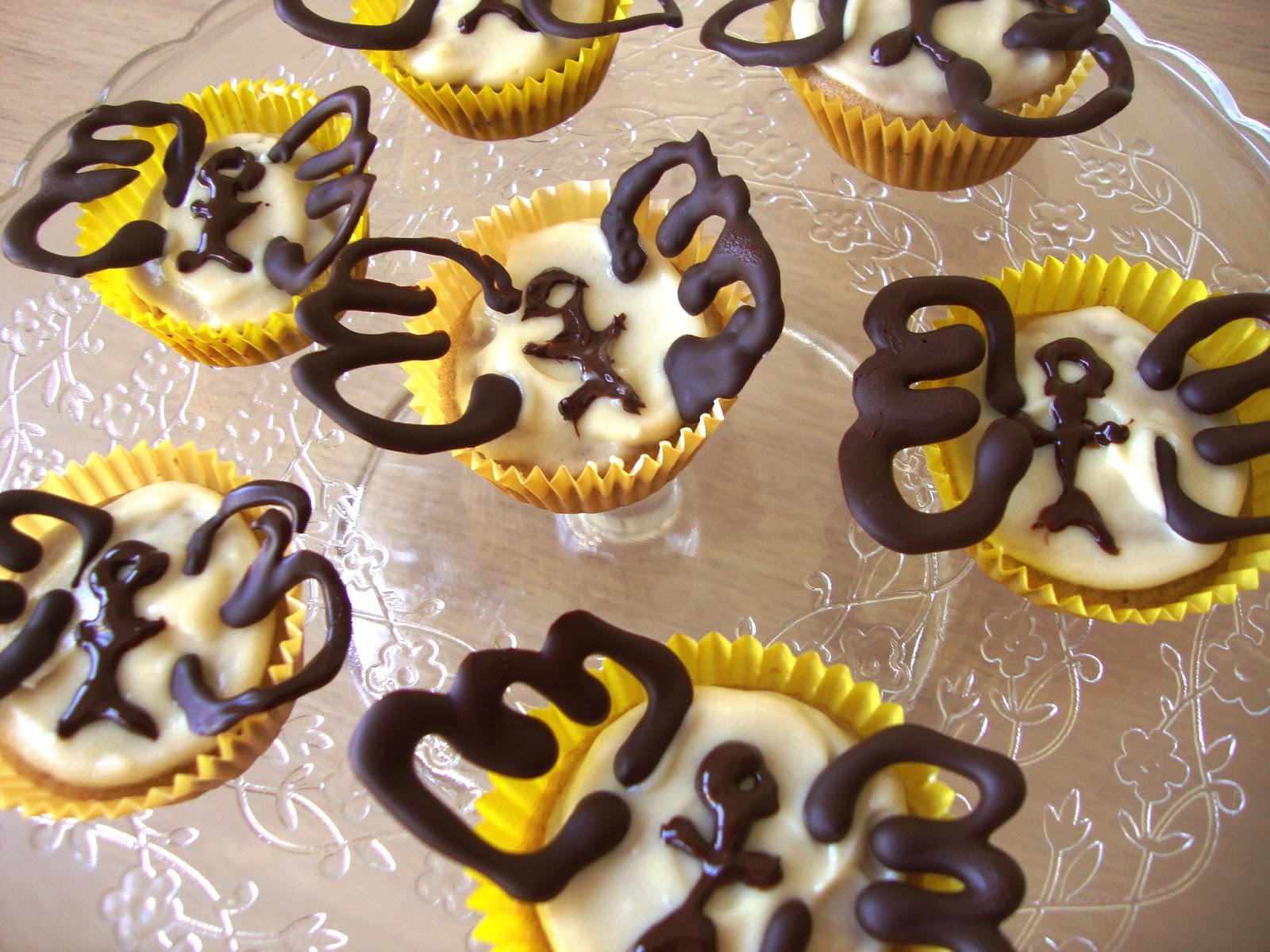
St. Matthew Winged Cupcakes

The following recipe was submitted by Julie Machado, from Marta, Julie e Maria, for the feast of St. Matthew. Thank you, Julie!


A symbol for St. Matthew is a winged man or angel. Some link it to the geneology at the beginning of his Gospel while others to the angel that appeared to Joseph. I had the idea to make winged cupcakes, with the figure of a man, but you could also draw a lion for St. Mark, an ox for St. Luke or an eagle for St. John and put on the wings. (View the various symbols here.)

First, melt some chocolate, put it in a frosting dispenser or plastic bag with the tip cut off and draw angel wings on wax paper. Let them set in the refrigerator.


Make cupcakes and frost them according to whatever recipe you like best. I used a sugar and spice recipe from a cupcake book. Draw a man stick figure on the cupcakes using the melted chocolate. Stick the wings on.

It is hot here so my wings started melting pretty fast out of the refrigerator.


"Such was his intention when, behold, the angel of the Lord appeared to him in a dream and said, “Joseph, son of David, do not be afraid to take Mary your wife into your home. For it is through the holy Spirit that this child has been conceived in her."  Matthew 1:20


Pin It

Friday, October 17, 2014

St. Luke's Artist Palette Cookies


There is a great article, which was shared over at Catholic Culture today, about St. Luke, Evangelist and Artist written by Jennifer Gregory Miller. She begins by saying that "the month of October is filled with many memorials and optional memorials of saints, but the only two feasts during the month are for St. Luke, Evangelist on October 18, and ten days later Saints Simon and Jude, apostles." She goes on to say that in her family she likes to "emphasize the various "levels" of feast days, and since feasts are higher than memorials and optional memorials, St. Luke will be honored in a special way."

Jenn's article inspired me to plan something extra for the feast of St. Luke this year. I was just telling a friend yesterday that I really need to get started on Tract B of our Art Program for this school year. What better day to kickoff art than on the feast of the patron saint of artists?!  So we are going to get started with "A Little Art Study" as suggested by Jenn, after reading about St. Luke in Lives and Legends of the Saints from our October Book Basket.

I'm especially looking forward to learning a little more about Our Lady of Czestochowa, the "Black Madonna,"which my girls and I were blessed to see and venerate (the pilgrim icon) at my brother-in-law's parish during our recent road trip.

To go along with our art study I looked through my cupboards to see if I could come up with a special treat with the supplies I had on hand. In less than ten minutes I had a little platter of "St. Luke's Artist Palette" cookies all ready for the feast. They are far from perfect, but they were quick, easy, and still turned out cute. My children are going to love them!


St. Luke's Artist Palette Cookies

Supplies:

  • Sandwich Cookies (I used Trader Joe's Joe-Joe's, Oreos would work great too.)
  • M&M's in Red, Orange, Yellow, Green, and Blue (I used what I had in my cupboard: a mix of regular red, orange, blue M&M's, yellow Reese's Pieces, and green Pumpkin Spice M&M's…) 
  • Pretzel Sticks
  • White Heart Shaped Sprinkles (like these)
  • White Icing 

Directions: 

Twist open cookie. Place an M&M of each color on the white filling. Break a Pretzel Stick in half and attach the Heart Sprinkle to the broken end with a dab of white icing. (Note: If you don't have icing you can use a little of the cookie filling.) Place the pretzel "paintbrush" on the cookie. All done!


St. Luke, Patron of Artists, Pray for Us! 

Pin It

Wednesday, October 15, 2014

Root Vegetable Harvest Recipes for October Saints


October is late harvest time all over the world. The Polish especially have a tradition of emphasizing the and celebrating the harvest season. Late September usually brings frost, so most often only the root crops, like cabbage, turnips, beets and carrots and perhaps some grains are being harvested in October. Old Polish legends talk about harvesting these late root crops and sowing of winter wheat on or just after October 16 which is St. Hedwig’s Day or Sw. Jadwiga in Poland. She is a patroness of Poland and it is said that she sweetens these crops if they are left until that date. 

Sw. Jadwiga, jesli deszcz nie pada
To do kapusty Pan Bog miodunada.


On St. Hedwig's, if it's not raining
God grants honey to the cabbage.


Another mid-October feast is tied into Polish harvest lore. It is also said that by St. Luke's Day (Sw. Lukasz), October 18 all the work in the field should have been completed. They might chant:  "Sw. Lukasz day, co w polu szukasz?" (Translated: "On St. Luke's Day, what are you looking for in the fields?"). And of course there is St. John Paul II's feast on October 22. 


So to celebrate the late harvest season and the root vegetables, to recognize a couple October saint feast days, and give a nod to my Polish heritage, I have a couple hearty recipes to share. 


Roasted Root Vegetables 

1 T olive oil
1 small onion, sliced
4 cloves garlic, peeled and minced
2 carrots, peeled and diced
1 turnip, peeled and diced
1 yam or sweet potato, peeled and diced
1 parsnip, peeled and diced
1 t dried rosemary
1 t dried thyme
1 pinch salt
1/2 t black pepper
1-2 T balsamic vinegar, optional for drizzling.

Preheat oven to 375°F. Spray a baking sheet pan with nonstick cooking spray. Combine all ingredients in a mixing bowl and toss to combine. Place mixture on a baking sheet and bake approximately 30 minutes. Turn vegetables every 10 minutes until vegetables are tender and slightly browned. Drizzle with balsamic vinegar before serving.
Makes 6 servings.

Polish people make a lot of zupa (soups), and starting with the cold weather and the harvest, soup is a wonderful addition to any meal.  Here is one that combines some of the root vegetables that are common in Polish fare.

Cabbage Kielbasa Soup

1 small head cabbage, shredded
1 small onion, chopped
4 garlic cloves, minced
2 T olive oil
4 cups water
3 T cider vinegar
1 T brown sugar
1 pound Kielbasa sausage, halved, cut into 1/2-inch pieces
4 medium potatoes, peeled and cubed
3 carrots, chopped
1 t caraway seeds
1/2 t pepper


In a Dutch oven or large kettle, saute the cabbage, onion and garlic in oil until tender. Add water, vinegar and brown sugar to cabbage mixture.  Stir in remaining ingredients. Bring to a boil. Reduce heat; cover and simmer for 60-70 minutes or until vegetables are tender. Makes 8-10 servings.
Pin It

Friday, July 25, 2014

Lace Cookie Bowls for St. Anne

As mentioned in the previous Florentine Lace Cookie post, there are numerous saints associated with lacemaking. Those saints who are listed as patrons of lacemaking and or lacemakers includes:
  • St. Anne
  • St. Catherine of Alexandria
  • St. Crispin
  • St. Elizabeth of Hungary
  • St. Francis of Assisi
  • St. John Regis
  • St. Luke
  • St. Therese
  • St. Zelie Martin

Since today is the feast of St. Anne, I am offering a variation on the lace cookies - Lace Cookie Bowls. These delicate and tasty edible bowls are great for fruit or ice cream.

Follow recipe for making the florentine cookie dough from earlier post. In the previous recipe for smaller cookies, small balls were formed. In order to make the lace cookie bowls you need to form much larger balls of dough - approx. 2 inch in diameter.   Place on baking sheet lined with parchment paper, 2 or 3 to a tray as they will spread a lot.

Place in preheated oven - 350 degrees. Bake 1 pan at a time, until the cookies are thin and an even golden brown color throughout, rotating pans halfway through baking time, about 10-12 minutes. Cool on baking sheet for a few minutes until they can be handled. They need to be cool enough to remove from tray but not yet have hardened. While still soft place over a small inverted bowl and press down to form bowl shape.  Let cool until hardened.


Filled with ice cream these are a refreshing treat for a mid-summer feast day. While we used chocolate because it was what I had on hand, another great ice cream choice would be spumoni, which includes both a red (cherry) and green (pistachio) color - the colors associated with St. Anne.  Or any red/green combination - like strawberry ice cream with a sprig of mint or green tea ice cream with fresh raspberries on top. There are many fun and refreshing combinations in those colors.


Enjoy!

Dear Saint Anne, we know nothing about you except your name. But you gave us the Mother of God who called herself handmaid of the Lord. In your home, you raised the Queen of Heaven and you are rightly the model of homemakers. In your womb came to dwell the new Eve, uniquely conceived without sin. Intercede for us that we too may remain free from sins. Amen.
St. Anne, Pray for Us.


Pin It

Sunday, July 13, 2014

The Lace Cookie - Florentines


With the recent feast of Sts. Zelie and Louis Martin I shared the connection to the lace and lace making. Lace is such a beautiful and delicate textile art and the look can translate to the kitchen to some degree.

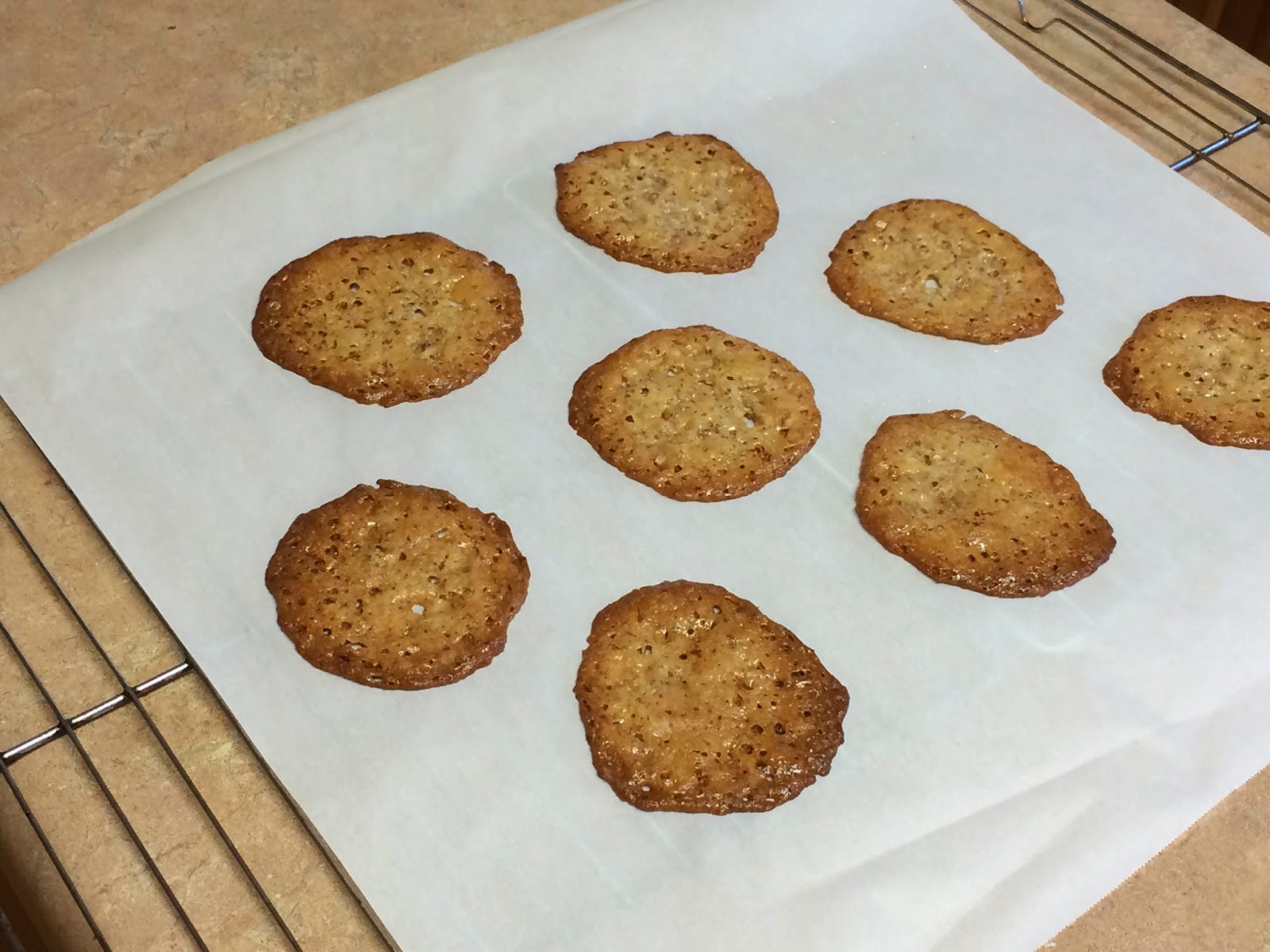
July 13 is the anniversary date of Sts. Zelie and Louis Martin and follows their feast day by one day. So since we are still thinking about the Martins, I am adding an additional lace themed treat idea for today. The florentine is a a cookie commonly called lace cookie because of the natural lacy open hole appearance it gets while baking. There are variations on the cookie but the traditional one is almond or other nut based. Candied fruit, coconut, oats are sometimes used in the variations. Sometimes just a honey/sugar and butter base such as these here.

Florentines

1 3/4 cups sliced, blanched almonds (about 5 ounces)
3 tablespoons flour
finely grated zest of 1 orange
1/4 teaspoon salt
3/4 cup sugar
2 tablespoons cream
2 tablespoons light corn syrup
5 tablespoons butter
1/2 teaspoon vanilla extract


Pulse the almonds in a food processor until finely chopped, but not pasty. Stir together the almonds, flour, zest and salt in a bowl.

Put the sugar, cream, corn syrup and butter in a small saucepan and cook over medium heat, stirring occasionally, until mixture comes to a rolling boil and sugar is completely dissolved. Boil for 1 minute. Remove from heat and stir in the vanilla. Add sugar mixture to almond mixture and stir just to combine. Cool for 30 minutes.

Scoop rounded teaspoons (for 3-inch cookies) or rounded tablespoons (for 6-inch cookies) of batter and roll into balls. Place on baking sheet lined with parchment paper, leaving about 3 to 4 inches between each cookie. They will spread considerably in oven.


Place in preheated oven - 350 degrees. Bake 1 pan at a time, until the cookies are thin and an even golden brown color throughout, rotating pans halfway through baking time, about 10 minutes. Cool on baking sheet for 5 minutes, then transfer to racks to cool.

You can serve plain or drizzle with chocolate. You can also put a filling (jam, cream, chocolate, ice cream) between two cookies for a sandwich style. 
Pin It

Saturday, July 12, 2014

Saint Zélie Martin Lace Effect Sugar Cookies

“The good God gave me a father and mother more worthy of Heaven than of earth.”

Written by St. Thérèse of Lisieux of her parents, Sts. Louis and Zélie Martin, who married on July 13, 1858 and whose feast is celebrated today, July 12.

The couple were married for nineteen years before Zélie’s death from breast cancer in 1877. They created a close, caring, family home, where love of God and neighbor were taught and practiced. It was in and by marriage that Louis and Zelie were to gain their own sanctification and set a heroic example for others. Their example illustrates how marriage can be a starting point of the journey to holiness made in the company of a spouse.  St. Louis Martin and St. Zélie Martin were canonized as a couple in October 2015. First time in history that a married couple has been canonized together.

Marie Azelia (known as Zélie) Guerin was born near Alencon France in 1831. This is an area of France renowned for its beautiful lace making.  Zélie was an accomplished lace maker in the tradition and style of the region.  After she married Louis Martin in 1858, they settled in Alencon and conducted their businesses where Louis took on the business management of Zélie’s lace making enterprise.  An example of her beautiful lace can be seen here. 

This is a simple idea to incorporate a touch of subtle lace effect into a cookie for the feast day. Using any sugar cookie recipe, just roll out the dough and cut out basic shaped cookies. Keep the dough a little thicker than you would normally when you cut the cookie as you will be pressing down lace and it will flatten slightly. Place a lace or crochet doily (or any piece of lace with large, deep design would work) over the cookie dough and roll gently but with enough pressure to press the design into the dough. 


Remove lace, place cookies on baking sheet and bake until golden.


As mentioned any sugar cookie recipe (or even pre-prepared refrigerator brands) could be used. If you are looking for a good sugar cookie recipe, I like this one from a Midwest parish cookbook.

Sugar Cookie Dough Recipe
  • 2 ¾ C. sifted flour
  • 1 t. baking powder
  • ½ t. salt
  • ¾ C. butter or margarine
  • 1 C. white sugar
  • 2 eggs
  • 1 t. vanilla

Put softened margarine in large bowl of mixer. Add sugar, eggs, and vanilla. Beat until mixture is light and fluffy. Mix in flour, baking powder, and salt. Blend until smooth. Chill at least one hour. Roll small amount of dough at a time on floured board. Cut into desired shapes. Put on ungreased cookie sheet. Bake at 375 degrees for 8-10 minutes.

While St. Zélie was specifically a lacemaker by trade, there are numerous saints who are listed as patrons for lacemaking and lacemakers. These cookies would be a fitting addition for a treat on any of their feast days. 

St. Zelie, Pray for Us!


Pin It

Tuesday, October 16, 2012

Bible Cookies for the Year of Faith


A couple years ago, when trying to come up with a snack for our Little Flowers Girls' Club meeting on the virtue of Wisdom, I came up with these cute little Bible Cookies to place on top of our cupcakes.  Lacy expanded on this idea by cleverly adding a little bookmarks made from fruit roll ups!   We just made them again, since one of our Kindergarten Themes this past week was "B is for Bible" inspired by A is for Altar, B is for Bible, and I thought I'd share the directions with you all, as we begin The Year of Faith.   

Bible Cookies 

Ingredients:
  • Fig Newtons (we made these with "Gold" Peach & Apricot Newtons)
  • White Icing (I used Wilton's Icing Writer, but any white icing/frosting would work)
  • Red Fruit Roll-ups


Directions:

Begin by trimming off one long side of each fig newton with a sharp knife.   This creates the book, with three sides of "pages" showing with the binding on the remaining side.  


I have found that standing them on their end and cutting straight down leaves a nice clean edge, versus cutting through the cookie/cake:  


Using a sharp knife, cut "bookmarks" from the red fruit roll ups. Stick them into the end of the "book" (newton) using a toothpick (or the end of the knife, like I did).       


Decorate the cover and binding with icing to complete the "Bibles."


This idea can also be modified, using different flavored/colored cookies and decorations, like we did for our "Story of a Soul" cookies last year.  

These cookies would make a great snack anytime during this "Year of Faith."  They are also perfect for the feasts of the Evangelists, Sts. Matthew, Mark, Luke, and John, or for the feast of St. Paul and any other of the many saints that are symbolized with a "Book."   

Pin It