Showing posts with label 08 August. Show all posts

Thursday, August 21, 2025

Bartlemas - Traditional St. Bartholomew feast day treat


Watermelon is a classic summer fruit treat - refreshing and plentiful. So it is a perfect choice for the August 24th feast of the Apostle, St. Bartholomew (aka Nathanael).  Watermelon originated in Africa (or at least that is where there is earliest evidence) but seems to have been introduced in Europe by the 10th-12th century. Medieval manuscripts created in several countries have illustrations of watermelons. In Northern Europe, monk and scholar St. Albertus Magnus might well have provided the first written description of watermelon in the 13th century. 

Turismo Roma Website shares an history of an old traditional festival that was held in Rome (until the 19th century) at the Tiber island church Church of San Bartolomeo all’Isola - the Church in Rome dedicated to St. Bartholomew. So at least in Italy the watermelon is very much connected Bartlemas - the feast of St. Bartholomew. 

Bartholomew’s memory and popularity among Romans, until the 19th century, were also linked to the feast held here every 24 August, when every corner of the island was invaded by watermelon sellers and watermelons displayed on the so-called “spallette” or piled up like cannonballs. Amid the shouts and cheers of the crowd, some watermelons would be thrown into the river and become objects of contention among the kids who would dive into the eddies of the Tiber to retrieve them. Decidedly dangerous, the pastime was banned in 1870 because of the frequent accidents that occurred: but watermelon has remained one of the city’s freshest summer vices.

For its ease of preparation and the plentiful availability this time of year, watermelon is a fun and simple choice for a treat for this Apostle's August feast day.   Bon appetito!

St. Bartholomew, Pray for us!


Pin It

Thursday, August 20, 2020

Mary's Crown - Queenship Salad

Bachelor's Button, or Cornflower, is an annual flowering plant in the aster family, with florets that are edible and may be used fresh in salads.  Its jagged frilly petals remind one of an ornate crown and because of that it also has a Marian connection – often called Mary's Crown. Traditionally blue, they also come in many different color variants. The blue ones especially are a Marian color.  

Because of these connections, the flowers make a beautiful and symbolic addition as a garnish to a Marian summer salad.  Its name as Mary's Crown is particular fitting for a salad on the Feast of the Queenship of Mary (August 22).

Use any available salad greens and fresh summer vegetables. Garnish with freshly picked Mary's Crown flower heads. Serve with a light vinaigrette dressing. Regina Red Wine Vinegar, in addition to being a common vinegar, easy to find - has a name that means queen, so perfect for this Queenship of Mary summer salad. 

If you don't have access to fresh Bachelor Button flowers, make sure to plant some for next year. These hardy and easy to grow flowers, make a great addition to a liturgical year and Marian garden.  And other edible late summer Marian flowers or flower petals (daisy, lavender, rose, calendula, nasturtium, chive, marigold) could be substituted though they don't have the same crown significance. 

Our Lady, Queen of Heaven, Pray for us. 


Pin It

Tuesday, August 21, 2018

Reginette "little queen" Pasta for Our Lady's Queenship

Several past Catholic Cuisine posts have shared ideas for pasta meals based on the symbolism of the pasta shape. There are hundreds of kinds of Italian pastas, and each one has its own special name and each pasta name actually means something.


Mafaldine or malfada, also known as reginette or reginelle (Italian for "little queens") is a type of ribbon-shaped pasta. Mafaldine were named in honor of Princess Mafalda of Savoy which is why they are also called "little queens." The pasta is flat and wide, usually about ½ inch in width, with wavy edges on both sides. The delicately fluted edges remind one of a crown. It is prepared similarly to other ribbon-based pasta such as linguine and fettuccine. On this feast of the Queenship of Mary (August 22) a pasta shape referencing a queen is perfect. It would also be a great pasta to serve up on any of the queen saints' feast days, such as St. Margaret of Scotland, St. Elizabeth of Hungary or St. Helena.

A variety of sauces could be served with this pasta. I chose a sun-dried tomato pesto which highlights the fresh bounty of basil from my August garden. Since August - the month of the Assumption and the one dedicated to the Immaculate Heart - is such a Marian month and is tied to herb harvest in her honor, it was fitting.


Reginette with Sun-dried Tomato Pesto

Ingredients:
10 sun-dried tomatoes
1 tbsp pine nuts
2 tbsp grated parmesan
10 basil leaves
5 tbsp extra virgin olive oil
4 oz pasta

Directions:
In a blender, place the tomatoes, pine nuts, cheese, basil leaves and oil and blend at maximum power. Cook the pasta until al dente in boiling salted water, drain and stir in the pesto.

NOTE: Reginette/Reginelle pasta is not one of the most common shapes of pasta available in grocery stores. But I did find it available from Kroger as part of their HemisFares pasta brand. It is also available online and is specialty stores.

Our Lady, Queen of Heaven, Pray for us!

Pin It

Tuesday, August 14, 2018

Assumption Day and First Fruits


August 15, the feast of the Assumption, is a harvest feast day and associated with "first fruits". We are reminded that Mary goes before us in Faith and also as a first fruit of the Resurrection, of which all the faithful will experience at the end of time (1 Corinthians 15:20-21). In many Catholic counties Assumption Day marks the period for invoking blessings on various "fruits" or fruiting plants - - particularly vineyards/grapes, fruit trees, grains, and herbs.

One idea is to serve "First Fruits" shortcake and topped with whipped cream - symbolizing the clouds of the sky in scenes depicting Mary being raised into heaven. You can use a variety of fruits on packaged shortcake cups.

A very simple idea along the same lines is a fresh fruit tray with whipped cream for dipping.


Grapes are especially associated with the feast of the Assumption. Armenian communities all over the world bless grapes on Assumption Day. Great trays are piled high with ripe grapes and carried to church, where they receive the blessings of the priest. Since grapes so often have this prominence in Assumption feasting we will often have this refreshing grape enhanced salad on this feast day.


Silverglade Spinach Salad
Ingredients:
6 cups spinach, rinsed and stemmed
6 ounces cheese, shredded or cut into julienne strips (Cheddar or Jack or combo)
2 cups seedless grapes, halved
Dressing:
1/4 cup cider vinegar
1/2 cup oil
2 teaspoons Dijon mustard
2 teaspoons brown sugar
4 slices bacon, fried crisp, drained, & crumbled
2 green onions, sliced thin

Directions:
To prepare dressing, whisk together vinegar, oil. mustard, and brown sugar. Stir in bacon pieces and onion. Refrigerate. In a large bowl combine spinach, cheeses, and grapes. Toss with dressing. 

O Clement, O Loving, O Sweet Virgin Mary, Pray for us. 
Pin It

Tuesday, August 22, 2017

Peruvian Corn Snack for St. Rose Feast Day


St. Rose of Lima, partoness of South America, is celebrated August 23. An idea for a simple snack on the feast of St. Rose (or other Peruvian saints) is the traditional Peruvian cancha, a popular snack made with a special type of large-kerneled corn called maíz chulpe. The dried kernels are tossed with oil and toasted in a hot skillet until they are browned and puffed.Trader Joe's makes their version of this snack - a Giant Peruvian Inca Corn which is very tasty. 


We love snacking on it. Since it is a ready made snack would be really easy to pull out for the feast day as an alternative to making your own. We opted for the ready made Trader Joe's version, but if you want to make the homemade version, it is as easy as popping corn. See recipe for details.

Homemade Cancha

Ingredients
1 cup maíz chulpe (can usually be found at Hispanic grocers)
1-2 tablespoons oil
salt

Directions

Heat oil in large, heavy-bottomed skillet on medium heat. Add the chulpe corn and toss to coat with the oil. Cover and cook, shaking the pan periodically to keep the kernels from burning. The kernels will begin popping (without turning inside out like popcorn) and turn golden brown. Cook until popping subsides, about 5-8 minutes.  Drain on a plate lined with paper towels. Salt to taste.

St. Rose of Lima, Pray for us. 
Pin It

Sunday, August 14, 2016

Honoring Our Lady with Star of the Sea Appetizers

"As sailors are guided by a star to the port, so Christians are guided to heaven by Mary."
--St. Thomas Aquinas

As mentioned before, Our Lady is known by many star titles - - Star of the Sea (Stella Maris) and Morning Star (Stella Matutina) being the most prominent. The star as a symbol of Mary is rich in meaning. Johnette Benkovic, on her Women of Grace blog mentions how the star is used to symbolize several characteristics of Mary: “her privileges, in particular her mission as Mother of the Redeemer or her holiness; her anticipatory role (forerunner, announcer) with regard to Christ; and her role as luminous and enlightening.”

The star image could be tied to any Marian feast day, but there is a very strong connection to the Assumption and the Star of the Sea title. In many places traditions associated with the sea are part of this celebration - like the blessing of fleets, blessing of the bounty of the sea, and wedding of the sea ceremony.

These appetizers combine the star shape and the products of the sea to recall Mary under this title – Our Lady, Star of the Sea.  I used Valley Lahvosh Baking Co. star shaped crackers though there are other star shaped crackers that could be used. 


I spread a smear of softened cream cheese in middle and added a lemony shrimp scampi on top. The lemon is a symbol of fidelity in love so is often associated with the Virgin Mary in Christian art.  This is the recipe I used for the Lemony Shrimp Scampi (from Pampered Chef) though I used medium shrimp and halved the other ingredients.


Another simple and last minute option would be to just pick up a prepared seafood spread or dip (like crab) and use that with the star shaped crackers.  


O God, you have willed that Mary should shine forth as the Star of the Sea and protectress for us who are tossed about on the stormy waves.

Grant that through her help and direction, we may be safe from dangers of soul and body, reaching the port of eternal happiness. We ask this through Christ our Lord. Amen.


Pin It

Saturday, August 13, 2016

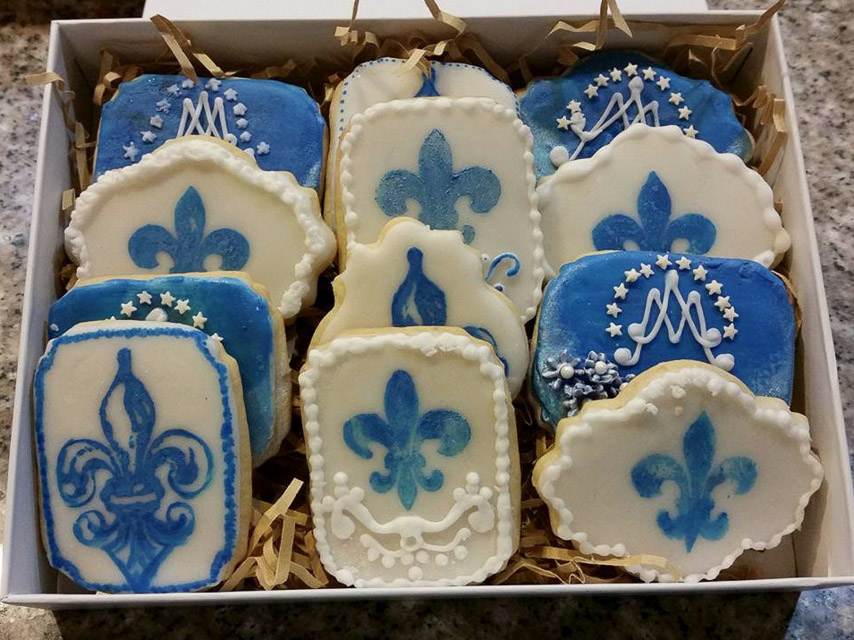
Assumption Cookies

These beautiful cookies, in honor of the Feast of the Assumption of the Blessed Virgin Mary into Heaven celebrated on August 15th, were submitted by LaDawn Wilson who shares, "I homeschooled six children for over twenty years. I now have three grandchildren I can bake for each week. I enjoy revolving most of my creativity around feast days and the children's birthdays." Thank you, LaDawn! 


Assumption Cookies

"The cookies are a basic sugar cookie recipe but I added lemon emulsion and poppy seeds.
I used two stamps for the fleur de lis. I like to paint directly on the stamp using AmeriColor Gels and then stamp the cookie on completely dried white glaze. Royal icing is used for the white borders and Ave Maria symbol. The tiny flowers are made from fondant."


Pin It

Tuesday, August 25, 2015

King St. Louis IX, French Food, & Hospitality


King St. Louis, Feast Day: August 25

St. Louis, king of France from to 1236-1270, was known for his generosity and hospitality. Every day King Louis had 13 special guests from among the poor to eat with him, and a large number of poor were served meals near his palace. During Advent and Lent, all who presented themselves were given a meal, and Louis often served them in person. To remember King St. Louis of France on his feast day let us recall his hospitality with a French dish.   Ratatouille is a hearty French dish and the vegetable ingredients are abundant now in late summer.  It seems a fitting dish to prepare in honor of King St. Louis and experience a little French cuisine.  And in the spirit of King St. Louis, invite some guests to share the meal with you. 

Easy French Ratatouille

Makes 4-6 servings

1 large eggplant
1 medium yellow onions
2 medium bell peppers
3-4 medium zucchini
2 large tomatoes
1 tablespoons olive oil
2 cloves garlic
1 bay leaf
2 sprigs thyme
1/8 cup loosely packed basil, sliced into ribbons
Salt and pepper

Peel the eggplant (if desired) and chop into bite-sized cubes. Transfer them to a strainer set over a bowl and toss with a tablespoon of salt. Let the eggplant sit while preparing other  ingredents. Dice the onions and chop the peppers, zucchinis, and tomatoes into bite-sized pieces. Mince garlic. Veggies will be cooked in batches. 

Warm a teaspoon of olive oil in a large Dutch oven or pot over medium-high heat. Add onions and salt to taste. Sauté until the onions have softened and are just beginning to brown, (approx. 10 minutes). Add the peppers and continue cooking until the peppers have softened (approx. 5 minutes). Transfer the onions and peppers to a clean bowl.

Add another teaspoon of oil to the pot and sauté the zucchini with a generous pinch of salt until the zucchini has softened and is beginning to brown (approx. 5 minutes). Transfer the zucchini to the bowl with the onions and peppers.

Rinse the eggplant under running water and squeeze the cubes gently with hands to remove as much moisture as possible. Add 1 teaspoon of oil to pan and sauté the eggplant until it has softened and has begun to turn translucent (approx. 10 minutes). Transfer the eggplant to the bowl with the other vegetables.

During cooking, a brown glaze will build on the bottom of the pan. If it looks like this glaze is starting to blacken, turn down the heat. To dissolve the glaze between batches add 1/4 cup of water or wine into the pan and scraping up the glaze. Pour the deglazing liquid into the bowl with the vegetables.

Finally add 1 teaspoon of olive oil in the pan and sauté the minced garlic until starting to turn golden. Add the tomatoes, bay leaf, and sprigs of thyme. As the tomato juice bubbles, scrape up the brown glaze on the bottom of the pan.

Add all of the vegetables back into the pan and stir until everything is evenly mixed. Bring the stew to a simmer, then turn down the heat to low. Stirring occasionally, simmer for at least 20 minutes or up to 90 minutes. Remove the bay leaf and thyme sprigs. Just before taking the ratatouille off the heat, stir in the basil.   Bon appetit!

St. Louis, Pray for us!


Pin It

Saturday, August 15, 2015

Heavenly Cloud Cookies

Sacred Art Series Rosary Flip Book and Trader Joe's Vanilla Meringues

I picked up a box of Vanilla Meringues  - "Heavenly Cloud Cookies" -  from our local Trader Joe's to serve as a little treat following our family rosary. 

Additional ideas and recipes can be found in the archives

Happy Solemnity of the Assumption of the Blessed Virgin Mary! 

Pin It

Friday, July 31, 2015

Onion Ring Chains "Linked" to August 1 Feasts


While it is no longer on the current liturgical calendar, the feast of St. Peter in Chains was a feast day commemorated on August 1st to recall St. Peter's miraculous release from imprisonment and the dedication in the 4th century of the church Pietro in Vincoli - St. Peter in Chains in Rome.  Last year I posted this St. Peter in Chains Feast Day Bread recipe as an idea to commemorate the feast.

This year I found a quote from St. Alphonsus Liguori whose feast is also on August 1.  He wrote in his sermon "On the Love of Christ":

Since God knew that man is enticed by favours, he wished to bind him to his love by means of his gifts: “I want to catch men with the snares, those chains of love in which they allow themselves to be entrapped, so that they will love me”. 

So another "link" to making chain related feast day foods for August 1. 

Onion Chain Links - Fried Onion Rings

1 onion, cut into ¼ inch slices
1 egg
1 t. baking powder
1 ¼ c. flour
1 t. salt
1 c. Panko bread crumbs
1 c. milk
oil for deep frying

Heat oil to 350 degrees.  Separate the ¼ inch slices of onion into separate rings.  Mix egg and milk, whisking until combined. Combine flour, salt and baking powder in another bowl. Dip onion rings in egg mixture, then in flour mixture.  Dip the flour-coated onion rings back into egg-milk mixture a second time. Place on a wire rack to let excess egg-milk mixture drain.  Place dipped onion rings into Panko bread crumbs and coat completely.  Drop in hot oil and cook 1 minute per side until golden brown color.  Place on a paper towel to drain excess oil. Sprinkle onion rings with salt to taste.

Serve either as individual links or cut the links so they open and link together several onion rings for a chain of onion rings.  Serve with ranch dressing or spicy dipping sauce.

St. Peter in Chains, Pray for us.
St. Alphonsus Liguori, Pray for us. 


Pin It

Tuesday, August 19, 2014

Honey Arnold Palmer - Refresher for St. Bernard Feast Day


The "Arnold Palmer" drink is a mix of half tea and half lemonade served chilled over ice. It is also called half-and-half. It is one of our family's favorite drinks, especially in the summertime. I came across a honey sweetened version on the National Honey Board Website. The inclusion of honey seemed a natural to add to the mid-August feast of St. Bernard of Clairvaux, as he is a patron of bees and beekeepers. There are other beekeeper patron saints but this one falling on August 20, seems particularly fitting since this time of year we are looking for ways to beat the summer heat and add refreshment.

I have adapted the recipe as follow:

Ingredients:
1 part - lemon juice
1 part - honey
2 parts - water
4 parts - unsweetened tea

For honey-lemon syrup/lemonade:
1 part - honey
2 parts - water
1 part - lemon juice (fresh squeezed or concentrate)
Combine ingredients in sauce pan over low heat. Stir until dissolved. Cool.

Mix honey-lemon mixture with 4 parts tea for the half and half.  Add more tea or water to taste.  Stir, refrigerate, and serve over ice. May need to stir again while drinking as honey settles to bottom if left too long. Garnish with lemon or mint if desired. Relax. Enjoy.

ETA: Apparently, August 20 is also National Lemonade Day - I had no idea. How convenient to have suggested a lemonade drink already. The honey-lemon/lemonade portion of this recipe is very tasty on its own and I recommend it as well. 


Pin It

Monday, August 18, 2014

St. Bernard of Clairvaux Dijon Chicken


St. Bernard (August 20), mystic and Doctor of the Church, was a main propagator of the Cistercian reform and the founding abbot of Clairvaux Abbey in Burgundy. He was born in Fontaines-les-Dijon, France in 1090.

Dijon is the capital of the Burgundy region in France. The region is world famous for its Burgundy wine and its mustard. It had become a recognized center for mustard making by the 13th century. The creation of Dijon mustard as we know it  is credited to Jean Naigeon, who revolutionized the original mustard recipe by substituting verjuice (the sour juice of unripe grapes) for the vinegar traditionally used in the making of mustard. This resulted less acidic mustard with a smother flavor. 

To make Dijon mustard, ground black or brown mustard seeds are pressed and steeped in verjuice, or more recently in white wine. At one time, any product called Dijon mustard had to be made in the Dijon region of France. Other products could be called "Dijon-style mustard" or simply "dijon mustard" with a lowercase "D".  Today, however, the term Dijon mustard has become generic, so any mustard using the basic Dijon recipe can be called Dijon mustard.

Our family has a Dijon mustard based chicken recipe that has been a favorite for 30 years. It seems a fitting feast day meal for the eminent St. Bernard who hails from the Dijon area.

Dijon Chicken

1/2 cup butter 
2 cloves garlic
2 tablespoons Dijon mustard
3/4 cup dry breadcrumbs
1/2 cup grated parmesan cheese (fresh or jarred)
2-3 T. dried parsley flakes
4 boneless skinless chicken breast cut in strips

Heat oven to 375°F.
Melt butter in small saucepan with minced garlic. After garlic has sautéed, add mustard and mix.  Let cool and whisk mixture to combine until creamy. Mix bread crumbs, parmesan cheese, and parsley in shallow bowl or pan.  Dip chicken into butter/mustard mixture, then dip in bread crumb mixture to coat both sides. Place in glass 9x13 pan. Bake uncovered 25 - 30 minutes, until juice of chicken is no longer pink when centers of thickest pieces are cut.


St. Bernard of Clairvaux is the author of the Marian prayer, The Memorare, which you may want add to your feast day meal prayer.

REMEMBER, O most gracious Virgin Mary, that never was it known that anyone who fled to thy protection, implored thy help, or sought thy intercession was left unaided. Inspired with this confidence, I fly to thee, O Virgin of virgins, my Mother; to thee do I come; before thee I stand, sinful and sorrowful. O Mother of the Word Incarnate, despise not my petitions, but in thy mercy hear and answer me. Amen.


Pin It

Saturday, August 16, 2014

A Lion Lunch for St. Mamas

I first learned about this obscure, to me, saint when we visited Spain a couple years ago. In the Basque region, near my relatives' town, there is a cave containing prehistoric paintings – Santimamiñe Cave. These cave paintings date from about 13,000 BC and include a range of animals such as bison, horses, deer, goats and brown bears.

The cave's name comes from a nearby chapel of Santimamiñe, which in the Basque language means San Mamés or St. Mamas (also St. Mammes), to whom the chapel is dedicated. I had not heard of him before, but the guide shared that he was a 3rd century martyr, often pictured with a lion. 

He was orphaned at a young age – his parents killed for being Christians. He was a shepherd who was known to preach to the animals in the fields. It is told that St. Mamas was tortured for his faith by the governor of Caesarea and was then sent before the Roman Emperor Aurelian, who tortured him again. An angel then freed him and ordered him to hide himself on a mountain near Caesarea.  St. Mamas was later thrown to the lions, but managed to make the beasts docile. A lion is said to have remained with him as companion and protector. Accompanied by the lion, he visited Duke Alexander, who condemned him to death.

In Cyprus, there is the legend that he was a hermit and when soldiers were sent out and captured him, while on the way back to town, St. Mamas saw a lion attacking a lamb, escaped the soldiers, saved the lamb, jumped on the lion's back, and rode it into town. That is how he is often depicted in icons. 

He is the patron of Langres; babies who are breastfeeding; protector of sufferers from broken bones and hernias.

Pilgrims on their way to Santiago de Compostela brought his cult into Spain and he is more well known there. A statue depicting San Mamés and a lion can be found in the Casa de la Misericordia in Bilbao, which was once the convent of San Mamés and whose current chapel holds a relic of the saint. The stadium that is home to the Athletic Club de Bilbao is called San Mamés Stadium, and players of that club are called the "lions of San Mamés" because their stadium was built near there.

So his feast day (August 17) can be a time to learn a little more about a saint that might be new to your family, too. Since St. Mamas is closely associated in pictures with a lion it is a feast day idea. Additionally, it was a medieval belief that the lion slept with its eyes open. For this reason, they also became a symbol of watchfulness. I came across this lion themed recipe and thought it would be a fun, savory lunch idea for children to add the the other lion themed recipes on Catholic Cuisine. It is made from spiral noodles in a red sauce, surrounding a circle of colby jack cheese. Add olives for the eyes and nose, with cheese triangle ears and pepperoni strip whiskers. Who can resist a pasta lion?


Other saints who are depicted with a lion are St. Mark, St. Jerome, St. Mary of Egypt, St. Paul the Hermit, St. Ignatius of Antioch, St. Onuphrius, so this idea could be used at other feast days.
Pin It

Thursday, August 14, 2014

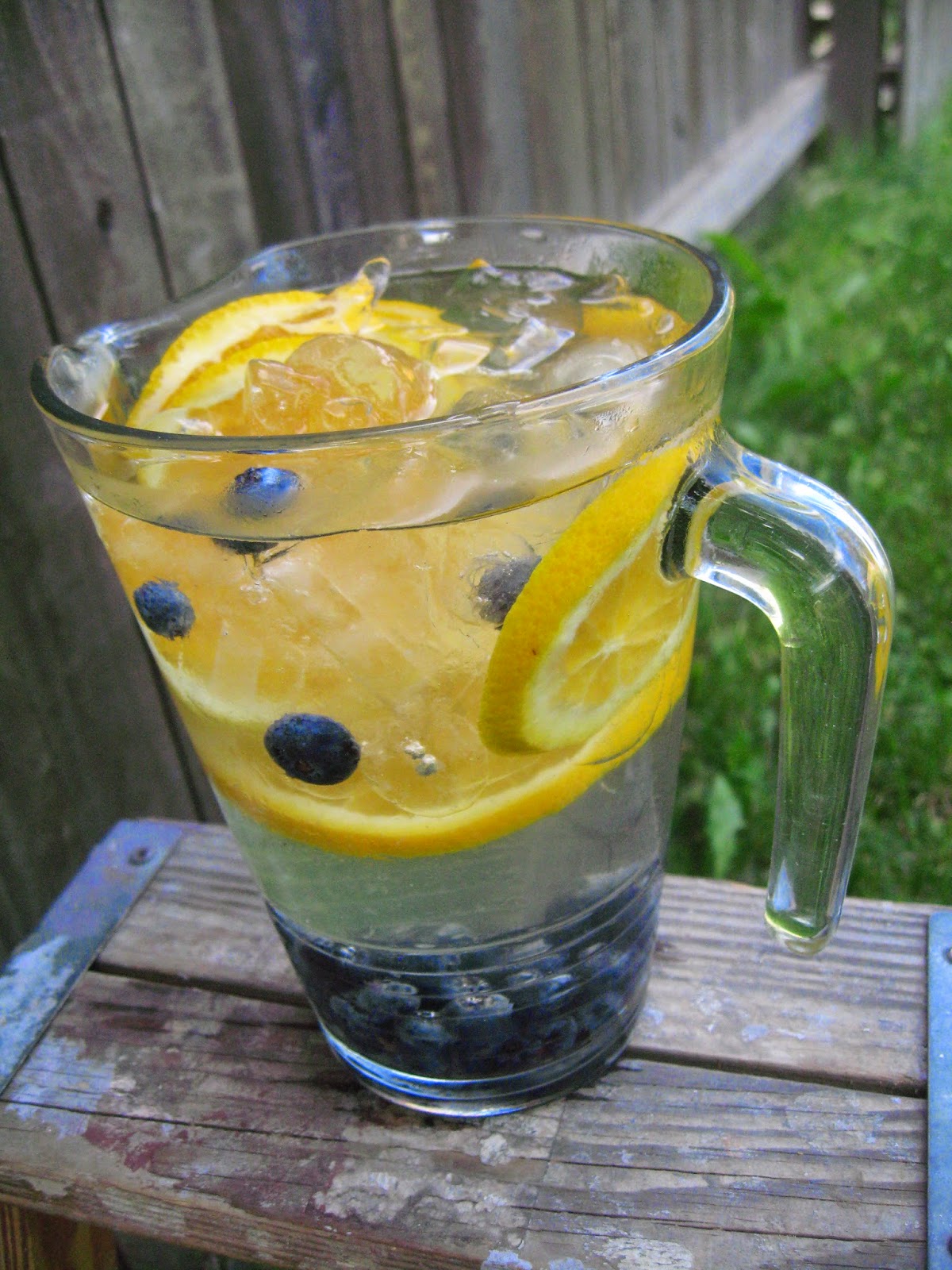
Infused Water - Refreshing Drink for Summer Feasts


Infusing your water with fruits, herbs, or veggies not only adds flavor to the water, but also adds essential vitamins and nutrients that help your body.  It is a great way to quench your thirst and keep you hydrated on a hot, late summer day. They can be helpful for getting children to increase their daily water intake. And they are pretty, too. 

Making your own is more cost friendly and healthier than purchased waters. So join in making some feast day themed waters with a hint of summer flavors for our August saints. 

Making infused water is very simple. Just add desired fruit, veggie, or herb or combination to a pitcher of water with ice. Muddle mixture a bit if you want to increase flavor and let steep for at least several hours, up to 24, depending on how strong you want the flavors.  For some mixtures you can pour directly from pitcher, for others you may want to strain ingredients first to remove small floaters. As long as you keep the water refrigerated, the fruit should stay fresh. And you can keep refilling the pitcher as you drink the water but, it will dilute the flavor each time you refill.  It should last several days before you need to remake with fresh fruit.

One way to make infused water is with a single ingredient. Citrus is a great, no lose option for adding a touch of flavor to water, so it can be a good one to start with.

St. Dominic – Orange

In her recent post for Catholic Culture, Jenn Miller alerted me to the connection of St. Dominic (August 8) to the orange. So orange infused water would be perfect for his feast day.  


You can also make infused waters that combine a variety of fruits, veggies or herbs.

St. Maximilian Kolbe – Coconut Strawberry or Blueberry Orange

Infused waters are simple, no frills refreshers and considering that St. Maximilian Kolbe (August 14) died in a concentration camp it is a simple, non-extravagant treat for an austere remembrance. St. Maximilian had a vision of Mary – she offered him two crowns – red for martyrdom and white for purity and asked which one he would accept.  He chose both. Making a coconut strawberry infusion represents the colors of the two crowns that he was shown and accepted.


Blueberry orange infused water incorporates blue for his Marian devotion and formation of the Militia of the Immaculata movement of Marian consecration. Orange trees and their blossoms are symbolic of purity, chastity and generosity so the addition of oranges for St. Maximilian represents three strong characteristics of this saint who gave his life to take the place of another prisoner.


Assumption – Blueberry Lemon

As mentioned since blue is a universal color associated with Mary, the blueberry is a great fruit to use on Marian feasts. The lemon is a symbol of fidelity in love, and, as such, is often associated with the Virgin Mary in art. A lemon blueberry infused water would be a refreshing addition to this Marian solemnity.

Saint Rose - Raspberry, Rose, & Vanilla

The rose is closely associated as a symbol for St. Rose of Lima (August 23) but could be used, too, for St. Clare (August 11) as she has a rose story. The vanilla bean and raspberries of this recipe don't necessarily represent anything about the saints but were a infused water combination I found with rose that sounds delicious.


Pin It

Thursday, July 31, 2014

St. Peter in Chains Feast Day Bread

"Liberation of St. Peter" by Murillo

"On the very night before Herod was to bring him to trial, Peter, secured by double chains, was sleeping between two soldiers, while outside the door guards kept watch on the prison. Suddenly the angel of the Lord stood by him and a light shone in the cell. He tapped Peter on the side and awakened him, saying, “Get up quickly.” The chains fell from his wrists." ~Acts 12:6-7

The feast of St. Peter in Chains was a feast day commemorated on August 1st to recall St. Peter's miraculous release from imprisonment and the dedication in the 4th century of the church Pietro in Vincoli - St. Peter in Chains in Rome . The church holds the reliquary containing the chains of St. Peter.
The feast day is no longer on the current liturgical calendar but definitely one that can be recognized. I think the imagery of chains is very vivid - one that makes an impression, so would be good to talk about and discuss with our children. 

This feast was also called "Lammas Day" or "Loaf Mass Day" because this day was offered as thanksgiving for the wheat harvest, used for the bread that becomes the Eucharist. Florence Berger discusses the connections between the liturgical year and agrarian life.

Bread is the most common product made from wheat – it is used to celebrate in all cultures and is symbolic of life and abundance.  We have discussed its significance in past posts here; Staples of Our Feastday Celebrations Part One: Bread and Bread – A Staple of the Liturgical Year Celebrations.  So making a bread of some sort to commemorate this day would be appropriate. And shaping it into links to form a bread chain uses that vivid image to a dramatic culinary advantage. Use any bread or pretzel recipe, such as the one suggested by Jessica in her St. Peter’s Keys post or even a pre-made refrigerator dough in a pinch.

Ingredients:
1 1/2 cups warm water
1 package yeast
1 tablespoon sugar
1 tablespoon salt
4 cups flour
1 egg (optional)

Directions:
Dissolve the yeast in warm water.  Add the sugar and salt.  Mix in the flour and knead until the dough is smooth.  Roll out dough and form into desired shape - in this case into links. Connect the links to form a chain. Brush the dough with a beaten egg for a golden finish if desired. Bake in a preheated oven at 425˚F for 15 minutes.


Another idea that came to mind with the chain shaped dough was to place it along the outside ring of a pizza crust so the pizza would be circled in chain. A dinner idea for the feast day. Blessings to all!

~  ~  ~  ~  ~  ~  ~  ~  ~  ~  ~  ~  ~  ~  ~  ~  ~  ~  ~  ~  ~  ~  ~  ~  ~  ~  ~  ~  ~  ~  ~  ~  ~  ~
Because of the symoblism of this feast and since St. Peter is their patron, The Priestly Fraternity of St. Peter has asked all of its apostolates around the world to dedicate Friday, August 1 to a day of prayer and penance for the Christians who are suffering terrible persecution in Iraq, Syria and elsewhere in the Middle East.
Pin It

Wednesday, August 21, 2013

Blueberry Peach Parfaits for the Coronation

The following recipe for Blueberry Peach Parfaits was submitted by Mary from Better Than Eden.  Thank you Mary! 


I put together a super simple dessert for the feast day of the Crowning of the Blessed Virgin and thought I'd share it in case you were wanting a jumping off point or some inspiration for your own festivities!


The great thing about parfaits and trifles is that there are no hard and fast rules and they are so versatile and yet still look fancy and are a special treat. This is what I put together from what I had but use what you have and make it work!

The blueberries represent Mary and the peach her golden crown. The whipped cream symbolizes the heavenly clouds and I suppose you could even have the cake represent that she is fully human and still intercedes for us here on earth below.

Ingredients:
  • Yellow Cake (Other possibilities: Nilla wafers, brownies, cookies, graham crackers, or just omit it altogether.)
  • Blueberries (about 2 cups)
  • One Peach (Or how about mango or pineapple?)
  • Whipped Cream (I used about 3-4 cups. Other possibilities: Vanilla ice cream or pudding)


Assemble your glasses or use a trifle dish.


Peel your peach and slice thinly. Cube up your cake into bite size pieces. Then just layer it all together: cake, whipped cream, blueberries, whipped cream, and use several slices of your peach for Mary's crown. Simple, simple.


I experimented with several crownesque shapes...


and an abstract version. No rules, remember?

Enjoy!

"And a great portent appeared in heaven, a woman clothed with the sun, with the moon under her feet, and on her head a crown of twelve stars." Revelation 12:1

Mary, you who are mother of our King and queen of heaven, pray for us!

Pin It