Showing posts with label St. Dominic. Show all posts

Friday, July 27, 2018

Blood Orange and Pomegranate Sparkling Sangria


This is a lighter sangria for July, but one with some significant symbolism for the month of the Most Precious Blood. One of the ingredients, blood orange, by name makes it very fitting for a drink to remember the blood of Christ poured out for us. The other unique ingredient to this recipe is the pomegranate arils (seeds). Pomegranates in Christian art symbolize the resurrection and eternal life in Christ. It is fitting as it is through the blood of Christ that we might have eternal life.  As a summer drink, this recipe was a little hard to fulfill since both blood oranges and pomegranates are out of season.  But it is possible to find packaged pomegranate arils in the refrigerated produce section of natural grocers.  I also substituted the blood oranges for regular oranges and then used a bottled blood orange sparkling drink in place of the club soda.  These substitutions made it possible to still make a delicious sangria which included the symbolic elements of blood orange and pomegranate.

Blood Orange and Pomegranate Sparkling Sangria

Ingredients: 
3 blood oranges (or other oranges if unavailable)
Arils (seeds) from 1 pomegranate
¼ cup brandy
¼ cup simple syrup
1 bottle dry sparkling rosé or white sparkling wine
1 cup sparkling water (use blood orange Italian soda if not using blood oranges as fruit)


Instructions: 
To make simple syrup, pour equal parts sugar and water into a saucepan and heat ingredients until dissolved. Cool. Juice two of the oranges. Slice the remaining orange into thin rounds, then cut into halves or quarters for garnish. In a pitcher, combine the simple sugar,  blood orange juice, blood orange slices, pomegranate arils and brandy. Let the fruit marinate for a few hours, covered and chilled in the refrigerator. When ready to serve, pour in the rosé and sparkling water. Ladle sangria and fruit into glasses and serve. Makes approximately 6 glasses.


Precious Blood,

Ocean of Divine Mercy:

Flow upon us! 

Precious Blood,
Most pure Offering:
Procure us every Grace! 

Precious Blood,
Hope and Refuge of sinners:
Atone for us!

Precious Blood,
Delight of holy souls:
Draw us!

Amen.
~St. Catherine of Siena


Pin It

Wednesday, July 25, 2018

Summer Sangria in this Month of the Most Precious Blood


July is drawing to a close, but there is still time to enjoy a classic summer drink - sangria - perfect for the month dedicated to the Most Precious Blood. Sangre means blood in Spanish and the drink sangria took it's name from the red wine used, as it resembled the color of blood. Living in Colorado where there is a spectacular mountain range which extends into New Mexico named Sangre de Cristo (Blood of Christ), I always think of the word sangre/sangria as associated with Christ's blood.

In addition to the dedicated month there are many saints with devotion and insights into the saving power of the Precious Blood and isn’t it convenient that several of them have summer feast days – perfect days to toast with a sangria and offer prayers through the saving power of the most precious blood.

St. Gaspar del Bufalo (feast: December 28), founder of the Missionaries of the Precious Blood said, “We must let it be known how the Blood of Christ cleanses the souls and sanctifies them, particularly by means of the sacraments.”

In both the Dialogue and her letters, St. Catherine of Siena (feast: April 29) talks much about the blood of Christ as fundamental to salvation. Her dying words were, “Blood! Blood! Father, into Thy hands I commend my spirit.”

The Carmelite saint, St Mary Magdalen de Pazzi (feast: May 25) when in a rapture, saw that, “every time a human being offers up the Blood by which he was redeemed, he offers a gift of infinite worth, which can be equaled by no other.” Inspired by her vision, St Mary Magdalen de Pazzi offered the Precious Blood fifty times for the souls of the living and the dead, and then God rewarded her with visions of the multitudes of souls that had been saved from perdition or delivered from Purgatory.

The Curé of Ars, St. John Vianney (feast: August 4), drew on the most perfect way of offering the Most Precious Blood: he asked Our Lady to offer it for him, and said that it never failed to obtain for him the grace or favor he sought.

St. Dominic (feast: August 8), actually had a vision of Our Lady sprinkling devout people in his congregation with the Precious Blood.

St. Maria De Mattias (feast: August 20), founder of the religious congregation of the Sisters Adorers of the Blood of Christ had a consuming desire that "not even one drop of the Divine Blood would be lost"; that it would reach all sinners to purify them and so that, washed in that river of mercy, they would rediscover the right way to peace and union among people.

Classic Sangria

Ingredients:
2 bottles chilled dry red wine, like Rioja
1 cup brandy
1 cup orange juice
1/4 cup superfine granulated sugar
2 oranges, cut into thin rounds & quartered
2 lemons, cut into thin rounds & quartered
3 limes, cut into thin rounds & quartered
2 apples, cored and cut into 1/2-inch chunks
2 cups cold club soda or sparkling water

Directions:
In a large pot or pitcher, combine the wine, brandy, orange juice, and sugar and stir until the sugar dissolves. Add the orange, lemon, lime slices, and the apples then refrigerate until well chilled, about 1 hour. Remove from the refrigerator and add the club soda. Serve in glasses over ice.


  *    *    *    *    *     *     *

“Eternal Father, I offer Thee the Most Precious Blood of Jesus Christ, in satisfaction of my sins, in supplication for the holy souls in Purgatory and for the needs of Holy Church (name a soul).”

“Immaculate Heart of Mary, do thou offer to the Eternal Father the Precious Blood of Our Lord Jesus Christ, for the conversion of sinners, especially, (name the soul).”

Pin It

Friday, October 7, 2016

White Chocolate Rosary Cheesecake

While today's feast celebrates Our Lady of the Rosary, the entire month of October is dedicated to the Most Holy Rosary.  This idea adds drops of fruit sauce to the top to create a visual rosary. 

White Chocolate Rosary Cheesecake


Ingredients

1 graham cracker crust
12 oz. cream cheese (1 1/2 pkg.), softened
1/3 cup sugar
1 egg
1 egg white
1 tsp vanilla extract
1 1/2 tsp lemon juice
4 oz. white chocolate, chopped or 1 cup white chocolate chips
1/4 cup heavy whipping cream


Fruit sauce (prepared puree or pie filling could be used instead)

1 Tbsp sugar
1 1/2 tsp cornstarch
1/4 cup water
1 cup raspberries (or blueberries, strawberries, etc.)


Directions

Preheat oven to 325 degrees.

Sauce:
In a small saucepan, whisk together 1 Tbsp granulated sugar and cornstarch . Stir in water and add berries. Cook over medium heat whisking frequently, until mixture reaches a boil. Allow mixture to gently boil about 5 minutes whisking constantly and reducing temperature slightly if necessary to reduce splattering, until sauce has thickened. Remove from heat and force sauce through a fine mesh strainer into a bowl to remove seeds (skin, etc.), set aside.

Cheesecake:
In a large mixing bowl, beat together cream cheese and granulated sugar until fluffy, about 1 minute. Mix in egg and egg white. Add vanilla and lemon juice. Set mixture aside. Melt white chocolate with cream in a double boiler until melted and smooth, Add melted chocolate mixture to cream cheese mixture and blend until smooth.

Pour cheesecake mixture into the crust and spread evenly. The idea I had seen for adding shapes to the top of a cheesecake suggested using a clean medicine syringe. Fill with fruit sauce and begin to pipe small circles in a rosary pattern over cheesecake. It was more challenging than I thought to get uniform drops. Take a toothpick or sharp pointy move it through the center of each circle to connect “beads”.  Melted chocolate chips were used to make a cross. 


Bake cheesecake for 40 minutes. Turn oven off and leave cheesecake in the oven for 5 more minutes. Remove from oven and cool. Refrigerate for about 6 hours until fully set.


Our Lady of the Rosary, Pray for Us!

Pin It

Saturday, October 1, 2016

St. Francis of Assisi Tonture Cupcakes

(Tonsure: Latin tondere, "to shear") 

Tonture is the custom of shaving part (or all) of the hair of the head, derived from monastic observance in the fourth and fifth centuries. Shaving the whole head or leaving an outside ring of hair on scalp (representing a crown of thorns) became common for clerics in the sixth and seventh centuries.  Though used by many early religious orders, most associate this hair style with the Franciscans, especially St. Francis.  The idea of cakes and other treats that resembled a ring tonture have been posted here at Catholic Cuisine in the past for St. Francis feast day, October 4.

Tiny Tonture Cakes - baked donuts
Tonture of St. Francis Cake - bundt cake
Another Tonture Cake - Poor Man's Cake

This is another variation idea made with cupcakes and is very easy and quick to pull together. Make cupcakes as directed using a yellow or white cake. Pipe chocolate frosting around outer edge of each cupcake to form a tonture. The raised nature and the ability to make it look curly or wavy add to the appearance as hair and is set apart from the lighter color of the cupcake.

Serve for the feast of St. Francis or one of the other typically tontured saints.

St. Francis of Assisi and all the Franciscan saints, Pray for us!


Pin It

Tuesday, August 9, 2016

Sopa Estrella - Soup with Star Shaped Pasta


There are several small star shaped pastas in the variety referred to as stelline (Italian for "little stars"). It is sometimes simply packaged as pastina which is a the generic variety of of tiny pieces of pasta available in a variety of shapes. Pastina is the smallest type of pasta produced.  These pasta are common for broth based or thin soups.

August has several feast days where this tiny star shaped pasta, stelline, could be used as a symbolic reminder of a saint in a recipe.

St. Dominic (August 8) - On Monday we celebrated the feast of St. Dominic de Guzman. St. Dominic, the Spanish priest and the founder of the Dominican Order received the rosary from Our Lady and the child Jesus. It is said when St. Dominic was a baby his godmother saw a star on his forehead during the baptism, so a common attribute is a star either on the forehead or above his head.

St. Lawrence (August 10) - Wednesday is the feast of St. Lawrence, deacon and martyr. Due to the timing of his feast in mid-August at the peak of the Perseid meteor shower, that annual asteroid showing is often called the "tears of St. Lawrence." So a "shower" of stars in some dish would remember this tie to St. Lawrence.

Assumption (August 15) - Our Lady is known by many star titles - - Star of the Sea (Stella Maris) and Morning Star (Stella Matutina) being the most prominent. Other titles or images include Star of the New Evangelization, Madonna della Stella, Star of Jacob, Fixed Star.  The star image could be tied to any Marian feast day, but there is a very strong connection to this feast and the Star of the Sea title. In many places traditions associated with the sea are part of this celebration - like the blessing of fleets, blessing of the bounty of the sea, and wedding of the sea.

Our Lady of Guadalupe (December 12) - In the image on St. Juan Diego's tilma we see Our Lady clothed in a mantle of blue with 46 stars.

Epiphany (January 6) - And of course we associate a star with the visit of the wise men who followed the Star of Bethlehem to the infant Jesus.

Our Lady of Pontmain (January 17) - Our Lady of Hope appeared to several children at Pontmain, France. They described her as surrounded by stars. "Oh, there are so many stars the Blessed Virgin will soon be gilt all over.”  Images of her under this title show he clothed in a blue mantle gilded with golden stars.


St. Thomas Aquinas (January 28) and St. Nicholas of Tolentino (September 10) both are shown with a sun/starburst on their chest in many depictions.

St. John Nepomucene (May 16), Bohemian priest and martyr for the seal of the confessional, is often shown with five stars over his head (because, on the night of his murder, five stars were seen over the spot where he was drowned).

This week for the feast of St. Dominic I modified a typical Spanish tomato broth sopa, using stelline pasta instead of the typical fideo to celebrate the Spanish Dominic de Guzman.

Sopa Estrella


1 (8 ounce) can tomato sauce
1 large clove garlic, minced
2 tablespoons olive oil
3/4 cup stelline pasta, uncooked
3 cups chicken broth
salt and pepper to taste

Saute garlic in olive oil. Add chicken broth and tomato sauce. Bring to boil. Add dry pasta and simmer until pasta is tender. Add more liquid if desired for thinner consistency. Add salt and pepper. 


Pin It

Thursday, July 14, 2016

Campanelle "Little Bells" or Gigli "Lily" Pasta Ideas


Campanelle is a pasta shaped like a cone with a ruffled edge. It is Italian for "bellflowers” or "little bells" due to its shape like a bell or bell-shaped flower. This pasta shape is also referred to as gigli which means lily. Campanelle is intended to be served with heavier sauces or in a casserole.

It is part of tradition in Christian art to use lilies as a symbol of purity when portraying Our Lady or the Saints and even Angels.  The lily is an emblem of purity and chastity. It is the flower the medievals found to best symbolize the purity of Mary, and was admired as a flower of purity since the time of the Ancients. By the 14th century, it became common to find the lily in Annunciation paintings and illuminations, with either St. Gabriel holding it on in a vase between them.

There are numerous saints depicted with a lily or a bell which would be fitting for a campanelle pasta meal idea on feast days.  This week we happen to have a prominent lily associated saint - St. Kateri, the Lily of the Mohawks. But it is a good year round option due to the many saints associated and depicted with lilies or bells, as well as all the Marian feasts.  

St. Anthony the Hermit - January 17
St. Agnes - January 21
St. Agatha - February 5
St. Casimir - March 4
St. Joseph - March 19
Feast of the Annunciation - March 25
St. Agnes of Montepulciano - April 20
St. Catherine of Siena - April 29
St. Anthony of Padua - June 13
St. Aloysius Gonzaga - June 21
St. Maria Goretti - July 6
St. Kateri Tekakwitha - July 14
St. Dominic - August 8
St. Philomena - August 11
St. Gabriel the Archangel - September 29

Pin It

Thursday, August 14, 2014

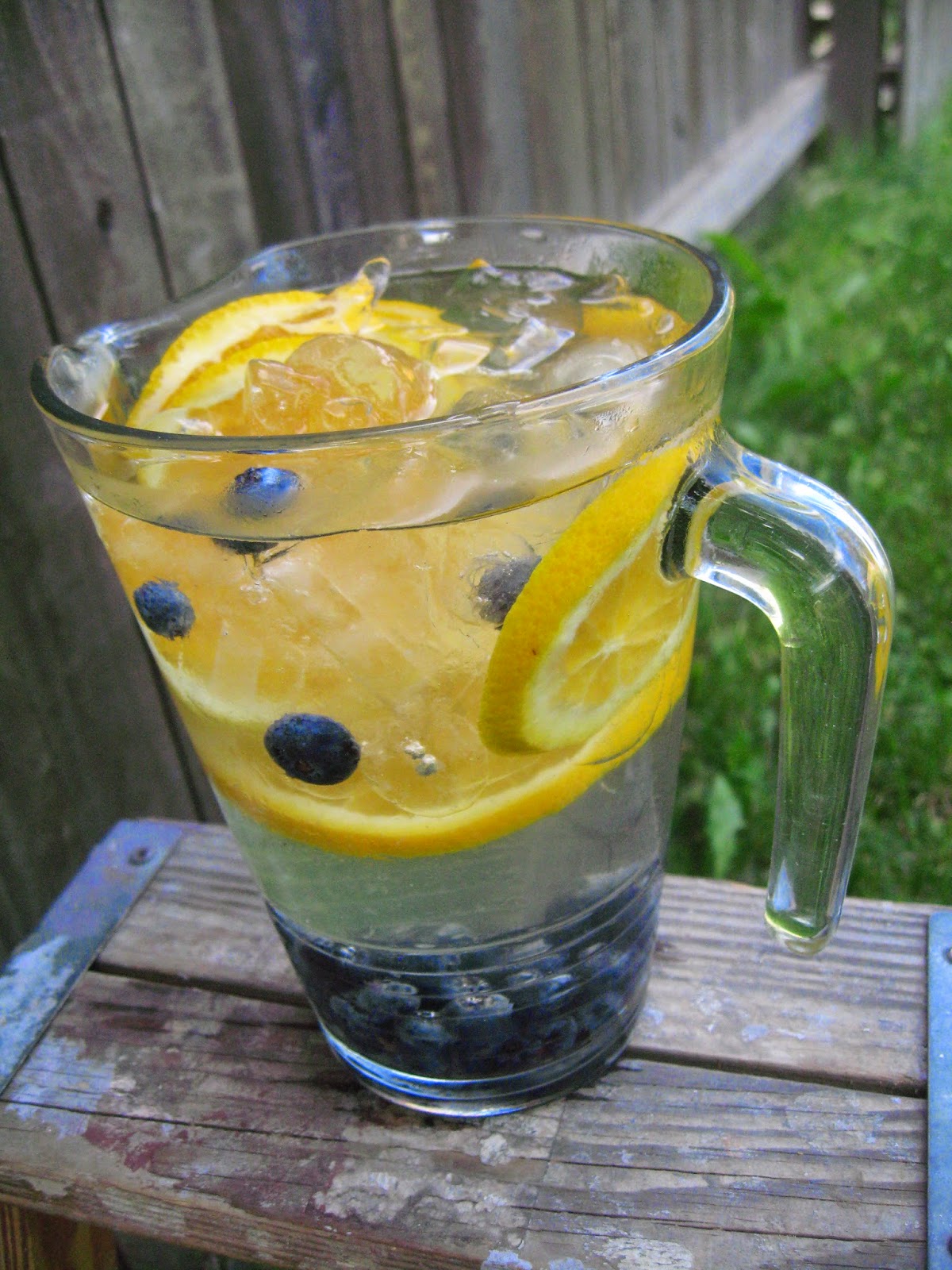
Infused Water - Refreshing Drink for Summer Feasts


Infusing your water with fruits, herbs, or veggies not only adds flavor to the water, but also adds essential vitamins and nutrients that help your body.  It is a great way to quench your thirst and keep you hydrated on a hot, late summer day. They can be helpful for getting children to increase their daily water intake. And they are pretty, too. 

Making your own is more cost friendly and healthier than purchased waters. So join in making some feast day themed waters with a hint of summer flavors for our August saints. 

Making infused water is very simple. Just add desired fruit, veggie, or herb or combination to a pitcher of water with ice. Muddle mixture a bit if you want to increase flavor and let steep for at least several hours, up to 24, depending on how strong you want the flavors.  For some mixtures you can pour directly from pitcher, for others you may want to strain ingredients first to remove small floaters. As long as you keep the water refrigerated, the fruit should stay fresh. And you can keep refilling the pitcher as you drink the water but, it will dilute the flavor each time you refill.  It should last several days before you need to remake with fresh fruit.

One way to make infused water is with a single ingredient. Citrus is a great, no lose option for adding a touch of flavor to water, so it can be a good one to start with.

St. Dominic – Orange

In her recent post for Catholic Culture, Jenn Miller alerted me to the connection of St. Dominic (August 8) to the orange. So orange infused water would be perfect for his feast day.  


You can also make infused waters that combine a variety of fruits, veggies or herbs.

St. Maximilian Kolbe – Coconut Strawberry or Blueberry Orange

Infused waters are simple, no frills refreshers and considering that St. Maximilian Kolbe (August 14) died in a concentration camp it is a simple, non-extravagant treat for an austere remembrance. St. Maximilian had a vision of Mary – she offered him two crowns – red for martyrdom and white for purity and asked which one he would accept.  He chose both. Making a coconut strawberry infusion represents the colors of the two crowns that he was shown and accepted.


Blueberry orange infused water incorporates blue for his Marian devotion and formation of the Militia of the Immaculata movement of Marian consecration. Orange trees and their blossoms are symbolic of purity, chastity and generosity so the addition of oranges for St. Maximilian represents three strong characteristics of this saint who gave his life to take the place of another prisoner.


Assumption – Blueberry Lemon

As mentioned since blue is a universal color associated with Mary, the blueberry is a great fruit to use on Marian feasts. The lemon is a symbol of fidelity in love, and, as such, is often associated with the Virgin Mary in art. A lemon blueberry infused water would be a refreshing addition to this Marian solemnity.

Saint Rose - Raspberry, Rose, & Vanilla

The rose is closely associated as a symbol for St. Rose of Lima (August 23) but could be used, too, for St. Clare (August 11) as she has a rose story. The vanilla bean and raspberries of this recipe don't necessarily represent anything about the saints but were a infused water combination I found with rose that sounds delicious.


Pin It

Saturday, August 8, 2009

Raise a Glass to St. Dominic!

Last year when I shared Chicken with Sauteed Tomatoes for St. Dominic's day, Mary Liz left a comment explaining the connection of St. Dominic with oranges. As today is his feast day I'm not suggesting anything elaborate for his feast, except to eat an orange or raise a glass of orange juice, or a delightful Mimosa (1 part champagne or white sparkling wine to 1 part orange juice) to toast the founder of the Order of Preachers, known as the Dominicans (although there is a wonderful Orange Roll recipe for January 20.)

Why is the orange associated with St. Dominic? From this site we read:

The Orange Tree
The orange tree pictured is at Santa Sabina and is said to be a direct descendant of the one planted in Rome by Our holy Father Dominic in 1220. Apparently this was the first of its type to be planted in Italy. The Villa Sciarra in Rome has an orange grove grown in commemoration of the bringing of the plant to Italy by St. Dominic.
From the original posting of Sacred Destinations Rome: Santa Sabina:
The Legend of the Orange Tree
In the quadrangular enclosure at Santa Sabina on the Aventine Hill in Rome, there is an orange tree. According to a legend, St. Dominic planted the seed from which it grows. In the nineteenth century, when the tree sent off a new and healthy shoot, having many oranges, someone noted that it was when Pere Lacordaire was a novice. Some took that as a symbol of the new vigor of the Order which was soon restored in France and of its increase in other provinces. And so the legend grew that when the orange tree produced well, there would be a flowering of the Order.

More information and photos of the actual tree can be found on St. Dominic's Orange Tree.

So you'll understand now that images of St. Dominic he is pictured with an orange tree. So raise your orange juice glass to St. Dominic today!

Image of Orange Tree from opeast.org.au and Image of Mimosa from Williams-Sonoma.com
Pin It

Friday, August 8, 2008

Memorial of St. Dominic, August 8


This is an adaptation of an earlier column from my blog.

August 8 marks the memorial of St. Dominic, priest, founder of the Order of Preachers. As this is a special family day that marks birthdays and anniversaries, I like to give a little recognition to this saint who has become part of our family feasts.

St. Dominic was born in Spain, but fought Albigensianism, a Christian heresy in western Europe. Father John Hardon has an excellent explanation of Albigensianism. The main reason so many people were being drawn into this heresy was plain ignorance. So his mission was preach the Truth of the Gospel.

For this saint's feastday, we're keeping it simple, since penitence was a focus in his preaching. I'm going to trace back to Dominic's Spanish roots and use a recipe from my favorite Spanish cookbook My Kitchen in Spain by Janet Mendel for the main dish. My tomatoes are ripening and this recipe is perfect for using some of those luscious fruits, Chicken Sautéed with Fresh Tomato. Accompanying this I will have brown rice, a simple green salad and fresh fruit salad for dessert.

The fresh tomatoes have a sweeter taste than most Italian tomato dishes. I realize the cooking time is lengthy, and I actually shortened the tomato cooking time without loss of flavor.

Chicken Sautéed with Fresh TomatoPollo con Tomate
3 Tbsp. olive oil
2 pounds chicken legs and/or thighs (or whole chicken cut-up)
4 1/2 pounds fresh tomatoes (about 8 large tomatoes)
1 garlic clove, chopped
1 tsp. salt
Freshly ground black pepper
Pinch dried thyme
1/2 tsp. pimentón (see below)
2 bay leaves
2 Tbsp. brandy
Chopped fresh flat leaf parsley
Heat the oil on medium high heat in a deep skillet, then add and brown the chicken pieces, about 10-15 minutes. Remove when browned all over, and drain extra fat except 2 tablespoons.
Blanch and peel the tomatoes. Seed the tomatoes and chop coarsely, making 5 1/2 to 6 cups.
Heat remaining oil in skillet on high, add all remaining ingredients except parsley. Cook for 5 minutes, then add the chicken back to the pot. Lower heat to medium and simmer uncovered, about 45 to 75 minutes. Remove the chicken when done, but continue cooking the tomato sauce over medium heat until very thick and beginning to brown, about 30 minutes longer. Add chicken back to the pot to reheat. Remove bay leaves, serve garnished with fresh parsley.

Note about pimentón, or smoked paprika: Apparently, there really isn't a true substitute for the Spanish paprika. It's not the same as Hungarian paprika at all. Only one place suggested sweet paprika and then add cayenne for some heat. See Smoked paprika and European spices for further information. I made this last time, omitting the pimentón and the flavor was quite nice.

Another sidenote on St. Dominic. He's the patron of scientists, seamstresses, and astronomers. Star fruit would be in order to add to our fruit salad. I hope to eat out on the screened porch since the day is so beautiful (fall like). Perhaps we'll do some sky-watching. Although the Perseid's are also known as Tears of St. Lawrence, since they generally coincide with his feast day, the feast of this patron saint of astronomy has perfect timing!
Pin It